October 13, 2026 · Homeowner Guide
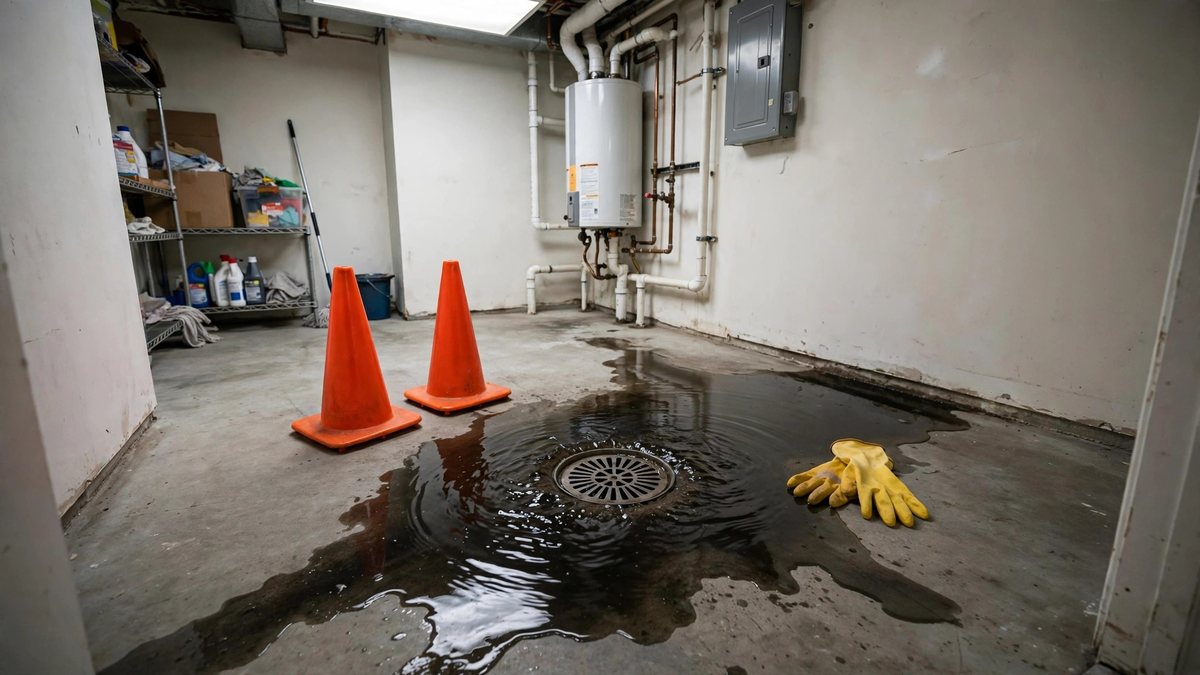
A sewage backup is one of the most unpleasant problems a homeowner can face — and one of the few where the water itself is the hazard. When a drain or sewer line backs up, the water entering your home can carry bacteria, viruses, and chemicals from the waste stream. Professionals treat sewage as the most contaminated category of water, and its response is very different from a clean-water leak.
This guide explains why backups carry real health risks, the immediate steps that protect your household, what professional cleanup involves, and prevention measures that reduce the chance of it happening again.
Restoration professionals group water by contamination. Clean water from a broken supply line sits at one end of the scale; water from a toilet overflow, sewer line, or septic connection sits at the other. That most contaminated category, often called category 3 water, can contain harmful microorganisms from waste, along with residues from cleaning products and anything else that has entered the drains.
Exposure can happen in more ways than touching the water directly. Splashing and disturbance of dried residue can spread contamination onto hands, shoes, and surfaces. Children, older adults, pregnant people, anyone with a weakened immune system, and pets face greater risk. A strong sewage odour indoors is also a signal: the area should stay off-limits until cleaned and disinfected properly.
Contamination also spreads through porous materials. Carpet, padding, drywall, insulation, and upholstered furniture can absorb sewage water deeply, so wiping a surface clean does not make the material underneath safe. That difference — between looking clean and actually being sanitary — is the key to handling a backup correctly.
The first rule is separation. Keep people and pets out of the affected area, and close doors to contain odours and prevent foot traffic tracking contamination through the home. If sewage covers a wide area or is still rising, consider staying elsewhere until cleanup begins, particularly for anyone in a higher-risk group.
The second rule is to resist mopping it up yourself. Household mops and cleaners are not designed for category 3 contamination, and using them can spread it to sinks and laundry areas while exposing you directly. Do not run fans across the area either, because moving air can spread contaminated droplets. Avoid using toilets, sinks, and appliances on the drain system until the blockage is addressed, because added water makes the backup worse.
Professional cleanup starts with protection and containment: protective equipment for the crew, and barriers separating the work area from the rest of the home. Contaminated water is extracted with equipment designed for the job, and waste is disposed of appropriately rather than poured into another indoor drain. Materials are then assessed one by one, because treatment depends on what the water touched.
Hard, non-porous surfaces can generally be cleaned and disinfected thoroughly. Porous materials are different: carpet padding, saturated drywall, insulation, and other absorbent materials sewage has soaked usually need removal, because disinfectant cannot reach contamination deep inside them. After removal and disinfection, the structure is dried and checked again before rebuilding. If damp conditions linger, mould can follow, so thorough drying matters after the visible mess is gone.
Prevention focuses on the line and what goes into it. A backwater valve, installed by a qualified plumber where appropriate, can help stop sewage flowing back when the main line surcharges. Tree roots commonly block older lines, so recurring slow drains deserve a camera inspection. Only toilet paper should be flushed — wipes, paper towels, and hygiene products belong in the bin, and cooking grease hardens inside pipes over time.
Even a small backup involves category 3 water, which can carry harmful bacteria and viruses into porous materials. Keep people and pets away from the area and have cleanup handled with proper protective equipment, extraction, and disinfection rather than household mops and cleaners.
Porous items that sewage has soaked, such as carpet padding, saturated drywall and insulation, and absorbent furnishings, generally need removal because contamination deep inside them cannot be disinfected reliably. Hard, non-porous surfaces can usually be cleaned and disinfected in place.
Yes. Multiple slow drains, gurgling toilets, and recurring blockages in the same line can signal a main line problem that deserves prompt attention.
If your home has had a backup, our sewage cleanup page describes how contaminated water is extracted and disinfected safely, and our mold remediation page explains follow-up care after damp conditions. We serve Lebanon, TN, including the 37087, 37088, and 37090 ZIP codes — see our Lebanon, TN service area page. Keep your household clear of the area, reach out, and we will explain the process before any work begins.
Keep everyone clear of the affected area and tell us what happened — we will outline a safe cleanup plan.
Request Service