
Mon–Fri 7am–10pm EST  ·  Sat 8am–10pm EST  ·  Sun 7am–9pm ESTRequest Service
Lebanon Water Damage Pros logoLebanon Water Damage ProsRequest a Quote

Flood Damage Cleanup in Lebanon, TN

Lebanon sits where heavy rain can raise local waterways quickly. Sinking Creek and Spring Creek run through and around the city, and properties near their low-lying banks, drainage channels, and floodplain edges face real risk when storms stall over Middle Tennessee. The area carries a moderate flood risk overall, so homes outside mapped high-risk zones can still take on water during intense rain. Lebanon Water Damage Pros provides flood damage cleanup for Lebanon homes in 37087, 37088, and 37090.

Floodwater differs from a clean plumbing leak. Water that has flowed across yards, streets, and fields can carry soil, debris, and contaminants into a home, and it often enters at multiple points: under doors, through foundation seams, and up through floor drains. Cleanup therefore combines extraction with removal of silt and unsalvageable materials, cleaning of salvageable surfaces, and monitored drying, so a home is not left with hidden residue or moisture after visible water is gone.

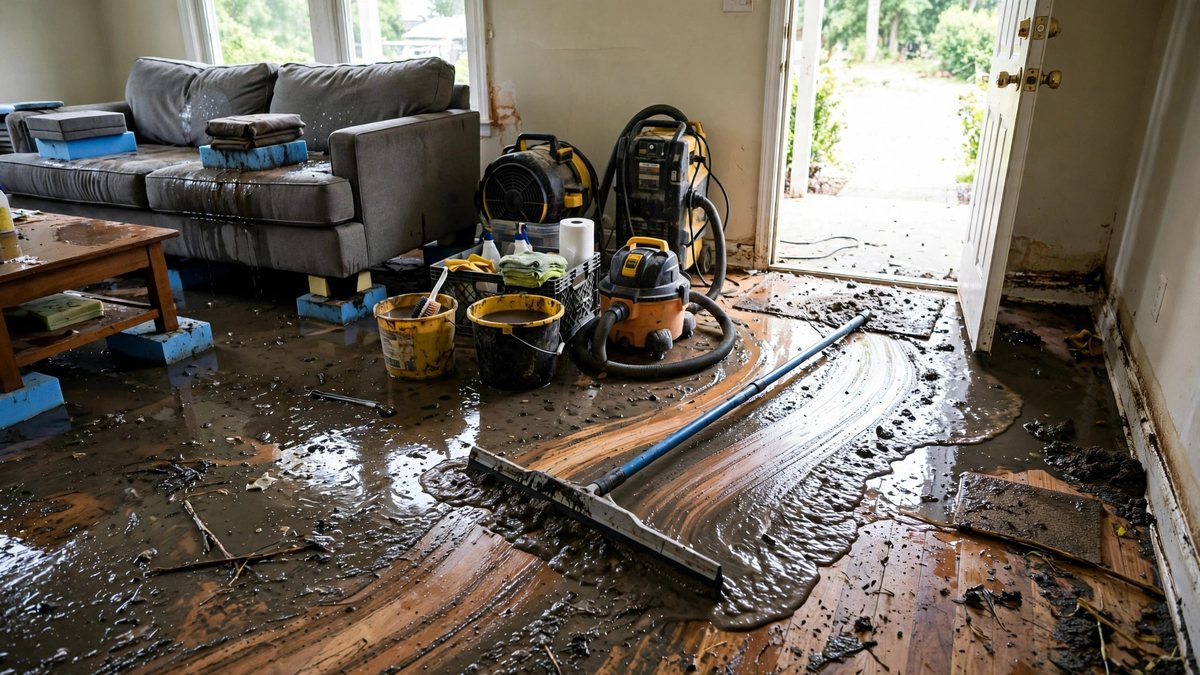
Flood damage cleanup after heavy rain in Lebanon TN

Signs of Flood Damage and Common Causes

Flooding in Lebanon most often follows sustained rain that overwhelms drainage, swells Sinking Creek and Spring Creek, and pushes runoff toward low properties. Flash flooding on local roads, backed-up storm drains, and groundwater rising through slab joints are also common causes. Homes with below-grade rooms, street-level garages, and crawl space vents near grade tend to take on water first.

Flood events can also leave problems outside living space. Water in a garage or crawl space can affect stored materials and create conditions for mold growth that later reaches the home. A complete inspection after any intrusion, even a shallow one, helps define the true scope of cleanup.

How the Work Proceeds

  1. Safety Review and Damage Survey

    We review conditions for safe entry, including electrical concerns, structural issues, and the likely contamination level of the floodwater. The survey documents water height marks, affected rooms, and materials, producing a plan that separates salvageable items from materials that absorbed contaminated water.

  2. Water and Debris Removal

    Remaining standing water is pumped or extracted, and silt, mud, and debris are cleared from floors and corners. Removing this material early prevents tracking into clean areas and allows underlying surfaces to be inspected. Entry points where water came in are noted for your repair planning.

  3. Removal of Flood-Damaged Materials

    Porous materials that soaked up floodwater, including carpet padding, sections of drywall and insulation, and swollen composite items, are removed and bagged for disposal. Hard surfaces and solid wood framing are generally retained and cleaned when they remain structurally sound.

  4. Cleaning and Surface Treatment

    Salvageable surfaces such as concrete, tile, and framing are cleaned to remove flood residue and treated as appropriate for the conditions found. Belongings that can be cleaned are separated from items recommended for disposal, and we explain the reasoning for each category.

  5. Drying and Final Verification

    Air movers and dehumidifiers dry the structure, with moisture readings taken at walls, floors, and framing until levels are acceptable. A final walkthrough reviews the cleaned areas and identifies repairs, such as drywall replacement or drainage improvements, that should follow.

Common Scenarios We Encounter

The following are illustrative examples drawn from typical flood situations in the Lebanon area. They describe general conditions near local creeks and low-lying streets without referring to specific households, and they show why flood cleanup involves more than removing water that can be seen.

Creekside Home After Heavy Rain

A home near a Spring Creek tributary takes on several inches of water across its ground floor during a storm that drops rain faster than drainage can carry it away. Silt coats the tile, and lower drywall stays saturated. Cleanup involves debris removal, cutting out wet wall sections, cleaning the slab, and monitored drying of the walls and flooring throughout the affected ground floor.

Garage and Storage Flooding

Runoff from a saturated yard flows under a garage door in a Lebanon subdivision, flooding stored boxes, tools, and a laundry corner. The living space stays dry, but the slab and lower walls absorb contaminated water. Work focuses on sorting contents, extracting water, cleaning concrete and wall bases, and drying the space thoroughly before stored items are returned to the garage floor.

Below-Grade Room Intrusion

A finished basement room in Wilson County floods when groundwater rises through a floor joint during days of rain. Carpet and padding hold the water, and furniture legs sit in it for many hours. The plan includes extraction, padding removal, carpet evaluation, and drying of the slab and walls, plus checking adjoining rooms for moisture that migrated during the event.

Frequently Asked Questions

Is floodwater in a home considered contaminated?

Generally, yes. Water that has flowed over ground, roads, and yards can pick up soil, chemicals, and microorganisms before entering a home. That is why flood cleanup treats porous materials conservatively and includes thorough cleaning of hard surfaces. During the survey we explain how the water category affects which items can be cleaned and which should be removed.

What hours can I request flood cleanup in Lebanon?

Our posted hours are Mon–Fri 7am–10pm EST, Sat 8am–10pm EST, and Sun 7am–9pm EST. Submit a request describing the affected areas, approximate water depth, and your Lebanon ZIP code. If conditions are unsafe, wait until access is safe before entering flooded rooms, and we will coordinate next steps during service hours.

Should I start cleanup myself before help arrives?

You can take safe, limited steps: photograph the damage, move dry valuables to a safe area, and keep people and pets out of flooded rooms, especially where electrical items are wet. Avoid wading through floodwater and do not remove saturated drywall on your own. The main cleanup should wait for proper equipment and protective measures.

How long does flood cleanup and drying usually take?

Timelines depend on water depth, how long water stood, materials involved, and weather during drying. Extraction and debris removal may be completed early in the project, while structural drying commonly continues for several days with monitored readings. At the survey stage we give a realistic sequence for your property and update it as drying progresses.

Related Services

Flood projects often begin with water extraction and removal to clear standing water, and weather-driven events may also involve our storm damage restoration work. Once cleanup is complete, structural drying and dehumidification brings the building back to stable moisture levels. See our Lebanon, TN page for coverage across 37087, 37088, and 37090.

Floodwater Entered Your Lebanon Home?

Tell us which rooms were affected and how high the water reached. We will review your request and outline a cleanup and drying plan.

Request Service
Request Service