
Mon–Fri 7am–10pm EST  ·  Sat 8am–10pm EST  ·  Sun 7am–9pm ESTRequest Service
Lebanon Water Damage Pros logoLebanon Water Damage ProsRequest a Quote

Water Extraction & Removal in Lebanon, TN

Standing water is the first problem to solve after a leak, overflow, or flood event in a Lebanon home. While water sits, it seeps into subflooring, baseboards, and wall cavities, and the affected area grows. Carpet padding acts like a sponge, laminate can swell, and water on a slab will wick into drywall above the visible waterline. Lebanon Water Damage Pros provides extraction and removal for homes and small commercial properties across Wilson County, clearing bulk water in a controlled way so drying can begin on a sound footing.

Extraction serves neighborhoods throughout 37087, 37088, and 37090, from homes near Cumberland Drive to properties along West Main Street and newer subdivisions on the south side of the city. The method depends on depth, surface type, and water category. Our approach is to assess first, extract thoroughly, and verify with moisture readings rather than relying on how the surface looks once puddles are gone.

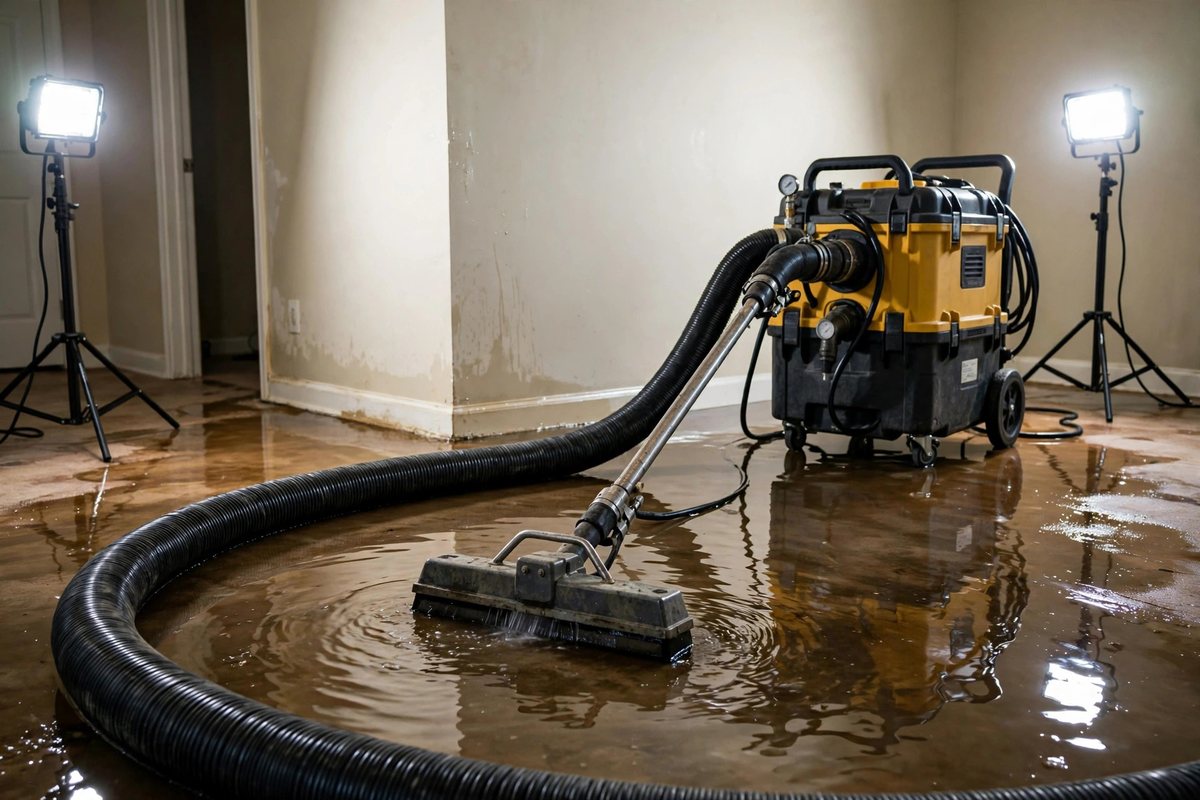
Water extraction equipment removing standing water in Lebanon TN

Signs You Need Extraction and Common Causes

Extraction is needed whenever water has pooled, saturated soft materials, or spread beyond what towels and a household wet vacuum can handle. Common causes in Lebanon include leaking pipes, water heater failures, overflowing fixtures, washing machine hose failures, and rainwater entering through doors or foundation seams during heavy Middle Tennessee storms. Sump pump failures in basements are another frequent source.

Stop the source before extraction begins whenever that is safe, such as closing the main shutoff for a plumbing failure. Avoid entering standing water where outlets or appliances may be energized, and leave that assessment to professionals on site.

How the Work Proceeds

  1. Site Assessment and Safety Check

    We confirm the source has been controlled, check for electrical and structural concerns, and identify the water category. The assessment also maps how far water has spread, including under appliances and inside closets, so extraction covers the full footprint.

  2. Bulk Water Removal

    Pumps and extraction units remove standing water from the lowest areas first, working toward approved discharge points. Staged pumping in basements and large rooms controls where the water goes. This step removes the greatest volume and slows further absorption into building materials.

  3. Surface and Carpet Extraction

    Weighted extraction tools draw water from carpet and padding, while hard-surface tools clear tile, vinyl, and concrete. Multiple passes are made until extraction yields minimal additional water. Furniture is moved, blocked, or protected to reach water trapped underneath.

  4. Moisture Verification

    Meters check flooring, subflooring, and wall bases to confirm what remains damp after extraction. Readings often reveal moisture beyond the visibly wet area, such as under cabinets or along a hallway. Those findings guide material decisions and where drying equipment goes next.

  5. Handoff to Drying

    Extraction ends when standing water is gone, but materials are still damp. We position or recommend air movers and dehumidifiers based on the moisture map and explain expected drying conditions. A clean handoff shortens drying time and lowers the risk of odor and mold.

Common Scenarios We Encounter

The situations below are illustrative examples of extraction work in Lebanon homes. They are general descriptions without specific addresses or identities, included to show how water depth, surface type, and source change the extraction plan from one Wilson County property to the next.

Basement Water After a Pump Failure

Heavy rain overwhelms a basement sump system in a Lebanon home, leaving several inches of water across the slab. Stored items sit in water and the stairwell wall is wet. Extraction begins with staged pumping, followed by hard-surface clearing and moisture checks along the walls, with drying equipment placed once the slab is cleared.

Washing Machine Overflow on a Main Floor

A washing machine overflows in a laundry room sharing a wall with a carpeted family room. Water runs under the wall and saturates carpet on the other side. The crew extracts from both rooms, uses weighted tools on the carpet, and checks the wall base for wicking, preventing a hidden saturation problem from developing unnoticed in the adjoining room.

Water Heater Release in a Garage and Hall

A water heater drains across a garage floor and into an interior hall before the supply is shut off. Hard surfaces hold most of the water, but hall flooring and baseboards absorb a share. Extraction clears the garage, then focuses on the hall, where meter readings guide whether flooring sections need lifting.

Frequently Asked Questions

How is professional extraction different from a wet vacuum?

Household wet vacuums remove surface water but draw very little from carpet padding, subflooring, and wall bases. Professional extraction uses higher-powered units and weighted tools that compress carpet and pull water from deeper layers. Moisture meters then verify what remains, so drying decisions rest on readings rather than on whether the floor feels dry.

When are extraction services available in Lebanon?

Our posted hours are Mon–Fri 7am–10pm EST, Sat 8am–10pm EST, and Sun 7am–9pm EST. Send a request through the quote form with your Lebanon ZIP code, the source of the water if you know it, and roughly how much area is affected. That detail helps us plan equipment and respond during service hours.

Does extraction alone dry out my home?

No. Extraction removes liquid water, which is the essential first step, but damp materials still hold moisture that must be dried with air movement and dehumidification. Skipping drying can leave enough moisture in subflooring and wall cavities for odor and mold problems to develop. We explain the drying needs for your property during the extraction visit.

Should carpet padding always be removed after flooding?

Padding that absorbed clean water briefly can sometimes be dried, but padding saturated with contaminated water or left wet for an extended period is usually removed because it dries slowly and can harbor odor. The decision follows extraction, based on water category, saturation level, and meter readings from the subfloor beneath the carpet.

Related Services

Extraction is usually one part of a larger recovery. For the full repair sequence, see water damage restoration. Drying follows extraction on most jobs, covered under structural drying and dehumidification, and below-grade flooding is addressed in our basement flooding cleanup service. For coverage details, visit the Lebanon, TN page.

Standing Water in Your Lebanon Home?

Describe where the water is, how deep it is, and what caused it. We will review your request and explain the extraction plan for your property.

Request Service
Request Service