October 15, 2026 · Homeowner Guide
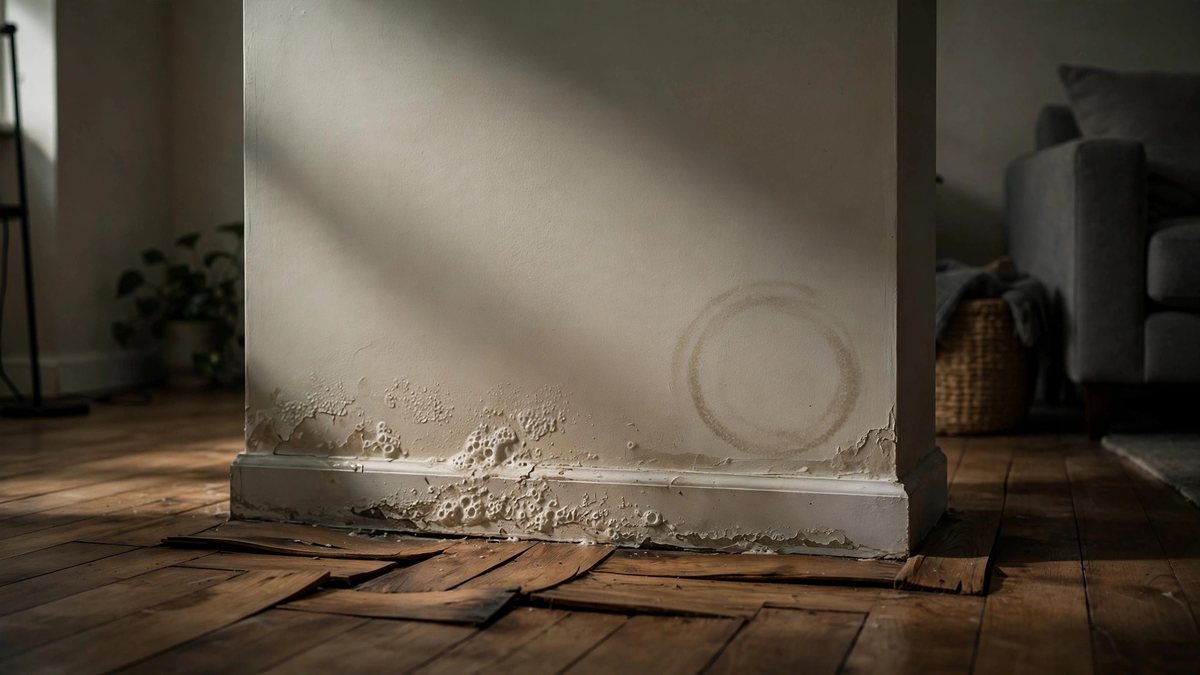
Not all water damage announces itself with a burst pipe or a puddle. Some of the most damaging leaks are slow and quiet: a supply line weeping behind a washing machine, a shower fitting dripping inside a wall, or groundwater finding its way into a crawl space. By the time the damage becomes obvious, wood, drywall, and insulation may have been damp for weeks or months.
Hidden moisture usually leaves clues, though. A smell that will not go away, paint that bubbles, or a floor that feels different underfoot can help you act while the affected area is still small. This guide covers the signs to take seriously, where leaks hide, and how professionals confirm what is happening behind the surface.
A musty, earthy smell is often the first sign. It lingers in one room, closet, or cabinet even after cleaning, and often grows stronger after rain or on humid days. That smell is associated with damp materials in places you cannot see, such as inside a wall cavity or under flooring. Treat it as information, not just an annoyance.
Visible changes are the next clues. Paint that bubbles or peels without another explanation often means moisture is pushing out from behind the wall. Water-stain rings on ceilings or walls — especially rings that grow or return after painting — point to an active source. Floors give clues too: hardwood that warps, laminate that lifts, and vinyl that feels spongy can signal moisture in the subfloor.
No single sign proves a leak on its own. Patterns matter: a stain below a bathroom, a musty smell, and a warped floorboard in the same area together make a strong case for a closer look.
Hidden leaks cluster around plumbing and around places where water is supposed to be carefully contained. Behind walls, supply lines, drain joints, and shower and tub fittings can leak slowly for a long time before a stain appears. Water escaping through failed grout, sealant, or a fitting can soak wall and floor structure while the bathroom itself looks mostly normal.
Under and behind appliances is another high-risk zone. Refrigerator lines, dishwasher connections, washing machine hoses, and water heater fittings deserve periodic checks, because a slow drip can soak flooring unnoticed. Sinks hide leaks too — a dripping connection inside a closed cabinet can damage the cabinet floor and wall behind it before anyone notices.
Crawl spaces can hide plumbing leaks, groundwater intrusion, and condensation, and moisture there can affect joists, subflooring, and insulation for a long time before anyone looks. Attics are the mirror image: roof leaks can dampen insulation and ceiling drywall from above. Checking both spaces periodically, and after major storms, catches problems earlier.
Finding the source matters as much as finding the damage. Painting over a stain or drying a room without fixing the leak simply resets the clock. An inspection starts with the signs you noticed, then traces them back: which pipes run through that wall, and what fixture sits above that stain?
Tools turn suspicion into evidence. Moisture meters measure dampness in drywall and wood, so a technician can map how far moisture has spread beyond the visible stain. Thermal imaging cameras can reveal cooler areas suggesting damp material behind a surface. Those images do not diagnose a leak alone, but combined with meter readings they narrow down where a small inspection opening is needed.
Once the source is stopped and moisture is mapped, the plan is straightforward: remove materials that cannot be dried, dry the structure, and verify with follow-up readings that moisture has returned to a normal range. If mould has developed, it needs its own careful remediation rather than a quick surface wipe.
Not always, but a musty smell that persists in one area after cleaning is a common early sign of damp material hidden in a wall, floor, or crawl space. It is worth investigating, especially alongside stains, bubbling paint, or changes in flooring.
You can check under sinks, behind appliances, and in crawl space and attic access points for dampness, stains, and odours. Basic checks help spot problems early, but confirming how far moisture has spread inside walls and floors usually requires moisture meters and professional experience.
Moisture that stays in wood, drywall, and insulation can weaken those materials over time, cause persistent odours, and create conditions where mould can grow. A small, contained repair can become a much larger project the longer the source stays active.
If you are noticing these signs, our water damage restoration page explains how we trace moisture to its source, and our mold remediation page covers what happens when damp conditions have led to mould growth. We work throughout Lebanon, TN, including the 37087, 37088, and 37090 ZIP codes — see our Lebanon, TN service area page. Describe what you have seen or smelled, and we will help you work out the next step.
Share what you are seeing and we will explain how an inspection and drying plan would work for your home.
Request Service