October 22, 2026 · Fire & Smoke Damage
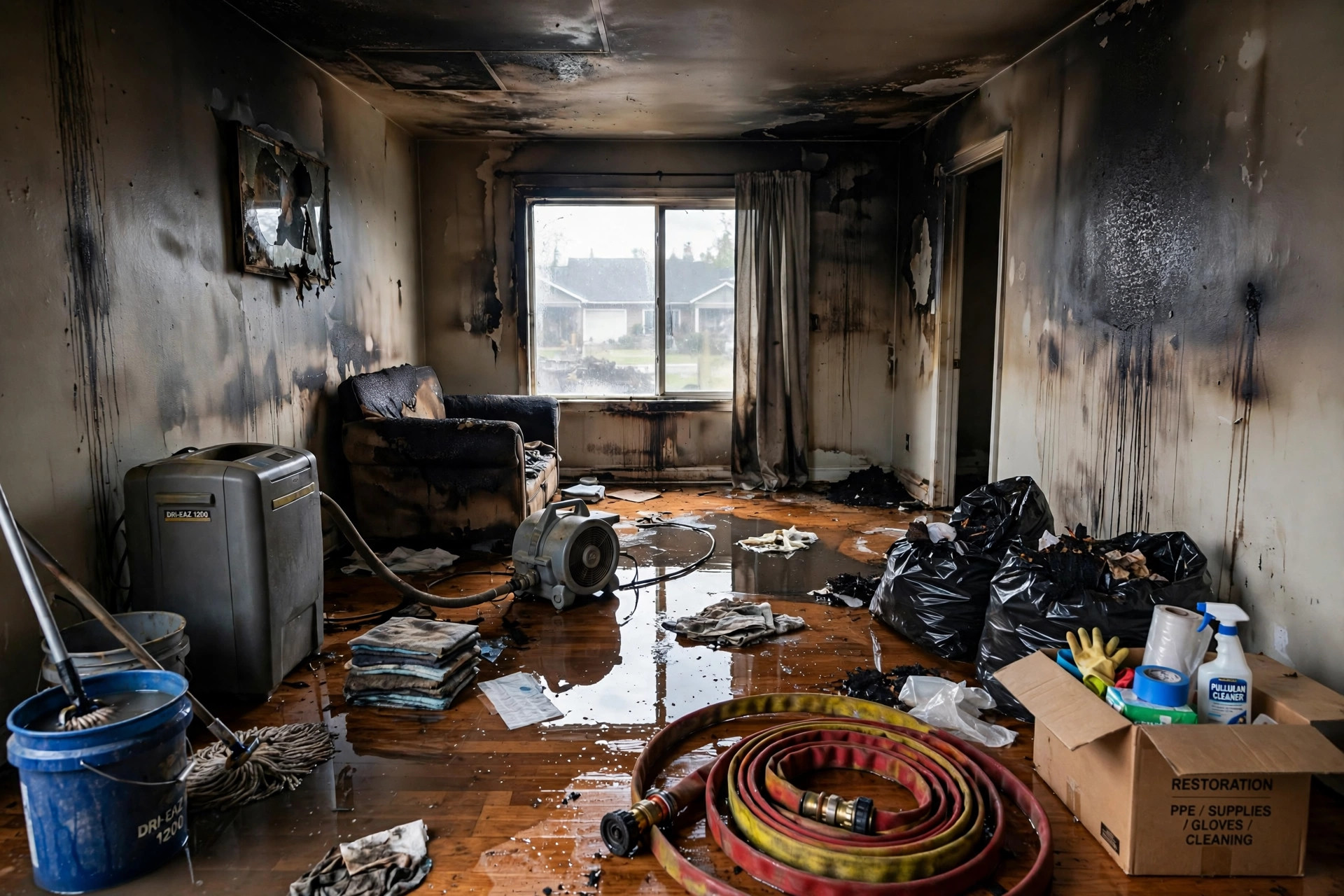
The fire is out, but the damage is not over. A house fire leaves behind three problems at once: charred materials, soot and smoke contamination, and thousands of gallons of water from firefighting hoses and sprinklers. What you do in the first 72 hours decides how much of the damage is reversible — and how much becomes permanent.
For homeowners in Lebanon, TN (ZIP codes 37087, 37088, and 37090), this guide walks through the right order of operations: safety first, then water, then soot, then documentation and professional restoration.
The single most important rule is the hardest one to follow: do not re-enter the home until the fire department says it is safe. Fires can weaken floors, roofs, and support beams, leave smoldering hot spots hidden in walls, and fill the air with harmful particles. Never rush back in to grab belongings — no possession is worth the risk.
While you wait for clearance, take care of the practical things. Call your insurance company to open a claim, and ask about coverage for temporary housing if the home is unlivable. Contact the utility companies to confirm gas, water, and electricity are shut off or handled safely. If the structure has broken windows, doors, or roof openings, the property needs to be secured — board-up services protect it from weather and trespassers while you sort out next steps.
Firefighting hoses deliver an enormous volume of water, and automatic sprinkler systems keep running until someone shuts them off. That water soaks into walls, subfloors, insulation, and framing — including areas the fire never touched. Wet materials sitting for days start growing mold within 24 to 48 hours, and saturated drywall and wood lose structural integrity.
This is why fire restoration is also water damage restoration. Professional water extraction and removal comes before cosmetic repairs: standing water is pumped out, soaked materials are assessed, and the structure is dried thoroughly with air movement and dehumidification. Skipping the drying step means mold and rot can surface months later, long after the visible repairs are done.
While water is the urgent structural threat, soot is the urgent cosmetic one. Soot is acidic, and it begins staining and etching surfaces within hours of settling. Plastics and vinyl discolor and yellow, metals corrode and pit, glass etches, and fabrics and upholstery absorb odors that become harder to remove with every passing day.
Well-meaning cleanup efforts often make soot damage worse. Wiping sooty walls with a regular cloth smears the particles deeper into the surface. Running the HVAC system circulates smoke particles through clean rooms and into ductwork. Vacuuming with a standard vacuum blows fine soot back into the air. Until professional cleaning begins, it is better to leave soot alone than to scrub at it. Learn how professional fire and smoke damage restoration handles soot removal without spreading it.
Before anything is thrown away or cleaned, document the damage thoroughly for your insurance claim. Photograph and video every room, including closets, the attic, and the exterior. Capture wide shots that show the overall condition and close-ups of damaged items, charred areas, water lines on walls, and soot staining.
Thorough documentation in the first days is far more useful to an adjuster than anything reconstructed from memory weeks later. It also gives restoration professionals a clear baseline for planning the work.
A professional fire restoration job follows a deliberate sequence. After emergency board-up and roof tarping secure the property, the team extracts standing water and begins structural drying. Damaged materials that cannot be saved are removed, and the remaining structure is cleaned of soot and smoke residue with specialized equipment and chemistry. Odor removal — the smoke smell that lingers in framing, ducts, and fabrics — is addressed with targeted treatments, not just air fresheners.
If you are in Lebanon, Mt. Juliet, Watertown, or the surrounding Wilson County communities, the earlier the restoration team assesses the property, the more can be saved. Secondary damage from water, soot, and mold grows more expensive by the day.
Only after the fire department says it is safe. Fires can weaken floors and roofs, leave smoldering hot spots, and fill the air with harmful particles. Never re-enter to grab belongings until officials clear the property.
Firefighting hoses deliver thousands of gallons of water, and sprinkler systems keep running until they are shut off. That water soaks into walls, floors, insulation, and framing, and it needs to be extracted and dried quickly to prevent mold and structural damage.
Yes. Soot is acidic and begins staining and etching surfaces within hours. Plastics discolor, metal corrodes, and fabrics absorb odors that become harder to remove with time. Fast professional cleaning is what keeps the damage reversible.
Light, careful cleanup of unaffected areas is fine, but aggressive cleaning can make things worse. Wiping soot smears it deeper, running HVAC fans spreads smoke particles, and discarding damaged items before documentation can hurt an insurance claim.
After a fire, our team can help with fire and smoke damage restoration, fast water extraction and removal, and complete water damage restoration. Learn more about how we serve homeowners in Lebanon, TN, and reach out when you are ready for help assessing the damage.
Act quickly to limit the damage. Contact Lebanon Water Damage Pros to request service and get a clear plan for restoration.
Request Service Call (615) 759-0522