October 14, 2026 · Homeowner Guide
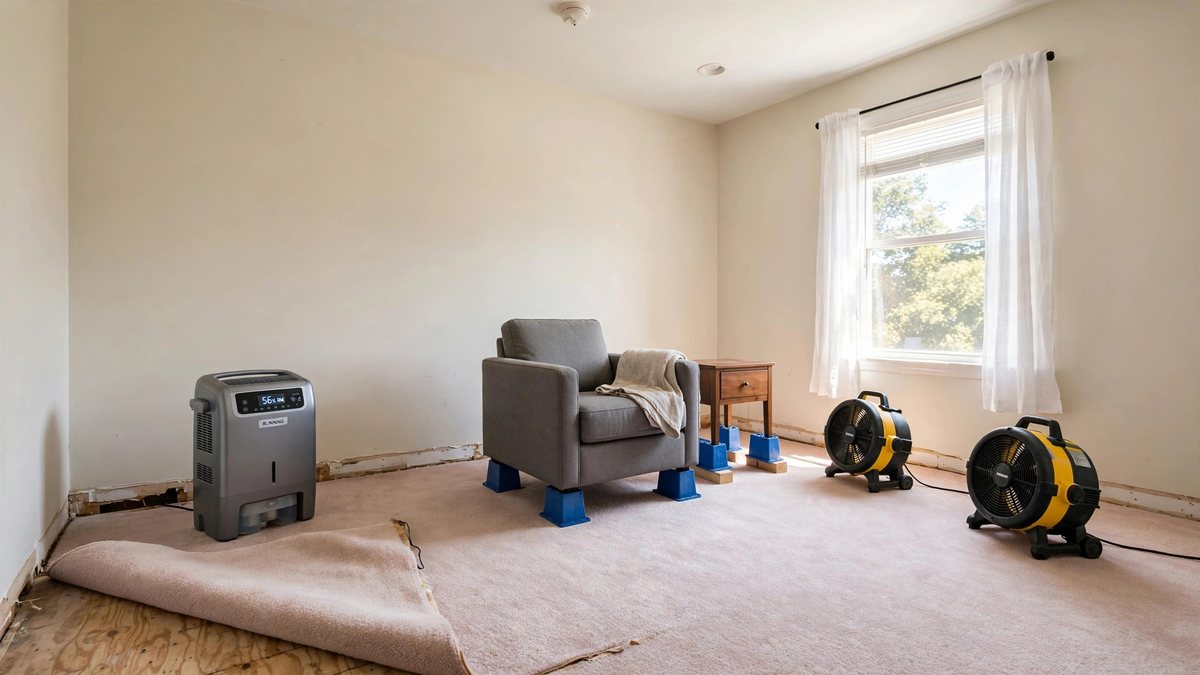
A leak can soak more than the spot where you first see water. Water spreads across floors, wicks up drywall, seeps under baseboards, and settles into carpet padding and subfloors. Drying properly means dealing with that hidden moisture, not just the puddle you can mop up — because material that stays damp can develop odours and create conditions where mould can grow.
For a small, clean-water leak caught early, careful do-it-yourself drying can work well. The order matters: stop the source, remove as much water as you can, then combine air movement with dehumidification. This guide explains each step, how long drying really takes, and when a leak is bigger than household equipment can handle.
Nothing you do will matter while water is still coming in. If a pipe, hose, or appliance is leaking, shut off its supply. If you cannot isolate it, turn off the main shutoff, usually near the meter or where the main line enters the home. Unplug an appliance only if you can do so safely with dry hands and dry footing.
With the source stopped, remove standing water as thoroughly as you can. A wet vacuum is far more effective than towels alone, though mops help in corners. Move furniture out of the wet area or raise it on blocks, and take wet rugs to a dry area to drain separately.
Drying is a partnership between moving air and removing moisture from that air. Fans should blow across damp surfaces — along walls, over floors, and into corners — rather than stirring air in the middle of the room. A dehumidifier in the closed room pulls out the moisture evaporation lifts into the air, so empty its reservoir regularly or set up its drain hose.
The details decide whether the structure behind the finishes actually dries. Baseboards trap moisture against the bottom of walls, so they may need loosening or removal to let the wall base dry. Carpet is similar: the surface can feel dry while the pad underneath stays soaked. Lift a corner to check the pad and subfloor. If the pad is saturated, it often needs removal so the subfloor can dry, even when the carpet itself can be saved.
Homeowners often expect a room to dry in a day, and surfaces sometimes feel dry that quickly. Structural drying takes longer: depending on how much water escaped and which materials absorbed it, thorough drying commonly takes several days of continuous air movement and dehumidification. Drywall and subfloors release moisture slowly, and the only reliable way to know they are dry is to check moisture in the material itself, not by touch.
Some signs show a leak has outgrown do-it-yourself drying. Water that spread into multiple rooms, soaked into walls, or sat for a day or more usually needs professional extraction and drying equipment. So does a leak where a musty smell persists, or where you cannot confirm the source has stopped. Contaminated water changes the decision entirely: if water came from a drain, toilet, or outside flooding, keep people and pets away rather than treating it as a routine job.
It depends on the weather. If outdoor air is drier than indoor air, ventilation can help. On humid Tennessee days, open windows can add moisture and slow a dehumidifier, so a closed room with a running dehumidifier is usually the better choice.
Surfaces feeling dry is a start, but walls, subfloors, and framing can hold moisture you cannot feel. Professionals confirm dryness with moisture meter readings compared against normal levels for those materials, which is the most reliable way to know drying is complete.
Sometimes lightly damp padding can be dried with strong air movement, but saturated padding usually holds water against the subfloor and slows everything down. In many cases removing the padding is the practical route while the carpet itself can still be dried and kept.
When a leak is larger than household fans can handle, our structural drying and dehumidification page explains how we measure and dry walls and floors, and our water extraction and removal page covers removal of standing water. We help homeowners across Lebanon, TN, including the 37087, 37088, and 37090 ZIP codes — see our Lebanon, TN service area page. Tell us where the leak happened, and we will help you judge the next step.
Describe the leak and the areas affected, and we will outline what thorough drying would involve.
Request Service