October 22, 2026 · Water Damage Tips
You turn on the faucet on a frigid morning and get a thin trickle — or nothing at all. During Middle Tennessee cold snaps, that almost always means a frozen pipe. How you handle the next few hours matters enormously, because a frozen pipe you thaw wrong can become a burst pipe that floods your home.
Lebanon, TN (ZIP codes 37087, 37088, and 37090) gets its freezes in sharp overnight drops rather than long deep winters, which catches pipes in crawl spaces, exterior walls, attics, and unheated garages off guard. This guide covers how to confirm a freeze, thaw it safely, and know when the pipe has already failed.
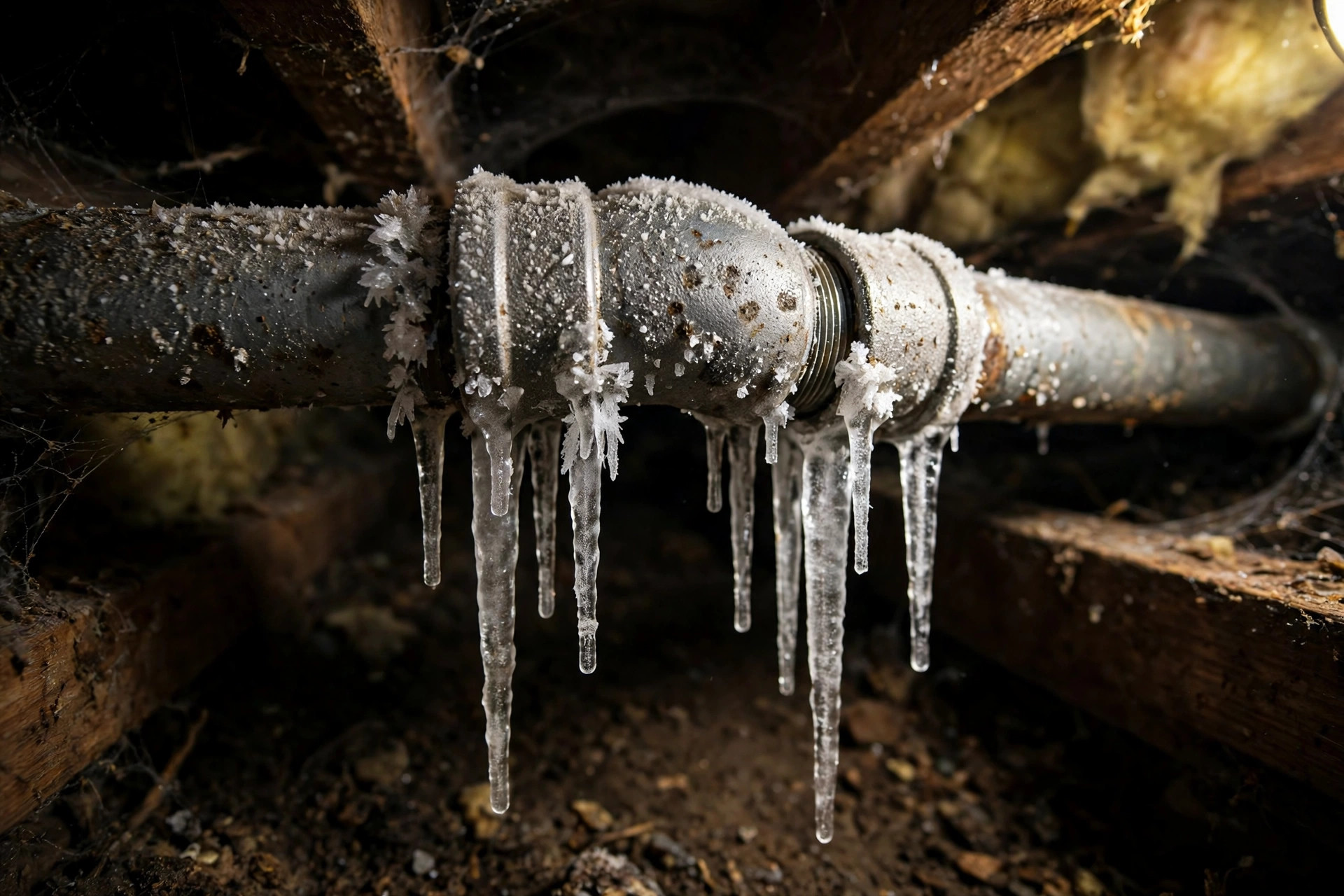
Before you start warming anything, check the signs. During or right after a cold snap, a frozen supply line usually announces itself clearly: a faucet that slows to a trickle or stops entirely while others in the house still run, frost or condensation on visible pipe sections, strange clanking or whistling when you turn the tap, or an odd smell from the drain as pressure builds behind the ice.
Also find your main shut-off valve now, before you need it. Knowing exactly where it is and that it turns freely is your insurance policy if the thaw goes wrong. In many Lebanon homes it sits near the water meter, in a utility room, or where the main line enters the house.
The fastest way to turn a frozen pipe into a disaster is aggressive heat. Never use a propane torch, open flame, charcoal, or a heat gun on a pipe. Open flames can ignite wood framing or insulation inside walls, melt soldered copper joints, crack ceramic or PVC fittings, and burst the pipe outright. Pouring boiling water directly on a frozen section is also risky, since the sudden temperature shock can split metal or plastic.
Skip the quick fixes. The safe methods below take longer, but they are the difference between restored water and a flooded kitchen.
Start by opening the faucet the frozen line feeds, just a crack. This gives melting water and steam somewhere to escape, which relieves pressure and speeds the thaw. Then locate the frozen section if you can — check the coldest runs first: pipes along exterior walls, in crawl spaces, in unheated basements or garages, and near uninsulated attic space.
Thawing one section often takes 30 minutes to a couple of hours. If you cannot find the frozen section, or nothing changes after a few hours of steady effort, the freeze is probably inside a wall or an inaccessible cavity — leave it alone rather than forcing the issue.
Sometimes the damage is done before you find the freeze. Warning signs include visible cracks or splits in the pipe, water stains spreading across a ceiling, the sound of running water inside a wall, or a surge of water where the pipe let go as it thaws. If any of these appear, shut off the main water valve immediately and cut power to the area if water is near outlets, appliances, or your panel.
Move valuables out of the water, photograph everything before you move items, and start removing standing water with towels, a wet vacuum, or mops. A burst pipe can release an enormous volume of water quickly — read our guide on what to do when a pipe bursts for the full step-by-step response.
Once water is flowing, act to prevent a repeat freeze the next night. Let the faucet drip slowly during hard freezes, open cabinet doors on exterior walls so warm air reaches the pipes, and keep the thermostat steady — do not set the heat back dramatically overnight. If you will be away, keep the heat at 55 degrees or above and have someone check the house.
For a lasting fix, insulate exposed pipes in crawl spaces and unheated areas, seal air leaks near pipe runs, and consider frost-proof outdoor spigots. These one-time steps pay for themselves the first cold snap they survive.
The telltale sign is little or no water coming from a faucet during or right after freezing weather, while other faucets in the house may still work. Frost visible on exposed pipe, strange clanking sounds, or an odd smell from the drain can also point to a freeze.
No. Open flames and high-heat tools can start a fire inside walls, melt soldered joints, crack ceramic fittings, or burst the pipe outright. Stick to gentle, indirect heat like a hair dryer, warm towels, or a heating pad.
Shut off the main water valve immediately, then cut power to the affected area if water is near outlets or appliances. Move valuables out of the water, document the damage with photos, and start removing standing water before calling for professional cleanup.
With gentle, steady heat it often takes 30 minutes to a couple of hours for a single frozen section. Thawing works toward the faucet from the coldest spot. If you cannot find the frozen section, or nothing changes after a few hours, the freeze may be in an inaccessible area.
If a frozen pipe has burst in your home, our team can help with burst pipe water damage, fast water extraction and removal, and complete water damage restoration. Learn more about how we serve homeowners in Lebanon, TN, and reach out when you are ready for help assessing the damage.
Act quickly to limit the damage. Contact Lebanon Water Damage Pros to request service and get a clear plan for extraction and drying.
Request Service Call (615) 759-0522