October 17, 2026 · Water Damage Tips
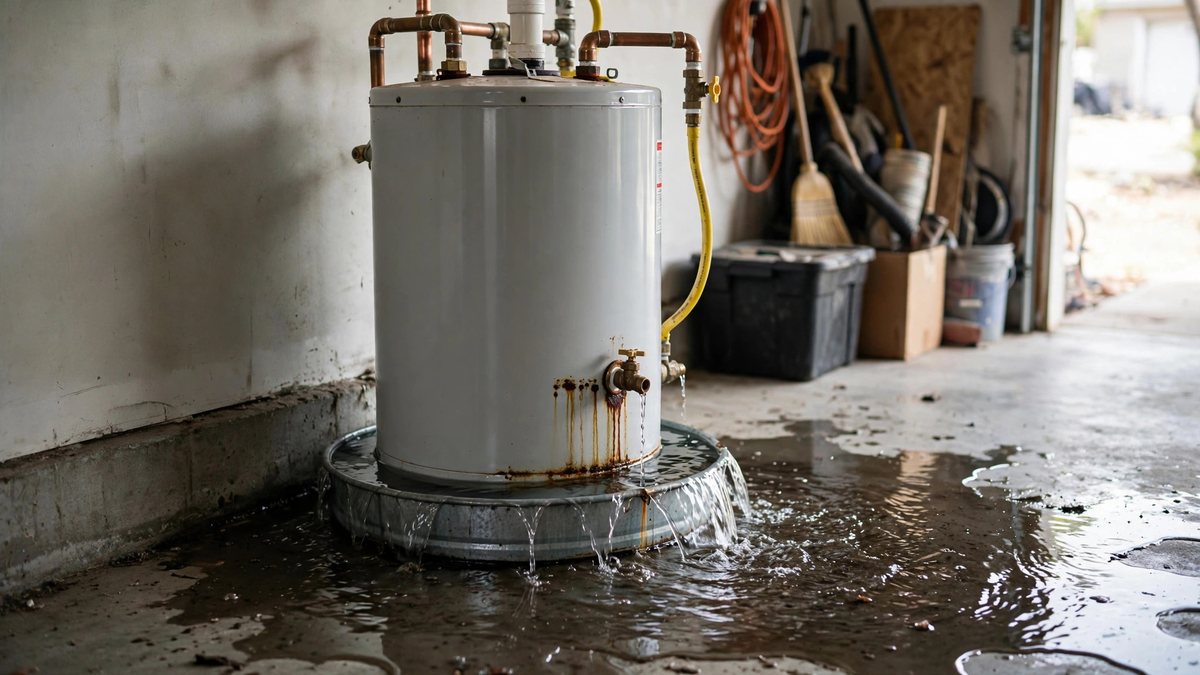
Finding water pooled around your water heater is unsettling, but a calm, ordered response limits the damage. Some leaks come from a valve or fitting, while others point to a failing tank. Either way, the water needs attention right away, because it spreads into subflooring, drywall, and nearby rooms faster than most homeowners expect.
This guide helps Lebanon homeowners identify the leak source, shut off water and power or gas safely, and protect surrounding floors. Whether the heater should be repaired or replaced is a plumber decision. Our focus here is the water: stopping it, cleaning it up, and drying properly.
Start by drying the floor and the outside of the tank, then watch where water reappears. The source matters, because a dripping fitting and a leaking tank call for very different responses. Check these common points in order:
Also rule out other sources. Condensation, a nearby pipe, or an HVAC drain line can leave water in the same spot. If water is coming from the tank body or base, the tank itself is usually failing, and shutting it down promptly is important.
Once you know water is coming from the heater or its connections, shut off its cold water supply valve, usually located on the pipe entering the top of the tank. If that valve does not work or you cannot find it, use the main shut-off for the house.
Shutting off water and energy protects the heater from running dry or overheating, and makes the area safer to clean up.
You may not need to drain the tank fully, but knowing the basics helps if water keeps coming. Attach a garden hose to the drain valve, run it to a floor drain or outside to a lower point, open a hot water faucet somewhere in the house to let air in, then open the drain valve slowly. Tank water can be hot, so use care and keep the hose end secured.
As you work, judge what you are dealing with. A small puddle that returns slowly is different from an active leak that steadily refills the floor. Note how much water appears and how quickly it returns after drying. That helps a plumber assess the heater and helps a cleanup team judge how much water surrounding materials have absorbed.
Water heater leaks often go unnoticed for days, quietly soaking the floor around the unit. Move stored items and anything porous away, mop up standing water, and run fans across the floor and baseboards. Check adjacent rooms and closets, because water travels under flooring and can appear several feet from the tank.
Pay close attention to subflooring and the bottom of nearby walls. Wood weakens and swells when it stays wet, and damp drywall can support mold if it is not dried. If the floor feels soft, walls are damp, or the leak ran for a long time, professional cleanup and drying are worth arranging. A plumber decides on repair or replacement; thorough extraction and drying protect the home around it.
It should be treated as urgent. A small drip can become a major failure if the tank is corroding, and even a slow leak causes ongoing floor and wall damage. Shut off the water and power or gas, then arrange help promptly.
Sometimes. Leaks from valves, drain fittings, or connections can often be repaired, while leaks from the tank body itself usually mean replacement. That decision belongs to a plumber after inspecting the unit.
The water may come from condensation, a slow seep at the base, a nearby pipe, or an HVAC drain. Dry the area completely and watch where moisture returns first, which usually points to the true source.
Not always. Partial draining can slow a leak while you wait for help, but a full drain is usually part of a repair or replacement visit. If you do drain it, shut off power or gas first so the unit does not heat an empty tank.
If a leaking appliance has soaked your floors, our team can help with appliance leak cleanup and related burst pipe water damage services for plumbing failures nearby. See how we support homeowners in Lebanon, TN, and reach out for help drying and protecting the area around your heater.
Shut it down safely and protect your floors. Contact us to request cleanup and drying service.
Request Service