November 2, 2026 · Water Damage Tips
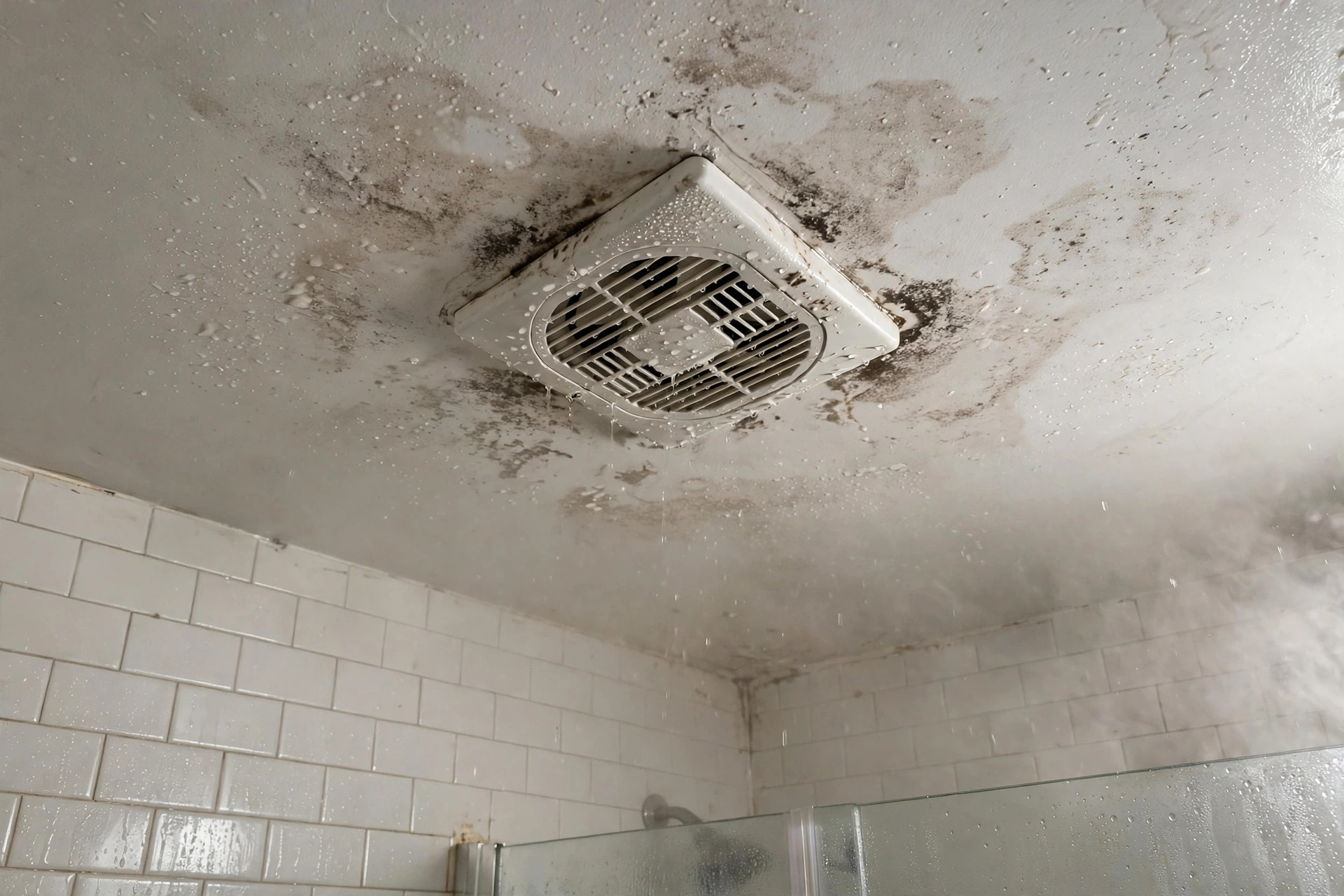
No room in the house produces moisture like a bathroom. A single hot shower releases a large amount of water vapor into a small, enclosed space, and that vapor condenses on the coldest surfaces it can find: mirrors, tile, ceilings, and the inside of wall cavities. Done occasionally, that is harmless. Done daily, without a way for the moisture to escape, it becomes a mold problem.
Bathroom mold is often treated as a cleaning problem, and cleaning does remove what you can see. But if the moisture source is a fan that vents into the attic, a slow leak behind the tub, or grout that has failed, the mold will return no matter how often you scrub. The fix starts with understanding where bathroom moisture actually goes.
Most shower moisture should leave through the exhaust fan, which must vent outside the house — through the roof or an exterior wall — not into the attic or a wall cavity. A fan that vents into the attic pumps warm, humid air straight onto cold framing and insulation, where it condenses and feeds mold out of sight. Many older homes have exactly this setup, installed before venting rules were enforced.
The rest of the moisture condenses on surfaces. Tile and glass dry quickly, but grout, drywall, and wood trim absorb water and dry slowly. Repeated wetting without full drying is what allows mold to establish itself in grout lines, around tub surrounds, and on ceilings — especially where the fan is weak, undersized, or simply never switched on.
Run the exhaust fan during every shower and for at least twenty minutes afterwards, so the room fully dries rather than just clearing the mirror. If the fan is noisy, weak, or more than a decade old, it may not be moving enough air — a simple tissue test at the grille shows whether it is pulling at all. Clean the grille regularly, since dust buildup quietly reduces airflow over time.
If your bathroom has a window, use it as a supplement, not a replacement, for the fan — opening a window in winter pulls in cold air that can condense elsewhere. The goal is steady, controlled removal of humid air to the outside, every single day, not an occasional blast of fresh air.
Some bathroom mold signals a leak rather than humidity. A stain on the ceiling below a bathroom, a soft spot in the floor around a toilet or tub, grout that stays dark even when dry, or a musty smell that survives a thorough cleaning all suggest water is getting behind surfaces. Toilet base leaks, tub drain leaks, and failed caulking around a surround are the usual culprits.
Do not seal over a suspected leak with fresh caulk or paint. Trapping water behind a new seal hides the problem while it spreads into the subfloor and wall framing. Mold remediation addresses growth that has taken hold, and structural drying and dehumidification addresses the wet material underneath — both steps matter, in that order.
The routine is simple: fan on for every shower and twenty minutes after, squeegee or towel-dry the shower walls, wipe up standing water on the floor, and check caulking and grout twice a year for cracks or gaps. Re-caulk a tub surround at the first sign of failure rather than waiting for water to find its way behind it.
For homeowners in Lebanon, TN and Carthage, TN, these habits matter most in winter, when cold surfaces and closed windows keep humidity high. Our frequently asked questions page covers mold timelines after water damage, and water damage restoration covers the wider work when a bathroom leak has spread beyond the room itself.
At least twenty minutes after the shower ends, so the room fully dries rather than just clearing the mirror.
Yes. It pumps humid air onto cold framing and insulation, where it condenses and feeds mold out of sight. The fan should vent outside.
Because the moisture source is still there — a leak, a failed seal, or inadequate ventilation. Cleaning removes growth but not the cause.
Re-caulking a sound surround is a reasonable homeowner job. If the wall behind it is soft, stained, or smells musty, get the area checked first — water may already be behind it.
If bathroom moisture or mold keeps returning in your home, our team can help with mold remediation and structural drying and dehumidification. Learn more about how we serve homeowners in Lebanon, TN, and reach out when you are ready for help assessing the damage.
Standing water and damp framing only get worse with time. Contact Lebanon Water Damage Pros to request service and get a clear plan for drying and cleanup.
Request Service Call (615) 759-0522