November 2, 2026 · Water Damage Tips
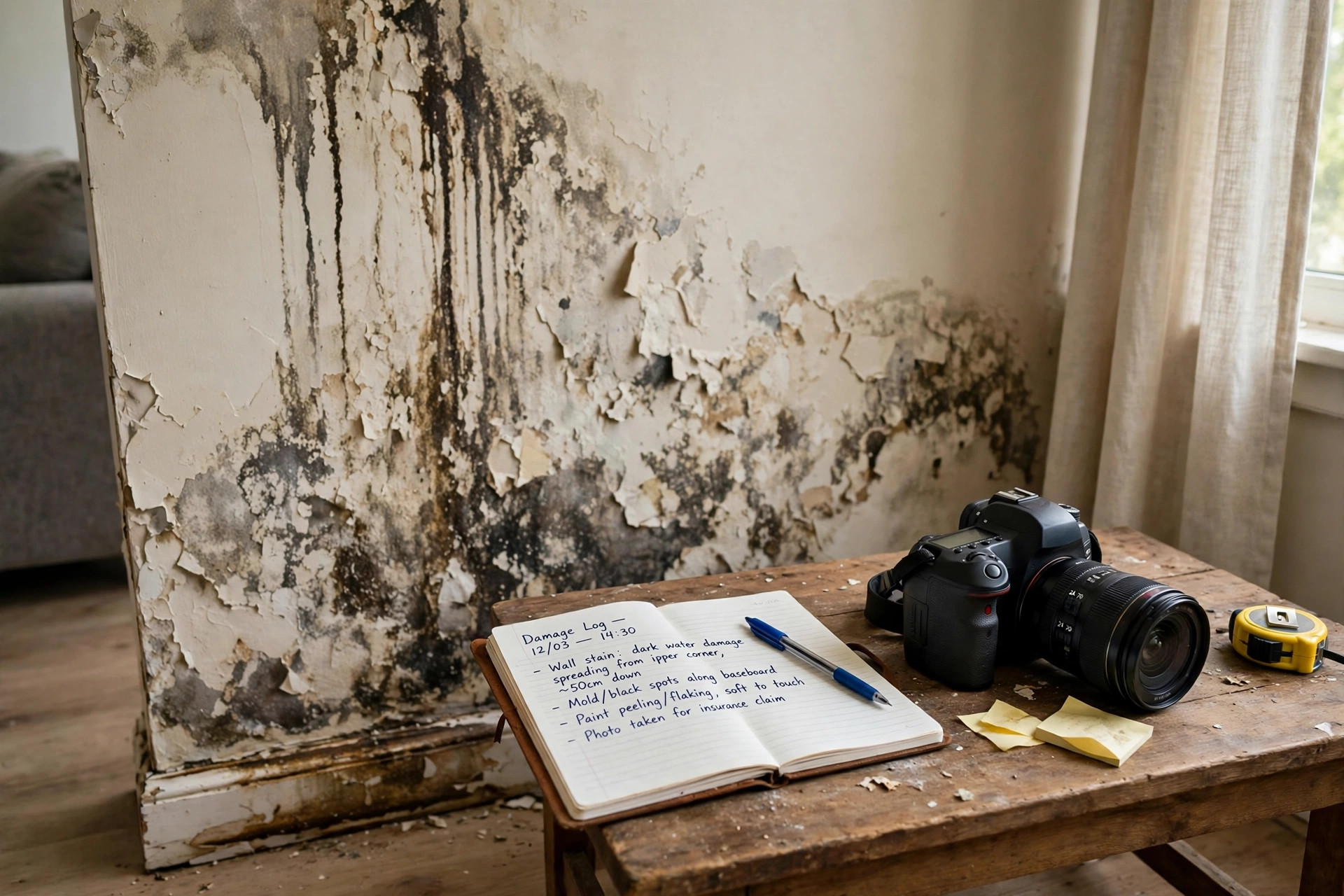
After water damage, most homeowners do the natural thing: they start cleaning up. Mopping, moving furniture, and throwing out soaked items feels like progress, and it is — but every item moved or discarded before it is recorded is evidence that no longer exists. If you later need to show what happened, when it happened, and what it affected, the photos and notes you take in the first hours matter more than anything you do later.
Documentation is not complicated, and it does not require special equipment. A phone camera, a notebook, and ten unhurried minutes before the cleanup begins will cover most of what anyone will ever ask about. This guide walks through what to capture, in what order, so the record is useful rather than a folder of blurry close-ups.
Start with wide shots of each affected room from the doorway, so the overall extent is clear, then move closer for detail shots of the source, the water line on walls, damaged flooring, and affected belongings. Include a recognizable reference in a few shots — a door frame, a piece of furniture — so the scale is obvious. Take photos of the source itself where it is safe to do so, whether that is a burst pipe, an appliance connection, or a roof leak point.
Do not forget the places water travels to rather than starts in: ceilings below a leak, walls on the other side of a wet room, and the inside of closets and cabinets. Water hides, and a claim or a drying plan built only on the visible damage will miss the rooms that need attention most. Water damage restoration always begins with mapping the full extent, and your photos help that process.
Note the date and time you discovered the damage, what you found, and what you believe the source to be — without guessing beyond what you can see. Record what you did next: when you shut off the water, when you called for help, and who you spoke to. If a storm caused the damage, note the weather and when it started.
Keep a simple running list as the days pass: when drying equipment arrived, what was removed, and any conversations about next steps, with dates. Memory blurs quickly after a stressful event, and a dated list is far more reliable than trying to reconstruct a timeline weeks later. Our frequently asked questions page covers the general drying process and the kind of documentation that proves useful.
It is tempting to throw out soaked rugs, swollen baseboards, and ruined boxes immediately, but hold off until each item is photographed and listed. A short inventory — room, item, approximate age, and condition — is enough; you do not need a formal valuation on the spot. Bag small damaged items rather than discarding them, and keep samples of damaged flooring or drywall where practical.
The same rule applies to receipts. Keep receipts for anything you buy in response to the damage, from fans and dehumidifiers to temporary lodging, and keep copies of any report or invoice from the drying work. Store the whole record — photos, notes, list, receipts — in one folder, with a backup copy somewhere other than the damaged home if possible.
Good records do not guarantee any particular outcome, and no guide can promise how a claim will be decided — that depends on the policy and the facts of the loss. What documentation does is remove doubt about what happened and what was affected, which makes every later conversation faster and clearer, whether that conversation is with an insurer, a contractor, or a future buyer.
If water has reached your home in Lebanon, TN, Hendersonville, TN, or anywhere in Wilson County, photograph first, then focus on drying. Water extraction and removal is the step that stops the clock on further damage, and the sooner it starts, the shorter the record of damage needs to be.
No. Photograph the damage as you found it first, then start cleanup. Moved or discarded items cannot be photographed afterwards.
Wide shots of each room, close-ups of the source and the water line, damaged belongings, and the rooms water travelled to, like ceilings below a leak.
A simple list — room, item, approximate age, condition — is enough to start. Photographs of each item matter more than detailed valuations on the day.
Keep photos, notes, lists, and receipts together until all drying, repair, and claim questions are fully resolved, and keep a backup copy outside the home.
If water damage has affected your home, our team can help with water extraction and removal and structural drying and dehumidification. Learn more about how we serve homeowners in Lebanon, TN, and reach out when you are ready for help assessing the damage.
Standing water and damp framing only get worse with time. Contact Lebanon Water Damage Pros to request service and get a clear plan for drying and cleanup.
Request Service Call (615) 759-0522