November 2, 2026 · Water Damage Tips
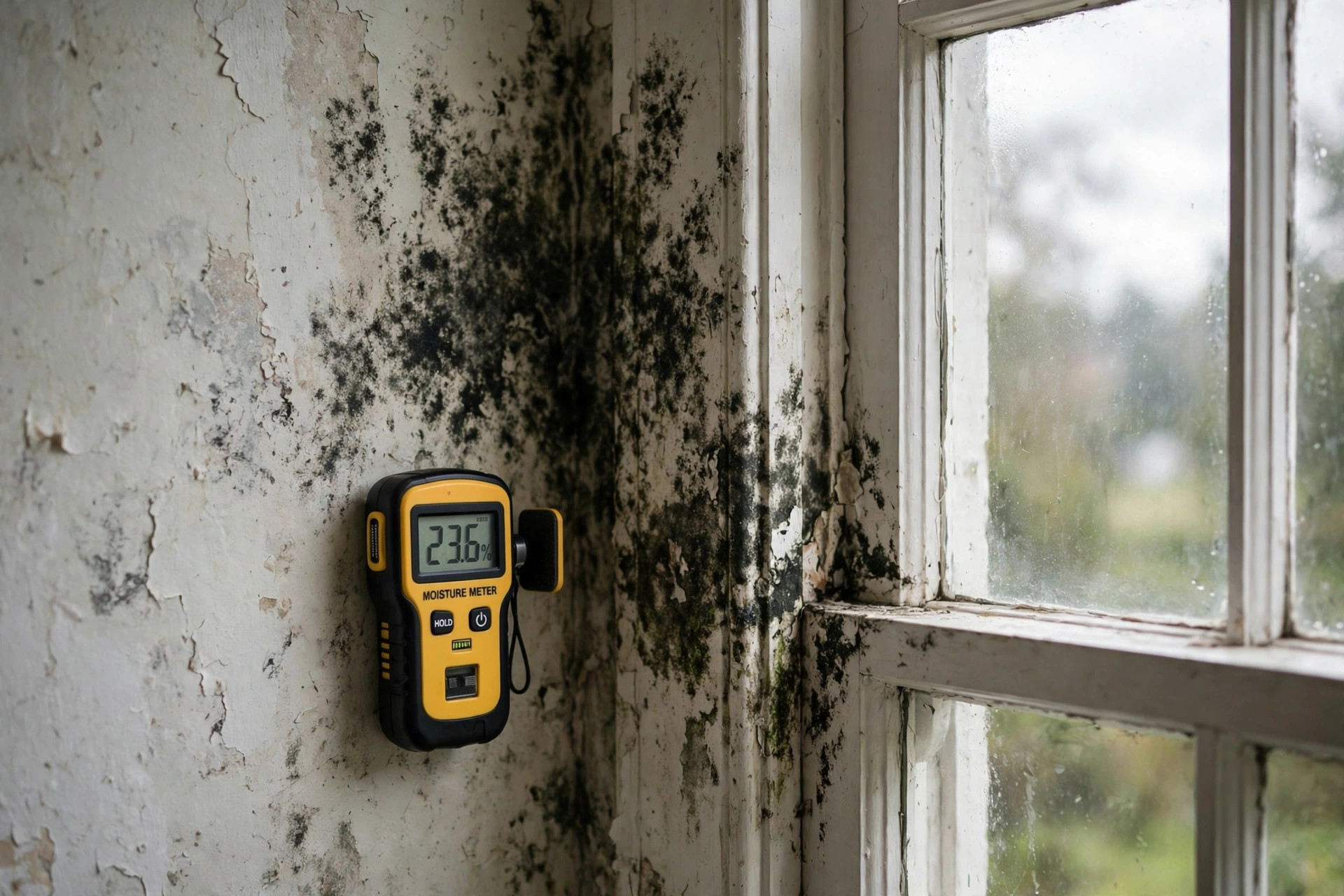
Homeowners who find mold usually ask one question first: should I get it tested? It sounds like the obvious step, but testing and inspection are two different services that answer two different questions, and ordering the wrong one first can leave you with a lab report that does not actually help you decide what to do.
An inspection looks for the mold, its extent, and — most importantly — the moisture source feeding it. Testing measures what is in the air or on a surface at a moment in time. Both have uses, but for most homeowners the inspection is the step that leads to a fix, while testing is useful in narrower situations. Knowing the difference saves time, money, and confusion.
A mold inspection is a visual and moisture-based assessment of the home. The inspector looks for visible growth, checks for the musty smell and staining that mark hidden growth, and uses moisture meters to find damp material inside walls, floors, and ceilings. The goal is a map: where the mold is, how far it has spread, and what water source is keeping it alive.
That last point is the one that matters most. Mold without moisture does not grow, so an inspection that finds growth but not its source has only done half the job. A good inspection report ends with a plan: fix the leak, dry the material, and remove what cannot be dried — in that order. Mold remediation follows that same sequence, because removing mold while the wall is still wet guarantees it will return.
Testing usually means air sampling, surface sampling, or both. An air sample captures spores floating in a room at the time of sampling and compares the indoor count and types to an outdoor control sample. A surface sample — a swab or tape lift — confirms what is growing on a specific spot. Both produce lab results, and both are snapshots, not permanent verdicts.
That snapshot quality is the key limitation. Spore counts change with weather, ventilation, activity in the room, and whether a door was open during sampling. A low count on a calm day does not prove a damp wall is clean, and a high count does not by itself identify the source. Testing answers the question 'what is here right now,' not 'where is it coming from or how do I stop it.'
Start with an inspection when you can see or smell mold, when water damage has occurred, or when someone in the home has symptoms that seem linked to a damp area. The inspection finds the problem and the plan. Testing is most useful when the source is unclear, when a doctor or another professional has asked for it, when you need a before-and-after comparison around remediation, or when a property transaction requires documentation.
Be wary of testing sold as a standalone solution. A lab report without an inspection can confirm mold is present while leaving you no closer to fixing it — and if the moisture source is never addressed, the growth will simply come back after any cleanup. If you already know you have visible mold after a leak, the inspection and the drying plan are the priority, and our frequently asked questions page explains the general timeline for mold growth after water damage.
Whatever route you take, the next step is the same: stop the water, dry the material, and remove growth that cannot be dried. Keep the affected area ventilated but do not disturb large areas of mold yourself, and do not paint over growth — paint seals moisture in and hides a problem that is still growing underneath.
For homeowners in Lebanon, TN and Smyrna, TN, the practical sequence rarely changes: find the moisture, dry it, then deal with the growth. Structural drying and dehumidification is often the step that makes remediation stick, because dry material does not regrow mold.
Usually not first. An inspection finds the extent and the moisture source, which is what you need to fix it. Testing is more useful when the source is unclear or documentation is required.
The spores present in that room at that moment, compared to an outdoor sample. Counts vary with weather and ventilation, so one sample is a snapshot, not a final verdict.
No. Paint traps moisture underneath and hides growth that continues spreading in the damp material.
Growth can begin within a day or two on damp material, which is why drying quickly after a leak matters so much.
If mold has appeared after water damage in your home, our team can help with mold remediation and structural drying and dehumidification. Learn more about how we serve homeowners in Lebanon, TN, and reach out when you are ready for help assessing the damage.
Standing water and damp framing only get worse with time. Contact Lebanon Water Damage Pros to request service and get a clear plan for drying and cleanup.
Request Service Call (615) 759-0522