November 2, 2026 · Water Damage Tips
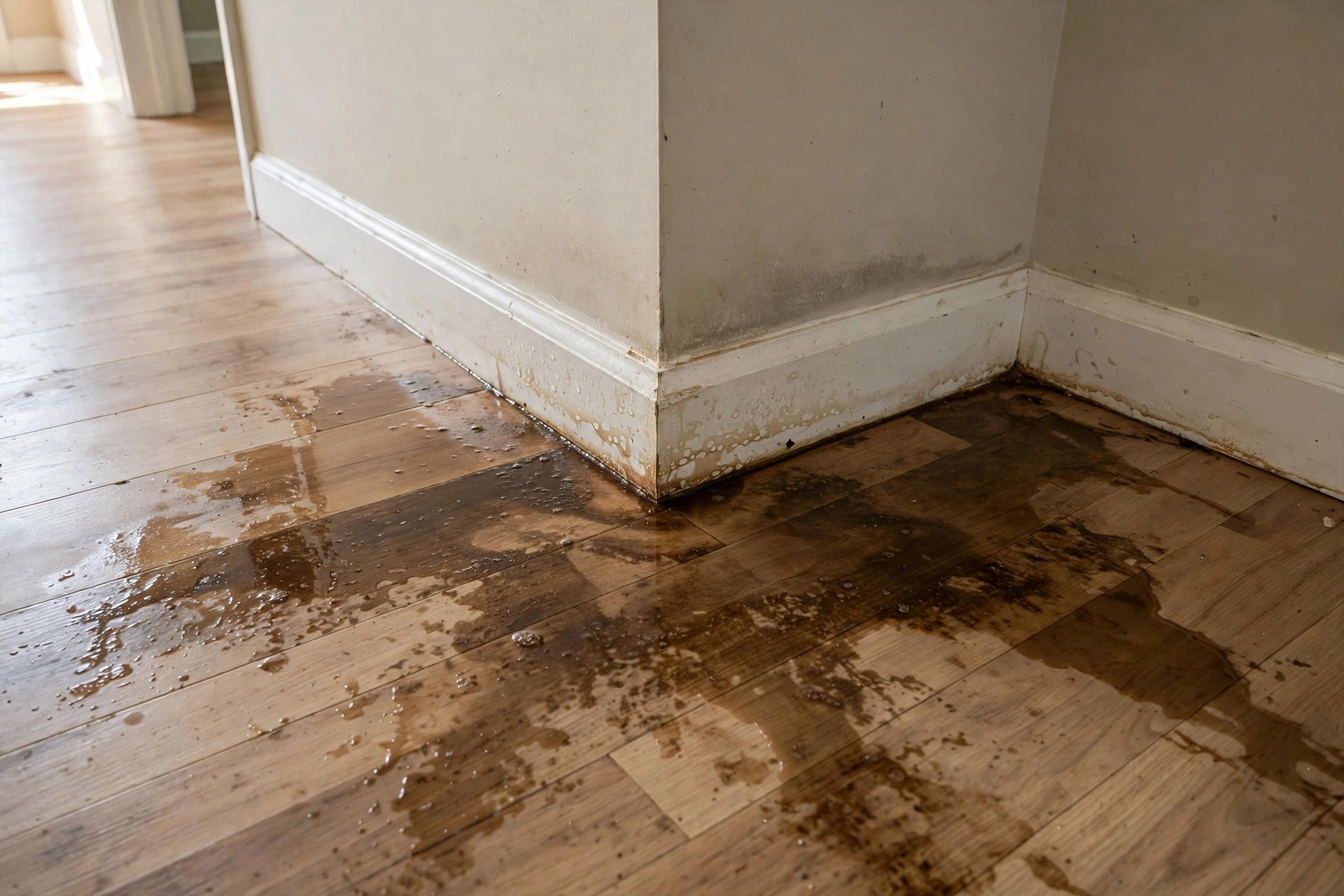
A slab leak is a water line leaking underneath the concrete slab your home sits on. You cannot see the pipe, and you cannot see the leak — you see what it does to everything around it. Water spreads through soil and concrete, wicks up through flooring, and quietly soaks the base of walls for weeks before anyone connects the symptoms.
That delay is what makes slab leaks expensive. The water itself is only part of the problem; the damp concrete, warped flooring, and mold-friendly conditions underneath are what turn a plumbing repair into a restoration job. The warning signs below are worth checking whenever something in your home feels slightly off and you cannot explain why.
A warm spot on the floor is the classic sign of a hot water line leaking under the slab — step across the floor in bare feet and notice any patch that feels warmer than the rest. Damp spots that return after cleaning, flooring that cups or lifts for no clear reason, and a musty smell near floor level all point the same way.
Your water meter is another early warning system. Turn off every tap and appliance, then check the meter: if it is still moving, water is going somewhere. A water bill that climbs without a change in use tells the same story. Either one is worth investigating before the next symptom appears.
Most slab leaks start with age and chemistry. Copper lines under concrete can corrode where soil conditions are aggressive, and older lines can weaken at joints. Shifting soil, especially during the wet-dry cycles Tennessee sees through the year, stresses rigid pipes. Poor installation — a line kinked during the original pour, or resting against an abrasive surface — can take years to fail and then fail all at once.
Homes built on slabs are common across Wilson County, and many have original plumbing that is now decades old. That does not mean every older home will develop a slab leak, but it does mean the warning signs deserve a faster response in an older home than in a newer one.
Do the meter test first, and note the results with dates — that record is useful for both the plumber and any later drying work. Look for the pattern of dampness: slab leaks tend to produce a damp patch that grows slowly and stays in one area, unlike a roof leak that appears after rain. Check baseboards and the bottoms of walls near the damp area for swelling or discoloration.
Do not ignore a slab leak while waiting to see if it gets worse; it will. Water under a slab erodes soil, can crack concrete over time, and keeps everything above it damp. Water extraction and removal deals with the water once it reaches living space, and structural drying and dehumidification addresses the moisture trapped in flooring and wall bases.
Keep the area dry on the surface with fans and airflow, and move rugs, furniture, and stored items away from the damp patch so they do not wick up moisture. Avoid covering a damp floor with plastic sheeting, which traps moisture underneath and encourages mold. If flooring is already buckling, do not try to force it flat — warped boards need to dry before anyone judges whether they can be saved.
Homeowners in Lebanon, TN and Gladeville, TN can find general guidance on drying timelines and documentation on our frequently asked questions page. A burst pipe inside a wall behaves differently from a slab leak, but both reward the same habit: act on the first sign, not the tenth.
A leak in a water line running underneath the concrete slab foundation of a home. The pipe is buried, so the leak is found through its symptoms, not by sight.
Turn off all taps and appliances, then watch your water meter. If it keeps moving with nothing running, water is leaking somewhere in the system.
A hot water line leaking under the slab warms the concrete and flooring above it. A warm patch that does not go away is a strong warning sign.
Yes. Constant dampness under flooring and at wall bases creates exactly the conditions mold needs, which is why drying the area matters as much as fixing the pipe.
If a slab leak has dampened your floors or walls, our team can help with water damage restoration and structural drying and dehumidification. Learn more about how we serve homeowners in Lebanon, TN, and reach out when you are ready for help assessing the damage.
Standing water and damp framing only get worse with time. Contact Lebanon Water Damage Pros to request service and get a clear plan for drying and cleanup.
Request Service Call (615) 759-0522