October 29, 2026 · Water Damage Tips
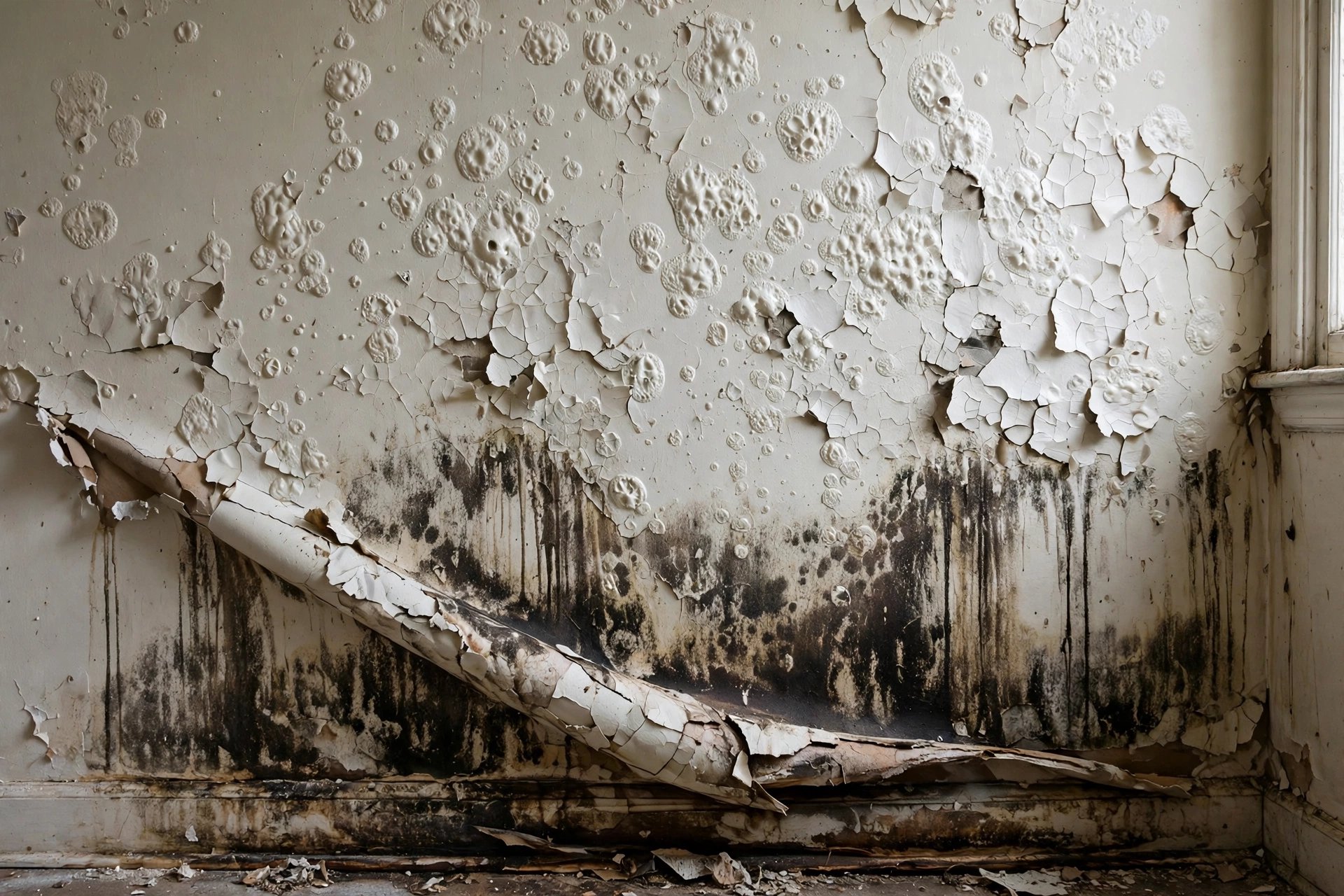
After a leak, drywall is often the first material homeowners want to judge — and the hardest to judge from the surface. A wall can look almost normal while the cavity behind it holds wet insulation. Or it can look terrible, with bubbling paint and a dark stain, while the framing behind it is barely damp. The decision to dry drywall in place or cut it out depends on what is happening inside the wall, not just what you can see.
Getting that decision right matters. Drywall that is left wet grows mold and weakens, and paint over a damp wall peels again within weeks. Drywall that is cut out unnecessarily adds repair work and dust for no benefit. Here is how professionals think about the choice, and what you can check yourself.
Drywall is porous. Its paper facing and gypsum core absorb water quickly and wick it upward from the floor line, sometimes well above the visible water level. That is why a leak that pooled at the base of a wall can leave a stain a foot or more up the wall, and why the bottom few inches are usually the wettest part. Paint and wallpaper slow surface evaporation, which means a painted wall can stay wet inside long after the room feels dry.
What is behind the drywall matters as much as the drywall itself. Fiberglass insulation in the cavity holds water and dries very slowly. Wood framing absorbs water and releases it slowly. If the cavity stays wet, mold can begin growing on the paper facing, the framing, or the back of the drywall within 24 to 48 hours — even when the room side looks dry.
Several signs point toward removal rather than drying in place. Drywall that sags, crumbles, or feels soft when pressed has lost its structure and will not recover. A wall that stays wet after several days of airflow, or that shows mold growth on its surface, usually needs the affected section removed so the cavity can be dried and cleaned. Drywall soaked by contaminated water — sewage or floodwater from outside — should be removed, not dried and kept.
The height of the damage also matters. Water that wicked high up the wall, or that reached electrical outlets and switches, needs a professional assessment before any repair. Do not cut into a wall near wiring or plumbing yourself, and do not ignore a wall that smells musty even after the room has dried — that smell often means the cavity is still wet.
Drywall can often be dried in place when the exposure was brief, the water was clean, and the wall begins drying within the first day or two. Small damp patches from a quickly stopped leak, with no sagging, no mold, and no insulation behind the affected section, may dry fully with good airflow and dehumidification. Baseboards are usually removed in these cases so air can reach the bottom of the wall, which is the wettest part.
The key is verification, not guesswork. Moisture readings taken through the wall or inside the cavity confirm whether the drywall, insulation, and framing are actually dry. Structural drying and dehumidification uses those readings to decide when drying is complete. A wall that feels dry on the surface but reads wet inside is not ready for paint or repair.
When a section of drywall comes out, the work is only half done. Wet insulation usually comes out with it, since soaked insulation rarely dries back to full effectiveness. The exposed framing is then dried with airflow and dehumidification, and any mold growth on framing is addressed before new drywall goes up. Putting new drywall over damp framing traps moisture and restarts the problem behind a fresh wall.
That sequence — remove, dry, verify, then rebuild — is what separates a lasting repair from a repeat stain. Homeowners in Gladeville, TN and across Wilson County can find general guidance on drying timelines and documentation on our frequently asked questions page. And if mold is already visible, mold remediation addresses the growth itself rather than just the wet material. Patience at the drying stage is what keeps the new wall from becoming the next stain.
It depends on the water type, how long it stayed wet, and whether it sagged or grew mold. Brief, clean-water exposure can often be dried in place; sewage exposure, sagging, or mold usually means removal.
Drywall wicks water upward from the floor line, sometimes a foot or more above the visible water level. The bottom of the wall is usually the wettest part.
Only after the wall and cavity are verified dry and the source is fixed. Painting over a damp wall traps moisture and the stain and peeling usually return.
Yes, it often means the wall cavity is still wet or mold is growing inside it. The cavity needs to be checked, not just the room-side surface.
If a leak has soaked your walls, our team can help with water damage restoration and mold remediation where mold has taken hold. Learn more about how we serve homeowners in Lebanon, TN, and reach out when you are ready for help assessing the damage.
Standing water and damp framing only get worse with time. Contact Lebanon Water Damage Pros to request service and get a clear plan for drying and cleanup.
Request Service Call (615) 759-0522