October 22, 2026 · Prevention
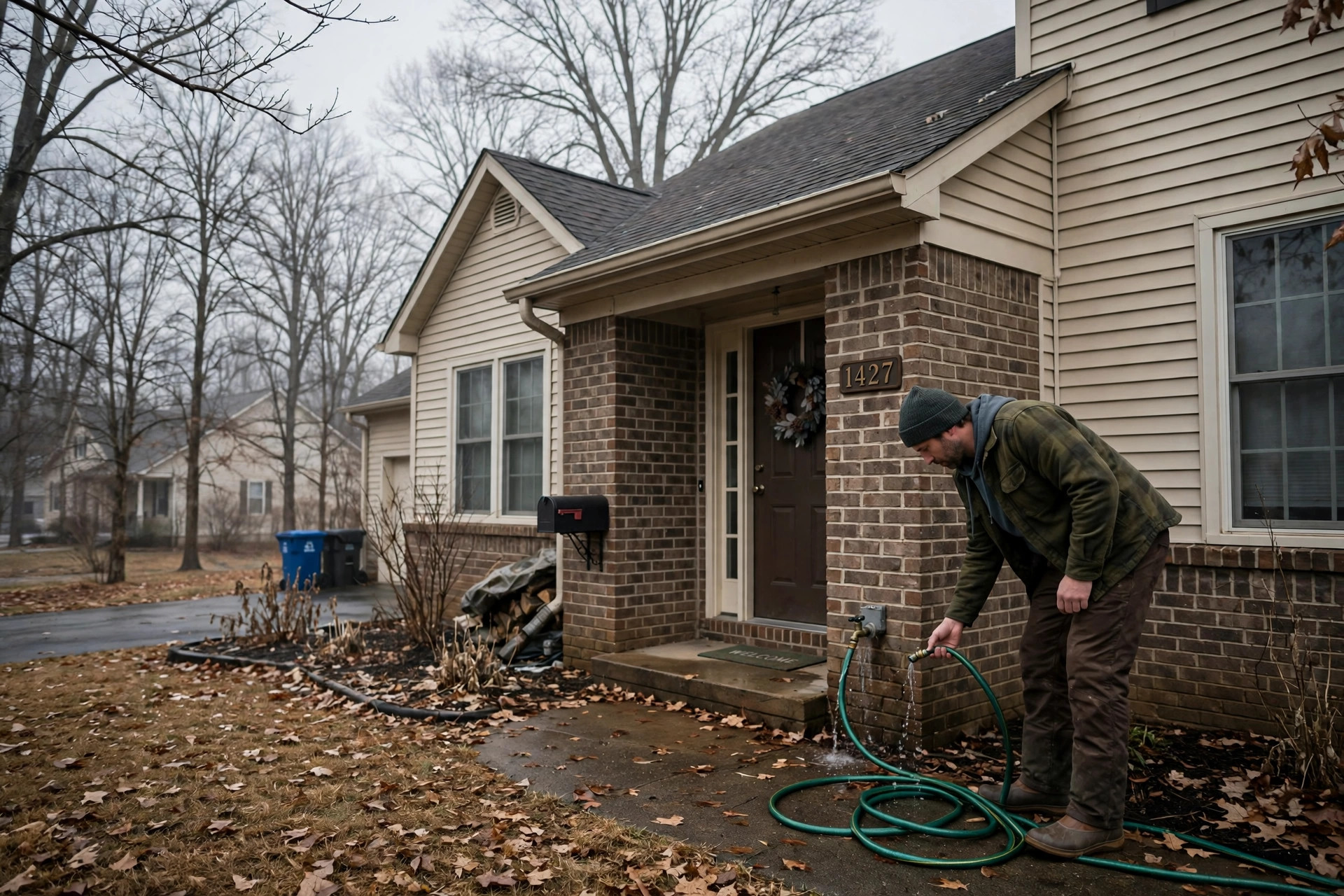
Most water damage we see in winter never involves a dramatic event. It is a hose left on a spigot, a crawl space vent left open, or a cold-snap night when the heat was set back too far. A few hours of prevention in the fall is the cheapest insurance your Lebanon home can get against winter water damage.
In Middle Tennessee, the danger comes from speed: a mild 50-degree day can drop below freezing overnight, and homes built for mild winters have pipes in places that do not stay warm. Work through this room-by-room checklist in Lebanon, TN — ZIP codes 37087, 37088, and 37090 — before the first hard freeze.
Outdoor plumbing is the most freeze-prone part of your home. Disconnect every garden hose, drain it, and store it for the season. A connected hose traps water in the line behind the spigot, where it can freeze and burst the pipe inside the wall — a leak you may not notice until spring. Cover outdoor spigots with insulated covers, and if you have an interior shut-off valve for the exterior lines, turn it off and drain the line.
Also shut down irrigation and sprinkler systems, blowing out the lines if you have the equipment. Walk the yard and check that downspouts carry water at least a few feet away from the foundation; winter rain on saturated soil finds its way into crawl spaces and basements fast.
Pipes in crawl spaces, attics, garages, and exterior walls are where most freezes start. Wrap exposed pipes in foam insulation sleeves, and pay special attention to elbows and joints where insulation is often missing. Close crawl space vents and check for drafts — a single open vent can drop the temperature around nearby pipes far below the rest of the crawl space.
On the coldest nights, open cabinet doors under sinks on exterior walls so warm room air reaches the pipes, and let a faucet fed by an exposed line drip slowly. Moving water is much harder to freeze.
Winter is when your water heater works hardest, and it deserves attention before the season starts. Look for rust stains, dampness, or corrosion around the base and connections — early signs of a leaking water heater are easiest to catch before winter stress turns a drip into a flood. Drain a few gallons from the tank valve to flush sediment, which improves efficiency and extends the tank's life. If your unit is aging or showing warning signs, the cold months are when failures spike.
On the heating side, schedule a furnace or heat pump service before the first cold snap, replace filters, and check that heat reaches every room — cold pockets in bathrooms and laundry rooms are where pipes freeze first. If you travel during the holidays, keep the thermostat at 55 degrees or above and have someone check the house.
Clogged gutters are a winter water problem, not just a fall chore. Trapped water freezes into ice dams at the roof edge, and the backed-up meltwater gets forced under shingles and into walls and ceilings. Clean gutters and downspouts thoroughly, and while you are up there, check for loose flashing and damaged shingles — winter freeze-and-thaw cycles widen every small opening.
Inside the attic, look for water stains on the underside of the roof deck and check that soffit vents are not blocked by insulation. Moisture up there in winter means something is letting water in or trapping it.
Even the best winterizing cannot prevent every problem, so finish with the one preparation that costs nothing. Make sure everyone in the household knows where the main water shut-off is and that the valve actually turns. A valve that has seized from years of disuse is no valve at all — exercise it once a year.
Keep a short list where you can find it fast: the shut-off location, a wet vacuum or mops, and towels. The first hour after a burst pipe decides how bad the damage gets — see our guide on what to do when a pipe bursts to lock in the steps now, while nothing is leaking.
Aim to finish outdoor work by early November, before the first hard freeze. Middle Tennessee cold snaps can arrive fast, and pipes in crawl spaces and exterior walls are the first to suffer when a mild week drops below freezing overnight.
Keep it at 55 degrees or above whenever the house is empty in winter. Lower settings save little and leave pipes in exterior walls and crawl spaces exposed to freezing temperatures, especially overnight.
Yes. Clogged gutters trap water that can freeze into ice dams at the roof edge, forcing meltwater under shingles and into walls and ceilings. Clean gutters and downspouts that carry water well away from the foundation prevent both roof and foundation water problems.
Your outdoor spigots and the pipes feeding them. Disconnect hoses, drain the lines, and cover or insulate the spigots. A burst outdoor line can leak inside the wall for hours before anyone notices.
If winter brings water into your home, our team can help with burst pipe water damage, fast water extraction and removal, and complete water damage restoration. Learn more about how we serve homeowners in Lebanon, TN, and reach out when you are ready for help assessing the damage.
Act quickly to limit the damage. Contact Lebanon Water Damage Pros to request service and get a clear plan for extraction and drying.
Request Service Call (615) 759-0522