October 29, 2026 · Water Damage Tips
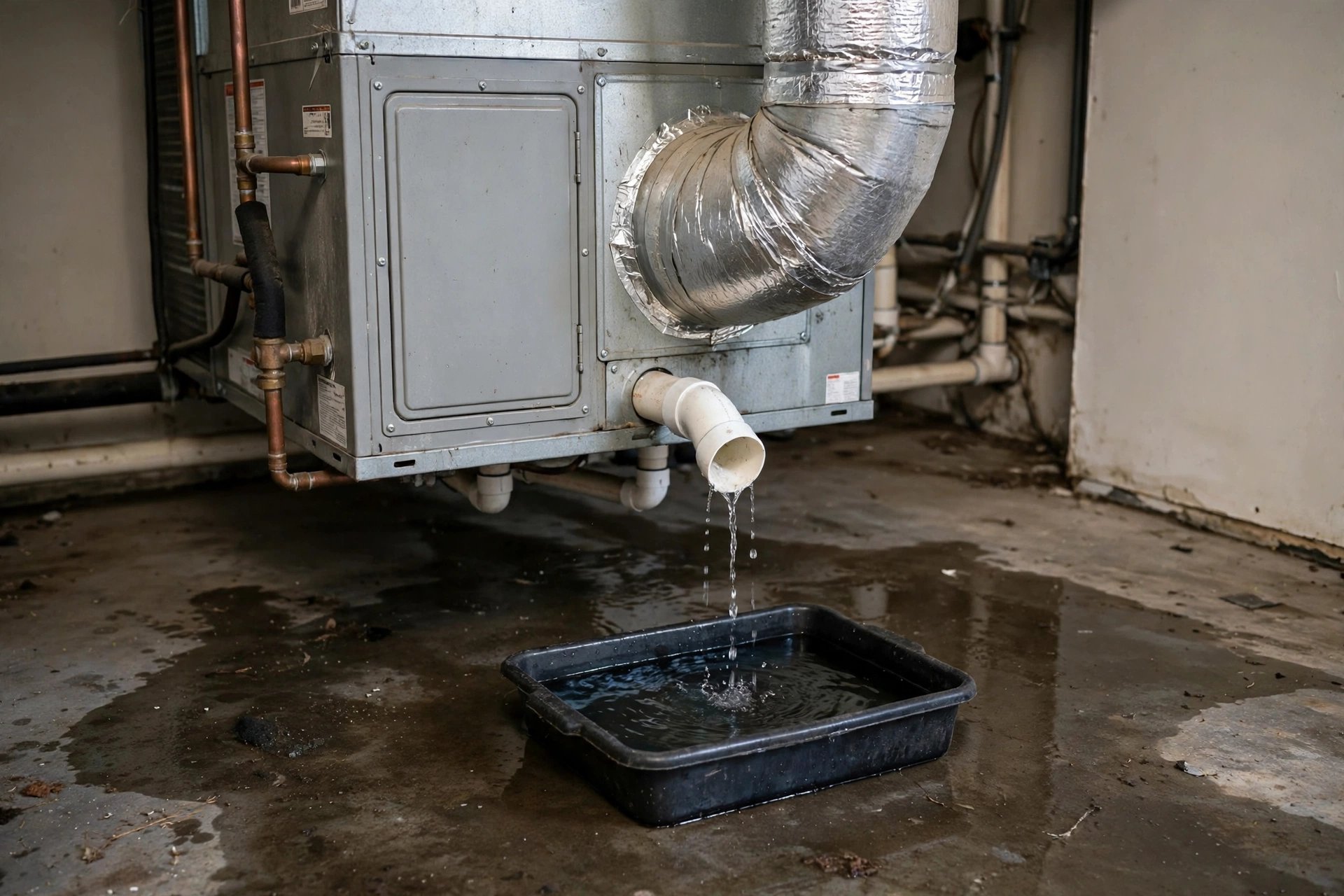
On a humid Middle Tennessee summer day, an air conditioner pulls a surprising amount of moisture out of the air. That water has to go somewhere, and it goes through a small condensate drain line to the outside or to a floor drain. When that line clogs with algae, dust, or sludge, the water backs up — into the drain pan, over its edge, and onto the floor, the ceiling below, or inside a wall cavity.
Condensate drain clogs are one of the most common summer water damage calls, and one of the most preventable. The leak is usually slow, which means it can soak a ceiling or a closet floor for days before anyone notices a stain. Knowing the warning signs and the simple maintenance that prevents clogs can save a ceiling, a floor, and a mold problem.
Every air handler has a drain pan beneath its cooling coil. Condensation drips into the pan and flows out through the drain line. Over a summer, algae and biofilm grow inside that dark, damp line, especially in homes where the line runs a long way or has low spots where water sits. Once the line narrows enough, water backs up into the pan. Most pans have a secondary overflow or a float switch that shuts the system off, but older installations may have neither — and even a float switch only helps if it is working.
The damage pattern depends on where the unit sits. An attic unit leaks onto the ceiling below, often showing up as a stain far from the unit itself. A closet unit soaks the closet floor and the wall behind it. A garage unit may go unnoticed for weeks because nobody checks the floor around it. In all three cases, the water is clean at first, but standing water on drywall and framing becomes a mold risk within 24 to 48 hours.
The most obvious sign is the system shutting off on a hot day for no apparent reason — that can be a float switch doing its job because the pan is full. Other signs include water around the base of the air handler, a musty smell near a return vent or closet, a stain on the ceiling below an attic unit, and a drain line outside the house that never drips even when the system has been running for hours.
Check the drain line outlet outside during a long cooling run. On a humid day it should drip steadily. If it stays dry while the system runs, the line may be blocked or disconnected. Also look at the pan itself if it is accessible: standing water, rust, or algae in the pan means the line is not draining as it should.
Turn the system off to stop more condensation from forming, and mop up any standing water. If the unit is in the attic, place a bucket under the drip and protect the ceiling below. A wet or dry vacuum can clear a short clog from the outside end of the line in some cases, but do not force anything sharp into the line — a cracked drain line leaks in a new place and is harder to fix.
Dry the affected area thoroughly and check the materials around it. A ceiling stain below an attic unit deserves the same attention as a roof leak, because the cavity above may hold wet insulation. Water extraction and removal plus structural drying and dehumidification handle cases where water has reached drywall, insulation, or framing. Our guide on signs of hidden water damage lists the clues that water went further than the visible puddle.
The simplest prevention is a monthly check during cooling season: confirm the outside outlet drips, look at the pan, and keep the area around the unit clear. Many HVAC technicians flush the line and treat it against algae growth during a routine service visit, which is worth asking about. A float switch or an overflow alarm in the pan is inexpensive protection for attic and closet units, and it is worth discussing with your HVAC technician if your system does not have one.
Also watch the filters. A dirty filter reduces airflow, makes the coil run colder, and can increase condensation and freeze-ups that later melt into the pan all at once. For homeowners in Gallatin, TN and across Wilson County, humid summers make this a seasonal habit worth building: check the drain when cooling season starts, again mid-summer, and any time the system shuts off unexpectedly. See also our frequently asked questions page for general guidance on drying timelines and documentation.
A float switch in a full drain pan can shut the system off to prevent overflow. A clogged condensate line is a common cause, so check the pan and drain line before assuming a bigger problem.
Fresh condensate is relatively clean, but water standing in a pan, on drywall, or in insulation quickly picks up contaminants and becomes a mold risk within 24 to 48 hours.
A gentle vacuum at the outside end sometimes clears a short clog. Avoid sharp tools that can crack the line, and call an HVAC technician if the clog persists or the pan keeps filling.
At the start of cooling season, mid-summer, and any time the system shuts off unexpectedly or a musty smell appears near the unit.
If a clogged condensate drain has soaked a ceiling, closet, or floor, our team can help with water damage restoration and mold remediation where mold has already taken hold. Learn more about how we serve homeowners in Lebanon, TN, and reach out when you are ready for help assessing the damage.
Standing water and damp framing only get worse with time. Contact Lebanon Water Damage Pros to request service and get a clear plan for drying and cleanup.
Request Service Call (615) 759-0522