October 29, 2026 · Water Damage Tips
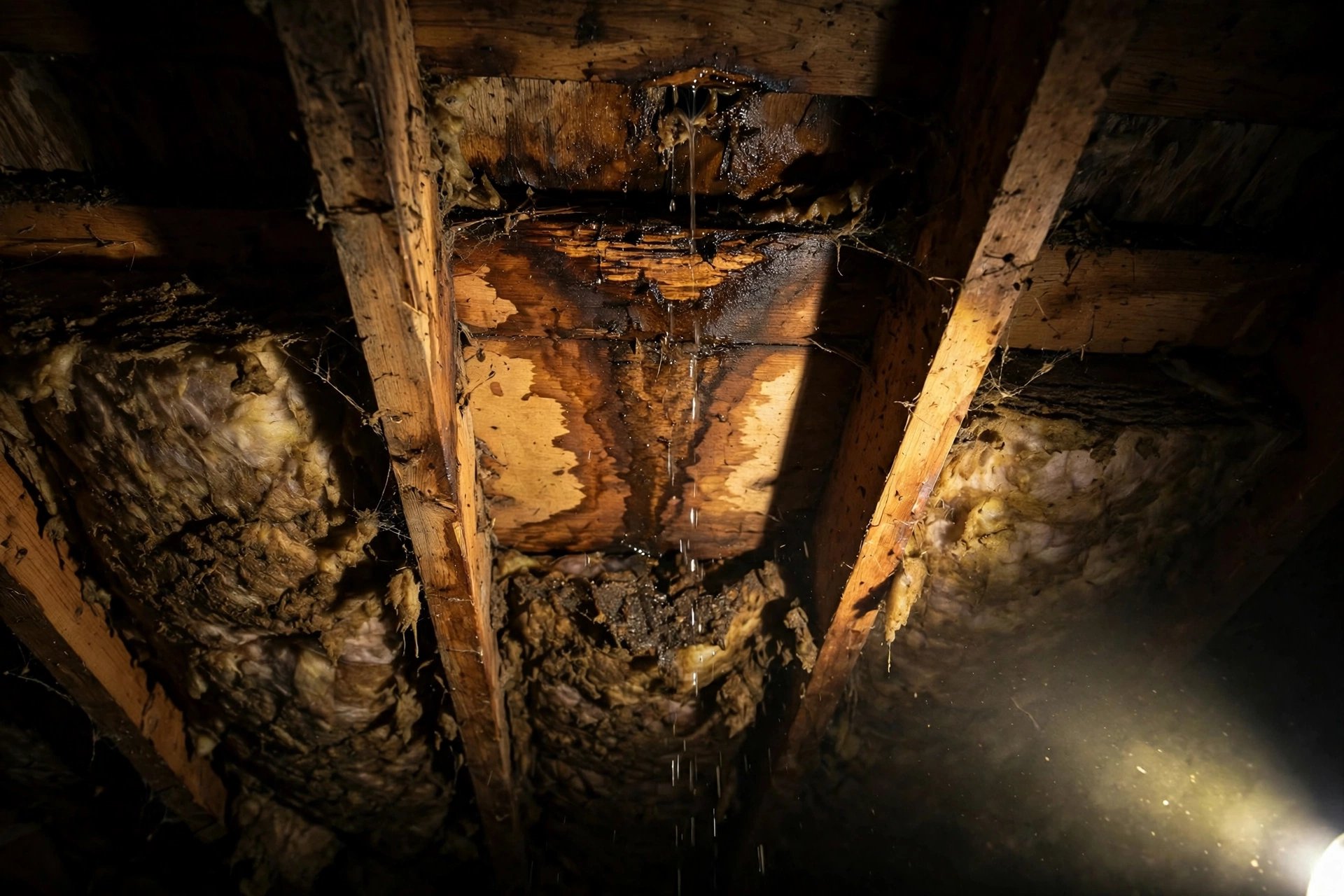
The attic is the part of the house most homeowners visit least, which makes it the perfect place for a slow leak to hide. A small roof failure, a bathroom fan venting into the attic, or condensation on ductwork can keep attic insulation and framing damp for months. The first sign inside the living space is often a ceiling stain — by which time the attic problem is already well established.
A quick attic check a couple of times a year catches most of these problems while they are still small. You do not need to be a roofer or an inspector to spot the warning signs. You need a flashlight, a safe way to look without stepping through the ceiling, and a sense of what normal looks like versus what needs attention.
Roof leaks are the most common source: damaged shingles, failed flashing around chimneys and vents, and ice dams in winter all let water into the attic. But not every attic moisture problem starts on the roof. Bathroom exhaust fans that vent into the attic instead of outside pump warm, moist air straight into the space, where it condenses on cold framing in winter. Unsealed gaps around light fixtures and attic hatches let humid house air rise into the attic for the same effect.
Plumbing vents and HVAC equipment in the attic add more possibilities. A condensation line from an attic air handler can drip if it clogs, and a vent pipe flashing that has cracked lets rain in around the pipe. The result in every case is the same: damp insulation, stained decking, and framing that stays wet longer than it should.
Before going into the attic, check the living space below it. Ceiling stains, especially ones that grow after rain, are the classic sign. Peeling paint near the top of a wall, a musty smell in an upstairs room, and visible mold on a ceiling corner can all trace back to attic moisture. In winter, frost or dampness on the underside of the roof deck, seen from the attic, points to condensation rather than a roof leak.
Also check around bathroom fans and recessed lights on the top floor. Moisture problems often show up first at these penetrations, because they are the places where warm, humid air escapes into the attic. If an upstairs room smells musty but shows no stain, the attic above it is the first place to look.
Enter the attic only if you can do so safely, with a flashlight and a stable place to stand — joists or a walkway, never the drywall between joists. Look for stained or darkened roof decking, wet or compressed insulation, rust on nails, and daylight where it should not be. Check around chimneys, vents, and skylights first, since flashing failures cluster there. Take photos of anything suspicious.
Do not disturb large amounts of insulation or material that might be mold, and do not enter an attic with standing water near wiring. If the attic is hard to access, very hot, or shows extensive staining, a professional inspection is safer than a DIY look. Note the date and the weather: a stain that is wet after rain but dry otherwise points to a roof leak, while dampness that appears in cold weather without rain points to condensation.
Once the source is fixed — a roof repair, a fan vented properly outside, or a sealed attic hatch — the attic still needs to dry. Wet insulation usually needs to be removed, since soaked insulation rarely dries back to full effectiveness and can feed mold growth. Framing is dried with airflow, and moisture readings confirm when it is safe to reinsulate.
Prevention is mostly about keeping water and humid air out: intact roofing and flashing, bathroom fans vented outside, sealed penetrations, and enough ventilation that the attic temperature stays close to outside. For homeowners in Lebanon, TN and across Wilson County, a spring and fall attic check catches roof wear before it becomes a ceiling stain. Storm damage restoration covers cleanup when a storm is the cause, and our frequently asked questions page gives general guidance on drying timelines and documentation.
A quick look in spring and fall, plus a check after any major storm, is a sensible routine. Look from a safe footing with a flashlight, without stepping on drywall.
Not always. Bathroom fans venting into the attic, condensation on ductwork, and plumbing vents can all cause attic moisture that shows up as a ceiling stain.
Usually, yes. Soaked insulation rarely dries back to full effectiveness and can feed mold growth. Removing it lets the framing dry properly.
A visual check from a safe footing is fine for most homeowners. Leave the roof inspection, extensive mold, and any work near wiring to professionals.
If attic moisture has stained your ceilings or soaked insulation, our team can help with water damage restoration and structural drying and dehumidification. Learn more about how we serve homeowners in Lebanon, TN, and reach out when you are ready for help assessing the damage.
Standing water and damp framing only get worse with time. Contact Lebanon Water Damage Pros to request service and get a clear plan for drying and cleanup.
Request Service Call (615) 759-0522