October 29, 2026 · Water Damage Tips
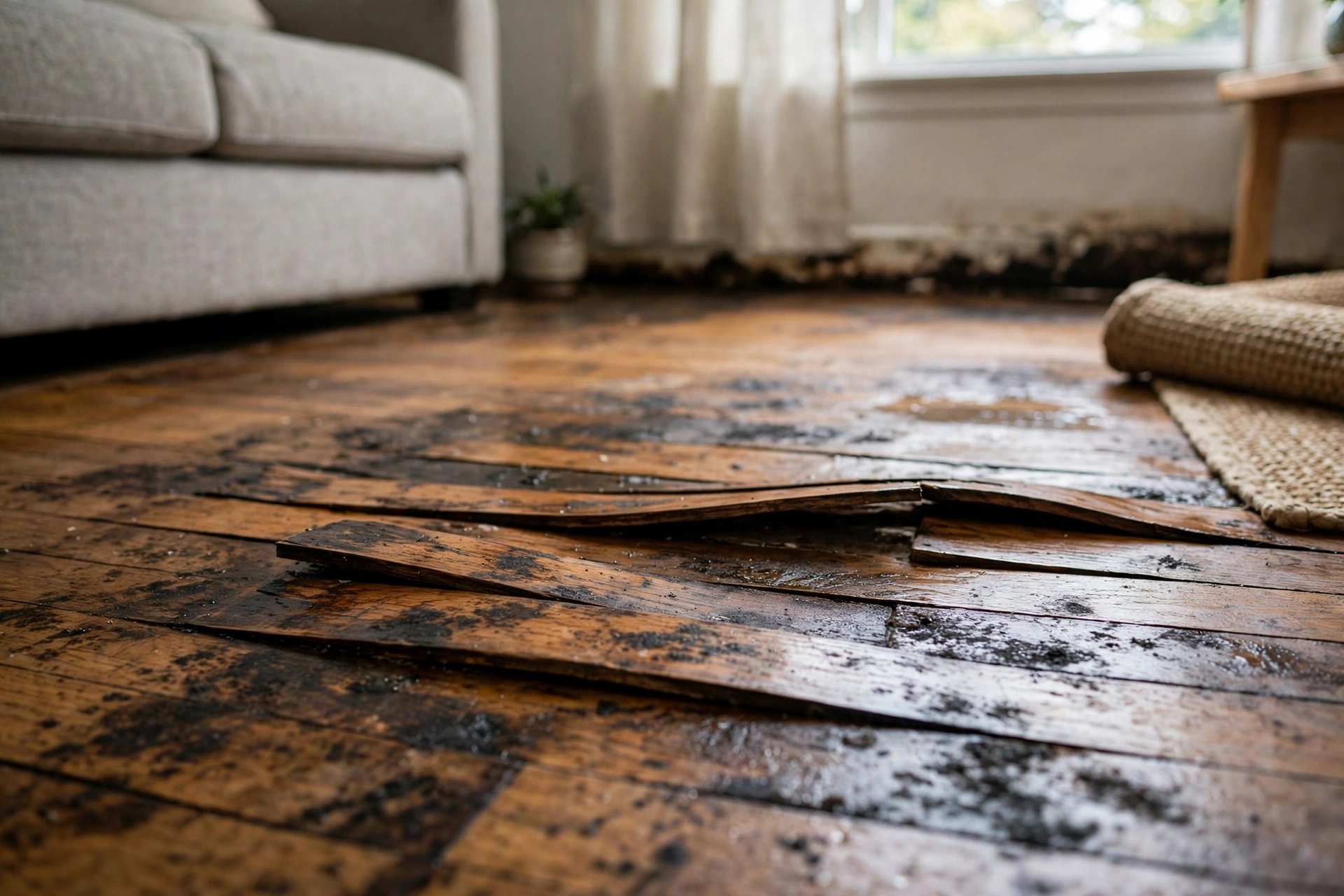
Few sights worry a homeowner more than a hardwood floor changing shape after a leak. Boards curl up at the edges, gaps open between planks, or a whole section lifts off the subfloor. The reaction is understandable — hardwood feels permanent, and a warped floor looks ruined. But hardwood is also more forgiving than it looks, and the outcome depends less on how dramatic the floor looks on day one than on how quickly and thoroughly it is dried.
Wood absorbs water unevenly, which is why it moves. The top of a board dries faster than the bottom, the bottom swells more than the top, and the board cups. Understanding that process helps you avoid the two most common mistakes: tearing out a floor that could have been saved, and refinishing a floor that is still wet underneath.
Hardwood is hygroscopic, which means it constantly exchanges moisture with its surroundings. When one side of a board gets wet, that side swells while the other side stays the same size, so the board bends. Cupping — edges higher than the center — is the most common result and often the least serious. Crowning is the reverse, and it usually appears when a floor was sanded or refinished while it was still damp underneath. Buckling, where boards lift off the subfloor entirely, means the floor has expanded beyond the room for it and is the most serious pattern.
The type of floor matters too. Solid hardwood can often be dried and refinished. Engineered hardwood, which has a thin real-wood layer over plywood, tolerates less water and less sanding. Laminate is not hardwood at all — once its core swells, it rarely returns to shape. Knowing which floor you have helps set realistic expectations before any work begins.
Stop the water source first, then remove standing water with towels or a mop — do not use a steam mop or add more water. Move rugs and furniture off the wet area so air can reach the floor, and run fans and a dehumidifier in the room. Resist the urge to sand or refinish anything right away. A cupped floor that is still drying will often flatten considerably on its own as moisture levels equalize, and sanding too early locks the cupped shape in permanently.
Patience is the hardest part. Drying a hardwood floor properly can take days to weeks depending on how much water got in, how thick the boards are, and whether water reached the subfloor. Moisture readings, not appearance, tell you when the floor is ready for the next step. Structural drying and dehumidification uses controlled airflow and dehumidification to dry both the boards and the subfloor, rather than just the surface.
Cupping that appears within a day or two of a leak and improves as the floor dries is often recoverable, sometimes with light sanding and refinishing once moisture readings are back to normal. Gaps that open as the floor dries are also common: boards shrink as they lose moisture, and small gaps may close again as indoor humidity returns to normal with the seasons.
Buckling is different. When boards have lifted off the subfloor, they have usually expanded past the expansion gap at the walls, and the floor may need partial removal to relieve the pressure and dry the subfloor beneath. Dark staining, a musty smell, or soft spots in the subfloor suggest water sat long enough for mold growth or subfloor damage, which changes the repair plan. Our guide on signs of hidden water damage covers the clues that water went beyond the surface.
A floor is most likely salvageable when the water source was stopped quickly, drying began within the first day or two, and the subfloor is not soft or moldy. A floor is less likely to be saved when water sat for days, when boards have buckled and separated from the subfloor, or when the finish has already been sanded while wet. An honest assessment before refinishing saves the disappointment of paying for a refinish that then fails.
For homeowners in Mt. Juliet, TN and across Wilson County, the sequence is the same as for any water damage: stop the source, dry thoroughly, verify with moisture readings, and only then repair or refinish. Water damage restoration covers the full process, and our frequently asked questions page gives general guidance on drying timelines. The floor that looks worst on day one is not always the floor that ends up replaced.
Often, yes, if drying starts quickly and the subfloor is not damaged. Cupping improves as moisture levels equalize, which is why sanding should wait until readings are normal.
It varies with the amount of water, board thickness, and whether the subfloor is wet. Surface drying takes days; full drying of boards and subfloor can take weeks, and moisture readings confirm when it is done.
No. Sanding a floor that is still wet locks in the cupped shape and can cause crowning later. Wait until the floor is fully dry and flat before refinishing.
Sometimes, if the water exposure was brief and the core did not swell. Engineered floors tolerate less water and less sanding than solid hardwood, so an assessment matters before refinishing.
If a leak has warped or soaked your hardwood floors, our team can help with structural drying and dehumidification and water damage restoration. Learn more about how we serve homeowners in Lebanon, TN, and reach out when you are ready for help assessing the damage.
Standing water and damp framing only get worse with time. Contact Lebanon Water Damage Pros to request service and get a clear plan for drying and cleanup.
Request Service Call (615) 759-0522