November 2, 2026 · Water Damage Tips
The worst water damage stories often start with an empty house. A supply line splits, a water heater fitting gives way, or a pipe freezes on a cold night — and nobody is there to hear it, shut it off, or call for help. By the time the homeowner returns, a leak that would have been a mop and a plumber visit has become soaked floors, swollen drywall, and mold starting in the walls.
Holiday travel makes this risk worse because trips are longer and winter weather is less forgiving. The checks below take less than an hour, cost nothing, and turn a potential disaster into a non-event. Do them the day before you leave, not in a rush on departure morning.
The single most effective step is knowing where your main water shut-off valve is and confirming it works before you need it in a hurry. For a trip of more than a few days, many homeowners shut off the main supply entirely — with the water heater set appropriately and any specific guidance for your system followed — so that no pressurized line in the house can fail while you are away.
If shutting off the whole house is not practical, at least shut off the individual supplies to the washing machine, dishwasher, refrigerator line, and toilets. Washing machine hoses in particular fail without warning and release a large volume quickly, so their valves deserve special attention. Appliance leak cleanup work after the holidays frequently starts with a hose that gave way on day two of a trip.
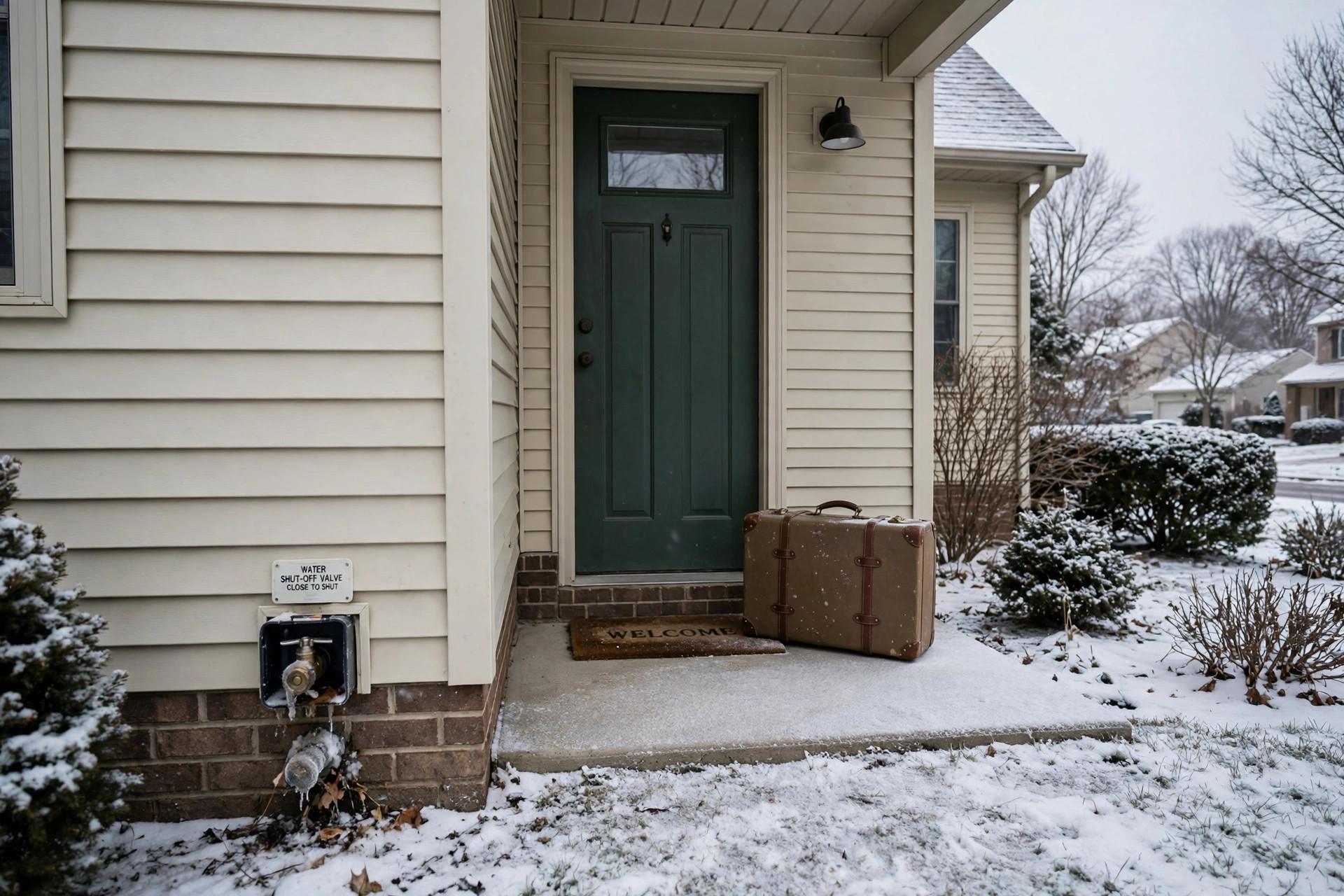
Never turn the heat fully off in winter, even for a short trip. A house kept at a modest, steady temperature protects pipes in exterior walls, crawl spaces, and attics. Open cabinet doors under sinks on exterior walls so warm air reaches those pipes, and if a hard freeze is forecast during your trip, ask a neighbor or family member to check the house and run the taps briefly.
Before leaving, disconnect garden hoses and shut off outdoor faucets, since a frozen outdoor line can split and then leak inside once it thaws. Insulate any exposed pipes in unheated spaces if you have not already. Our guide to burst pipe water damage explains what happens when a frozen pipe lets go — and why a check-in from a neighbor is worth more than any gadget.
Run the dishwasher and washing machine empty or not at all in the days before departure, and leave both with their water supplies off. Check that the refrigerator line is not kinked and that the sump pump, if you have one, cycles correctly — a storm during your trip is exactly when it will be needed. Clear gutters and downspouts so a winter storm does not send roof water against the foundation while you are gone.
Inside, clear valuables and electronics off basement floors and away from exterior walls, and leave a trusted contact with a key and your phone number. A neighbor who can walk through the house once during a long trip is the best early-warning system available. Our frequently asked questions page covers what to do first if you do come home to water damage.
When you return, walk the house before settling in: check the basement and crawl space, look under sinks, glance at ceilings below bathrooms and the kitchen, and listen for running water when nothing is on. If you smell mustiness or see a damp patch, do not just dry the surface — find the source first, then deal with the water.
If the house has flooded while you were away, shut off the water if it is still running, stay out of water near electrical equipment, and get help promptly — days of standing water mean the drying job is already substantial. Homeowners returning to Lebanon, TN or Mt. Juliet, TN after holiday travel face the same winter risks, and water extraction and removal is the step that stops further damage.
For trips of more than a few days, shutting off the main supply is the safest option, so no pressurized line can fail while you are away.
Keep the heat on at a modest, steady setting through winter travel — never fully off — so pipes in exterior walls and unheated spaces do not freeze.
A trusted neighbor or family member with a key, ideally walking through once during a long trip and able to reach you by phone.
Basement and crawl space, under sinks, ceilings below wet rooms, and listen for running water with everything off.
If you come home to water damage after a trip, our team can help with water extraction and removal and structural drying and dehumidification. Learn more about how we serve homeowners in Lebanon, TN, and reach out when you are ready for help assessing the damage.
Standing water and damp framing only get worse with time. Contact Lebanon Water Damage Pros to request service and get a clear plan for drying and cleanup.
Request Service Call (615) 759-0522