November 2, 2026 · Water Damage Tips
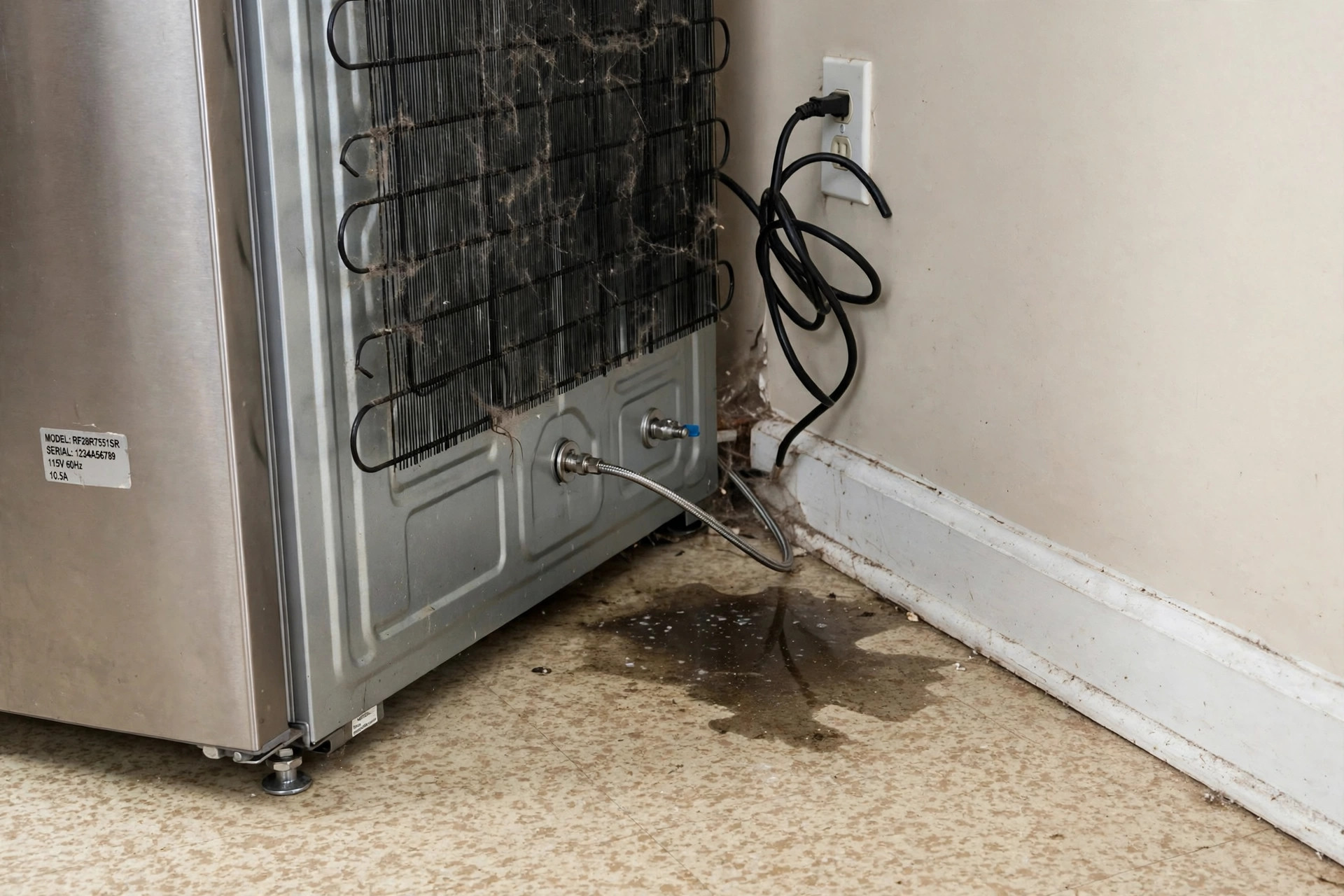
Few leaks are as quiet as a refrigerator water line leak. The line that feeds your ice maker and water dispenser carries pressurized water continuously, and it lives in the one spot in the kitchen nobody looks at: behind the fridge. A pinhole, a loose fitting, or a cracked plastic line can drip for weeks, soaking the subfloor while the kitchen above looks perfectly normal.
By the time most homeowners notice, the signs have moved beyond the fridge itself — a warped floorboard, a musty smell, or a stain on the ceiling of the room below. A quick check a few times a year takes minutes and can catch the problem while it is still a small repair rather than a flooring and drying job.
Most refrigerator leaks start at one of three points: the saddle or shut-off valve where the line taps into the household water supply, the connection at the back of the fridge, or the line itself. Plastic lines become brittle with age, and copper lines can kink or corrode where they bend. Moving the fridge for cleaning can also stress a fitting just enough to start a slow drip.
Ice maker lines are the usual suspect because they stay pressurized even when you are not using the dispenser. A drip of only a few drops a minute adds up to gallons over a week, and because the water spreads under the fridge and into the subfloor, it evaporates slowly and keeps the material damp. Appliance leak cleanup often begins with a line like this one.
Pull the fridge out carefully every few months — far enough to see the floor and the wall behind it — and look for dampness, discoloration, or a musty smell. Check the floor in front of the fridge too: cupping or gaps in hardwood, soft spots in vinyl, and a dark line along the baseboard can all mean water has been spreading from behind the appliance.
Also check the room below, if there is one. A stain on a ceiling or a damp patch on a wall directly under the kitchen often traces back to a fridge, dishwasher, or sink line above. If your ice tastes stale or the dispenser pressure drops, that can also point to a line problem, though it is less reliable than a visual check.
Shut off the water to the fridge first. Most lines have a dedicated shut-off valve nearby, often under the sink or in the basement below the kitchen. If you cannot find it, shut off the main water supply. Then pull the fridge out, mop up standing water, and set up airflow with a fan — but do not assume the floor is dry just because the surface looks dry.
Water under a fridge soaks into the subfloor and the wall cavity behind it, where it can feed mold growth if it stays damp. Note when you found the leak and take photos before you move anything, since that record helps later. If the floor feels soft, the baseboard is swollen, or the dampness extends beyond the fridge footprint, professional drying is the safer route.
Replace plastic water lines with a braided stainless steel line when the fridge is installed or the line shows any wear, and avoid kinking the line when you push the fridge back into place. Leave a little slack so the line is not stretched tight, and check the connections whenever the fridge is moved for cleaning.
Make the behind-the-fridge check part of your seasonal routine, alongside checking the water damage restoration basics for the rest of the kitchen. Our frequently asked questions page covers drying timelines and documentation, and homeowners in Mt. Juliet, TN and across Wilson County face the same appliance risks as those in Lebanon itself.
Every few months is enough. Pull it out carefully, check the floor and wall for dampness, and look at the line and fittings while you are there.
If it is old, brittle, or kinked, yes. A braided stainless steel line is more durable and far less likely to split.
Yes. Water follows gravity through subfloors and wall cavities, so a kitchen leak often shows up first as a stain on the ceiling below.
That means the subfloor has soaked up water over time. Do not just dry the surface — get the area assessed so trapped moisture does not lead to mold.
If a refrigerator line has leaked into your kitchen floor, our team can help with appliance leak cleanup and structural drying and dehumidification. Learn more about how we serve homeowners in Lebanon, TN, and reach out when you are ready for help assessing the damage.
Standing water and damp framing only get worse with time. Contact Lebanon Water Damage Pros to request service and get a clear plan for drying and cleanup.
Request Service Call (615) 759-0522