October 29, 2026 · Water Damage Tips
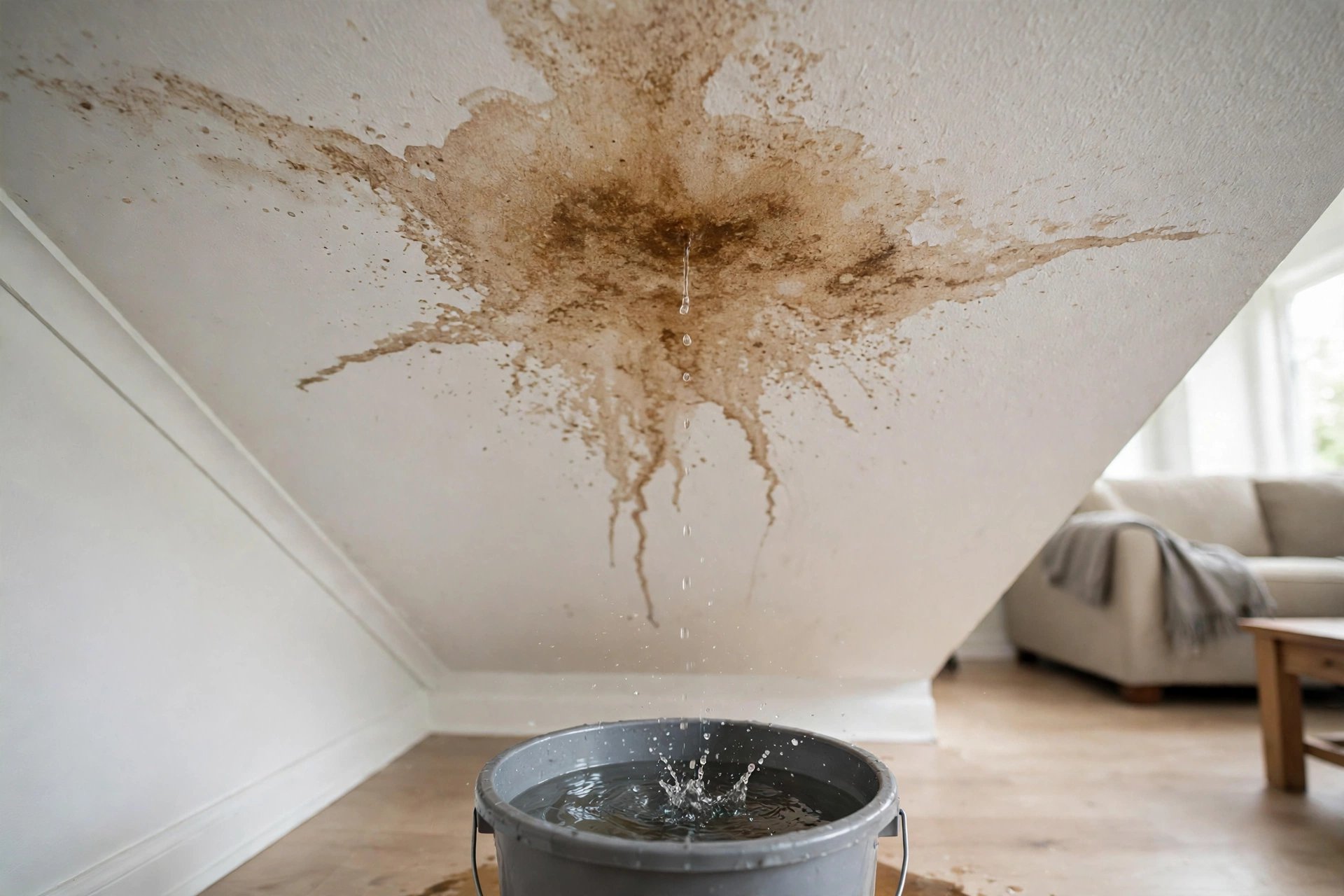
A water stain on the ceiling usually appears long after the leak that caused it. Rain finds a way through damaged shingles, worn flashing, or a cracked vent boot, then travels along rafters and decking before dripping onto drywall. By the time a brown ring shows up in the living room, water may have been moving through the roof system for weeks, soaking insulation and framing along the way.
That delay is why a ceiling stain deserves more than a coat of paint. Paint hides the mark but leaves the leak, the wet insulation, and the damp framing untouched. The right response is to find the entry point, stop the water, and dry the ceiling cavity properly — in that order. Here is how to read the stain and what to do about it.
A single round brown stain often points to a slow, steady drip from one spot above, such as a nail hole or a small flashing failure. A stain that grows after every heavy rain suggests an active leak that opens up under sustained rainfall. A long streak or a stain near a wall may mean water is running along a rafter or a valley before it drops, so the entry point can be several feet from the mark on the ceiling.
Stains near chimneys, skylights, and vent pipes are classic flashing problems, because those are the places where the roof surface is interrupted. Stains in the middle of a ceiling with no roof feature above them can come from a plumbing line in the attic or from condensation on ductwork. Location narrows the search, but it rarely pinpoints the leak on its own.
Place a bucket under any active drip and move furniture, electronics, and rugs out of the way. If the ceiling is bulging or sagging, water is pooling above the drywall — do not poke it with a sharp object, and keep clear of the area in case the section gives way. A small controlled drain hole made by a professional can relieve the weight, but a sagging ceiling is a sign to get help rather than to improvise.
Photograph the stain and any drips, and note which storms made it worse. That record helps a roofer trace the leak and helps document the damage. Meanwhile, check the attic if you can do so safely, with a flashlight and without stepping on drywall — only on joists or a walkway. Look for wet insulation, stained decking, and daylight where it should not be.
A stain that returns after painting means the leak is still active. Roof leaks often seal themselves temporarily when shingles swell or debris blocks a gap, then reopen in the next hard rain. Flashing that has lifted, shingles that have lost their seal, and sealant that has cracked with age all behave this way. Fixing the interior stain without fixing the roof entry point just resets the cycle.
There is also a second problem hiding behind the stain: wet insulation and damp framing inside the ceiling cavity. Insulation that stays wet loses its effectiveness and feeds mold growth, and framing that stays damp weakens over time. That is why structural drying and dehumidification matters even for a leak that looks small from below — the damage you cannot see is usually larger than the stain you can.
Once the roof repair is done, the ceiling cavity still needs to dry. Small damp patches may dry with airflow and time, but soaked insulation usually needs to be removed so the cavity can dry fully. Drywall that has sagged, crumbled, or stayed wet for days generally needs to come out rather than be painted over. A moisture reading confirms when the framing is dry enough for repair work to begin.
Homeowners often ask whether a roof leak counts as storm damage. The answer depends on the cause and the policy, and documentation makes the conversation easier either way. Our guide to storm damage restoration covers the cleanup side, and our frequently asked questions page explains how insurance-ready documentation works in general terms. For homeowners in Lebanon, TN, the practical rule stays the same: fix the roof first, dry the cavity second, and repair the ceiling last.
Paint will hide the mark for a while, but if the leak is still active the stain will return, and wet insulation and framing behind the ceiling will keep deteriorating.
Treat it as active until proven otherwise. A small stain can hide a larger wet area above the ceiling, and mold can begin on damp materials within 24 to 48 hours.
Not always. Water often travels along rafters or decking before dripping, so the entry point can be several feet away from the stain.
Roof work is risky, especially on wet or steep surfaces. A visual check from the ground and from the attic is safer; leave the roof inspection to a qualified roofer.
If a roof leak has stained or soaked your ceiling, our team can help with water damage restoration and structural drying and dehumidification. Learn more about how we serve homeowners in Lebanon, TN, and reach out when you are ready for help assessing the damage.
Standing water and damp framing only get worse with time. Contact Lebanon Water Damage Pros to request service and get a clear plan for drying and cleanup.
Request Service Call (615) 759-0522