October 26, 2026 · Water Damage Tips
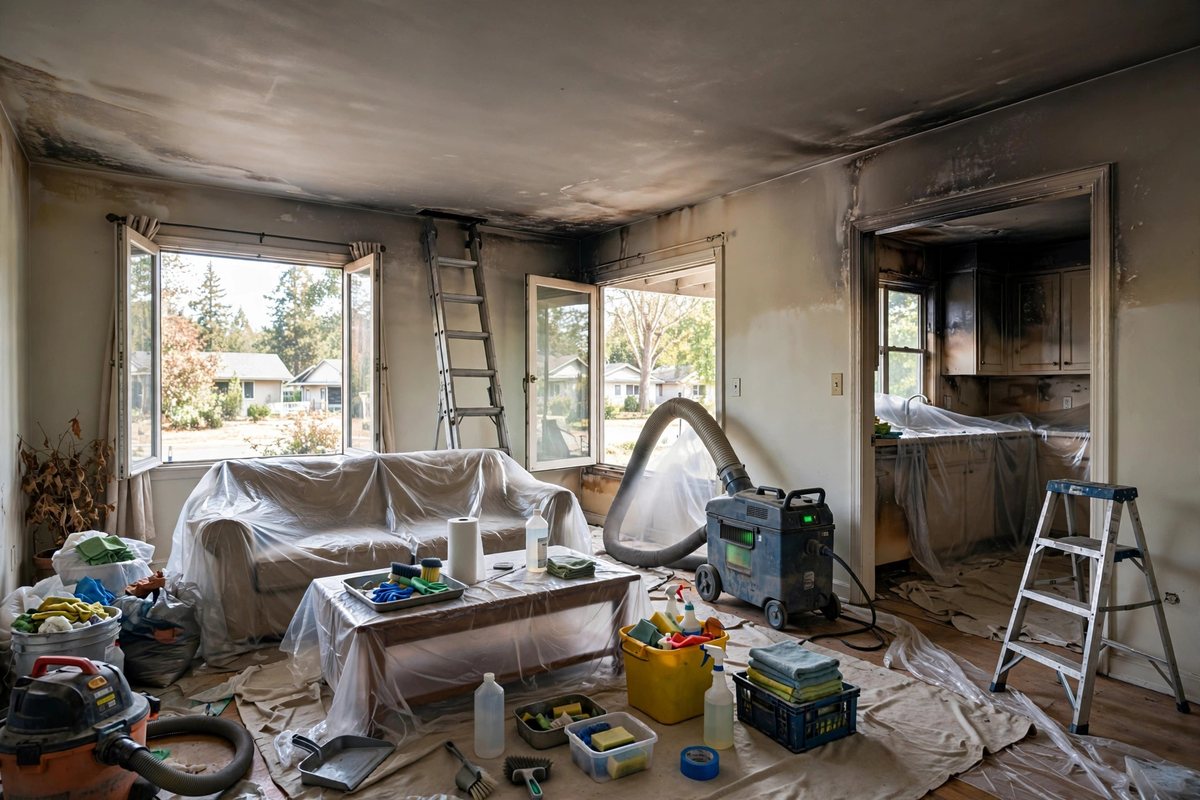
When the fire is out, the damage is only half over. Firefighting water soaks floors and walls, smoke travels into rooms the flames never touched, and soot settles into every porous surface it can reach. Homeowners are often surprised by how far smoke damage spreads — a kitchen fire can leave odor in bedrooms at the far end of the house, and soot can stain walls in rooms that look untouched at first glance.
This guide explains what smoke and soot actually do to a home, what is safe to handle yourself, what should be left alone, and how the cleanup process works. It covers Lebanon homes of every size, from a contained stove fire to a fire that affected several rooms.
Smoke is not just a smell — it is a mixture of tiny particles, gases, and residues that settle on and into surfaces. Soot, the black residue left behind, is acidic. On metal it causes tarnishing and corrosion, on painted walls it stains and discolors, and on porous materials like drywall, wood, carpet, and upholstery it sinks in and holds odor. The longer soot sits, the harder it is to remove and the more damage it does, which is why prompt attention matters even in rooms that look only lightly affected.
Different fires leave different residues. A fast, hot fire tends to leave dry, powdery soot that wipes off more easily but spreads widely. A slow, smoldering fire leaves wet, smeary soot that stains deeply and smells strongly. Protein fires — from cooking — leave an almost invisible residue with a powerful odor that clings to paint and varnish. Knowing which type you are dealing with shapes the cleaning approach, which is one reason professional assessment helps even when the visible damage looks minor.
Do not forget the water. Firefighting efforts soak floors, walls, and contents, and that water damage needs drying just as urgently as the soot needs cleaning. Wet, soot-stained materials left alone grow mold quickly, turning a fire cleanup into a combined fire, water, and mold job.
Before any cleanup, wait for the fire department's all-clear and do not re-enter until the structure is declared safe. If the power is off or wiring is damaged, do not switch breakers back on yourself. Once the home is safe to enter, you can ventilate by opening windows if the weather allows, change HVAC filters so the system does not spread soot further, and photograph every room and damaged item before anything is moved or discarded.
Light soot on hard, non-porous surfaces can often be wiped with a dry sponge or cloth, working from the top of walls downward. But avoid a few common mistakes: do not use water on soot-covered walls before dry-cleaning them, since water smears soot and drives it deeper into paint and drywall. Do not run the HVAC system with a dirty filter, do not try to clean electronics, appliances, or smoke-damaged food, and do not use household cleaners on smoke-stained fabrics until you know whether the fabric can be salvaged — wrong cleaning can set stains permanently.
Food, medicines, and cosmetics exposed to smoke or heat should be discarded, not tasted or tested. If you have breathing difficulties, asthma, or other respiratory conditions, stay out of heavily affected rooms entirely — soot particles irritate lungs, and protective gear matters even for a short visit.
Professional cleanup usually follows a clear order. First, the extent of smoke, soot, and water damage is mapped — including rooms that look clean, since smoke travels through ductwork and gaps you cannot see. Contents are sorted into what can be cleaned, what needs specialized treatment, and what cannot be salvaged. Then soot is removed with dry methods before any wet cleaning, soot-stained surfaces are treated, and the water from firefighting is extracted and dried.
Odor removal comes last, not first, because cleaning a surface that still holds soot just re-releases the smell. Techniques vary with the material: hard surfaces may be washed and sealed, soft contents may need specialized cleaning, and persistent odor in framing or drywall sometimes requires sealing after cleaning. Air scrubbers with fine filtration help clear airborne particles during the work. The full sequence matters — skipping the drying step or sealing over dirty surfaces locks the problem in rather than solving it. Our earlier guide on the first 72 hours after a house fire covers the safety and documentation steps that come before cleanup begins.
While cleanup is in progress, keep unaffected rooms closed off so soot does not keep migrating, and avoid tracking soot through clean areas on shoes or clothing. Keep a running list of damaged items with photos — this helps with insurance documentation and with deciding what is worth professional cleaning. Do not throw away damaged items until they have been documented, even if they seem clearly ruined.
Talk with your insurer early about what is covered and what documentation they need; requirements vary, and early calls prevent surprises later. And remember the timeline: soot damage worsens with time, so even if a full cleanup has to wait, dry-wiping accessible hard surfaces and keeping the space ventilated are worthwhile early steps.
Soot sinks into porous materials like drywall, wood, and fabric, and odor returns if those materials are not fully cleaned or sealed. Cleaning surfaces without addressing what is inside them, or sealing over dirty surfaces, leaves the smell trapped underneath.
Not as a first step. Water smears soot and drives it deeper into paint and drywall. Dry-clean soot first with a dry sponge or cloth, and let wet cleaning follow only after the loose soot is gone.
Lightly affected rooms may be usable, but heavily soot-damaged areas irritate lungs and should be avoided, especially by anyone with asthma or breathing conditions. Wait for the fire department's all-clear before re-entering at all.
Very often, yes. Firefighting water soaks floors, walls, and contents, and that water needs extraction and drying alongside the soot cleanup — otherwise mold follows the fire damage.
If smoke and soot have damaged your home, our team can help with fire and smoke damage restoration, water extraction and removal from firefighting efforts, and complete water damage restoration. Learn more about how we serve homeowners in Lebanon, TN, and reach out when you are ready for help assessing the damage. You can also find answers to common questions on our frequently asked questions page.
Soot gets harder to remove the longer it sits. Contact Lebanon Water Damage Pros to request service and get a clear plan for cleanup and drying.
Request Service Call (615) 759-0522