November 2, 2026 · Water Damage Tips
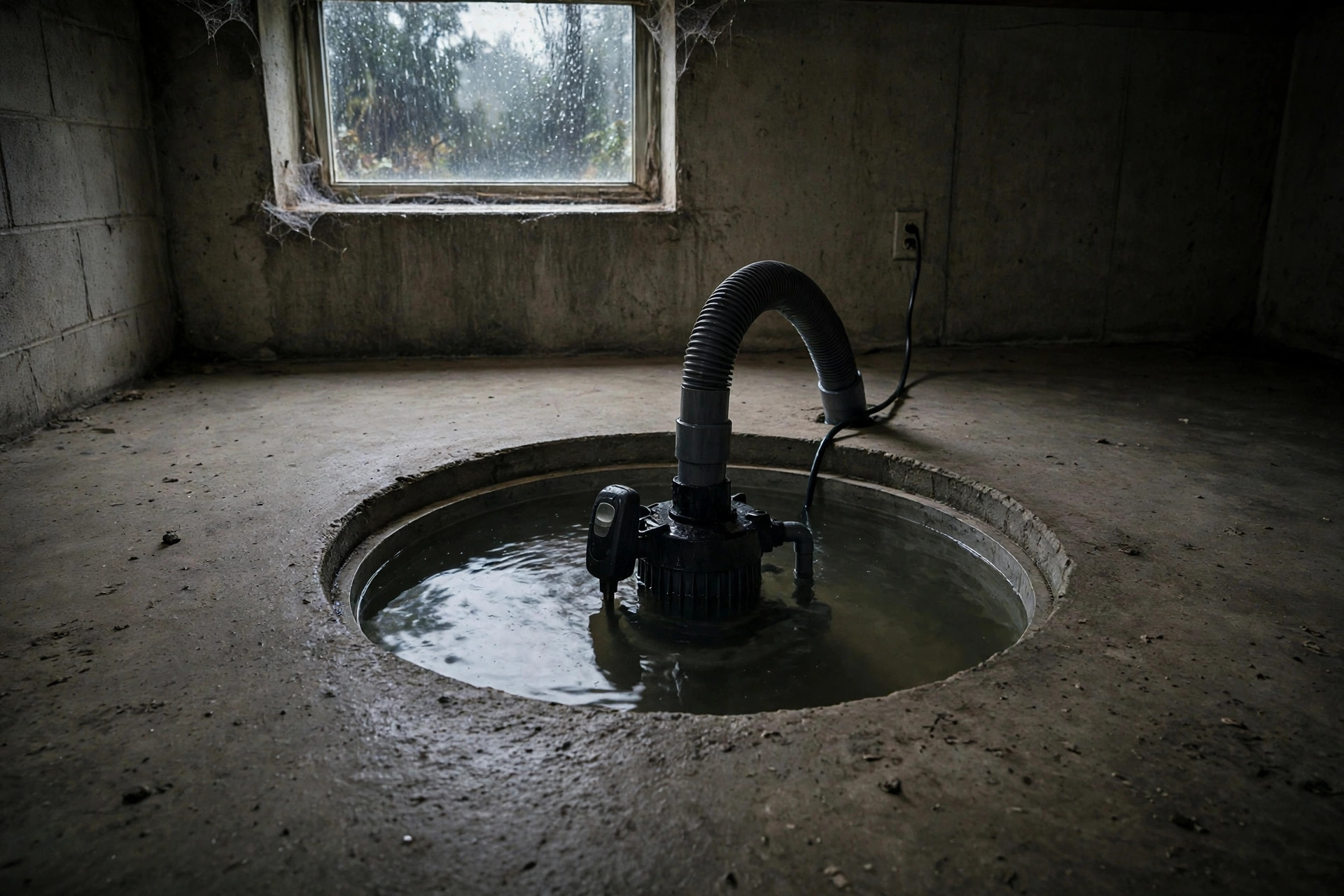
A sump pump is one of those things you forget about until the day it matters. It sits quietly in its pit, switching on now and then, keeping groundwater away from your basement floor. When it stops during a heavy rain, the water it was holding back does not wait — it spreads across the floor, soaks stored belongings, and starts wicking into drywall and framing.
Most failures are not mysterious. Pumps wear out, float switches stick, discharge lines freeze or clog, and power outages strike at exactly the wrong time. Knowing the warning signs and doing a few simple checks can mean the difference between a damp corner and a flooded basement in Lebanon, TN.
Homes with basements or crawl spaces in Wilson County often sit where groundwater collects after rain. Drain tile around the foundation channels that water to a pit, and the pump lifts it out through a discharge pipe that should carry it well away from the house. When the system works, you never see the water at all.
The pump itself is simple: a motor, an impeller, and a float switch that turns it on when the pit fills. That simplicity is reassuring, but it also means a single stuck switch or a burned-out motor stops the whole system. There is no backup unless you have installed one, which is why a pump that has gone quiet deserves attention before the next storm, not after it.
Listen for changes. A pump that runs constantly, cycles on and off every few seconds, or makes grinding or rattling noises is telling you something is wrong. Short cycling often means the float switch is sticking or the pit is too small for the inflow, while constant running can mean the discharge line is blocked and water is cycling back into the pit.
Look for water where it should not be. A damp ring around the pit, rust stains on the pump housing, or a musty smell in the basement all suggest the system is struggling. If your pump is more than seven to ten years old, age alone is a reason to test it regularly. Basement flooding cleanup often starts with exactly this kind of slow, overlooked failure.
Start with power. Check the outlet, the circuit breaker, and whether the pump is plugged into a ground-fault outlet that has tripped. Then lift the float switch by hand — if the pump starts, the switch was stuck, often on the side of the pit or on debris. Clear leaves, silt, and small objects out of the pit, and make sure nothing is pressing against the float.
Next, check the discharge line outside. It should be clear of ice, mud, and debris, and it should end far enough from the foundation that discharged water does not simply drain back in. Never work in standing water near electrical equipment, and never reach into a pit while the pump is plugged in. If the motor hums but does not pump, or if it trips the breaker repeatedly, leave it off and get help rather than forcing it.
Test your pump every few months by pouring a bucket of water into the pit and watching it cycle on, pump down, and switch off cleanly. Keep the pit covered to keep debris out, and check the discharge line each spring and fall. A battery backup pump is worth considering in areas where storms regularly knock out power, since a primary pump is useless without electricity.
Also watch what happens outside the house. Gutters and grading that send roof water toward the foundation make the pump work far harder than it should. Our frequently asked questions page covers drying timelines and what to document after flooding, and water extraction and removal explains how standing water is handled once it is inside.
Pour a bucket of water into the pit every few months and watch it cycle on and off cleanly. Test before the spring storm season and again before winter.
A blocked or frozen discharge line, a stuck float switch, or water draining back toward the foundation can all keep a pump running. Check the discharge line first.
Yes, if outages are common in your area. A backup runs on battery power when the main pump loses electricity, which is often when storms are at their worst.
Stay out of water near electrical outlets or equipment, shut off power to the area safely if you can, and call for extraction help. The longer water sits, the more it soaks into framing and finishes.
If your sump pump has failed and water is in your basement, our team can help with basement flooding cleanup and structural drying and dehumidification. Learn more about how we serve homeowners in Lebanon, TN, and reach out when you are ready for help assessing the damage.
Standing water and damp framing only get worse with time. Contact Lebanon Water Damage Pros to request service and get a clear plan for drying and cleanup.
Request Service Call (615) 759-0522