October 29, 2026 · Water Damage Tips
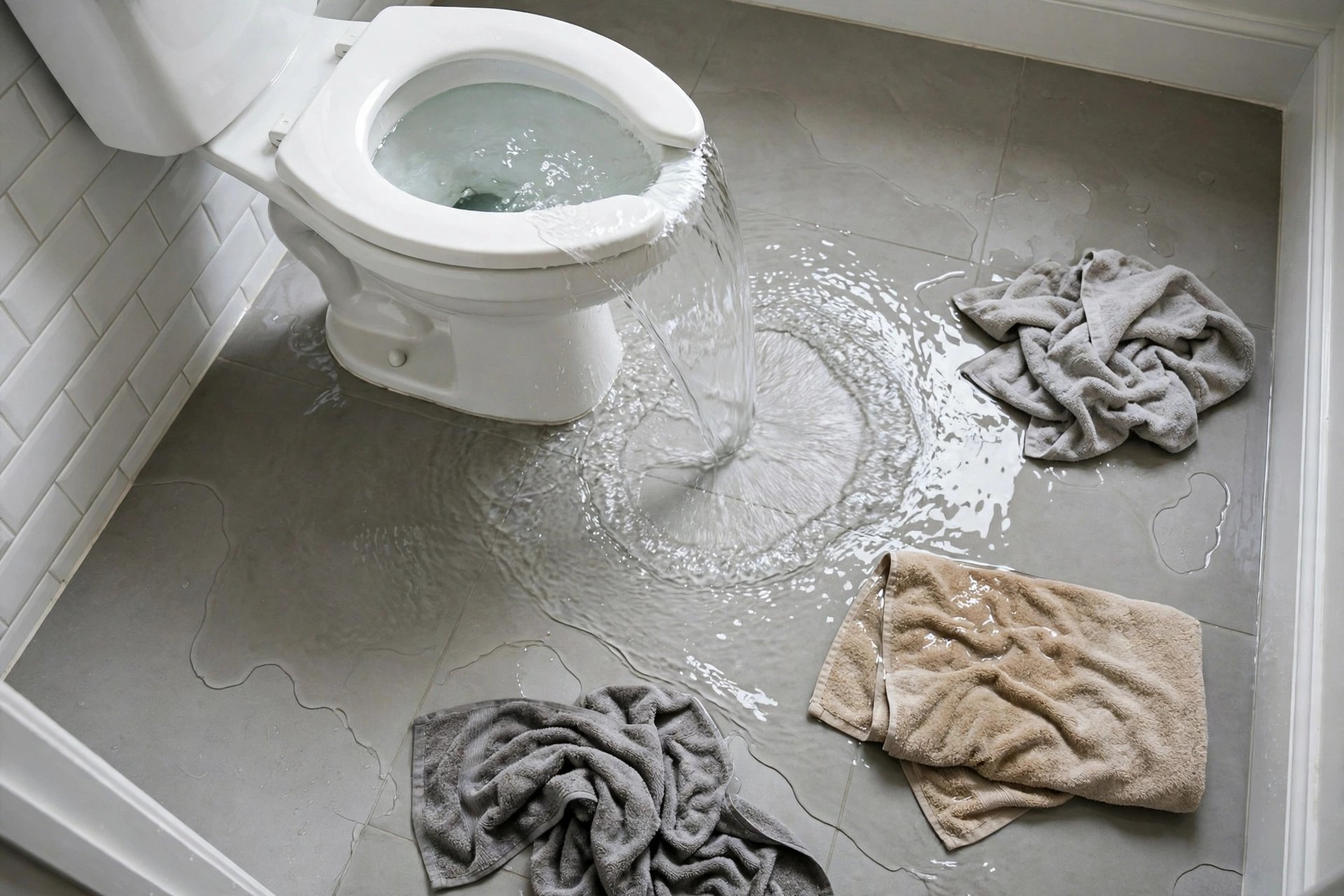
A toilet overflow is stressful because it combines two problems at once: water spreading across the floor, and uncertainty about what kind of water it is. The response in the first ten minutes matters more than anything else you do that day. Stop the water, keep people and pets out of it if it may be contaminated, and then work out whether you are dealing with a simple clog or a sewer backup.
Most overflows start with a clog — too much paper, a flushed object, or a partial blockage that finally closes off. Some, however, signal a problem further down the line, and those behave differently: water appears in the lowest drains in the house, or the toilet overflows without being flushed. Knowing the difference protects both your floors and your health.
First, stop the flush cycle. Lift the tank lid and push the flapper down over the flush valve, or turn off the supply valve behind the toilet by turning it clockwise. If the bowl is about to spill over, do not flush again — a second flush only adds more water. Lay towels around the base to contain the spread, and move bath mats, baskets, and anything stored on the floor out of the way.
If water is already on the floor, keep children and pets out of the room until you know what kind of water it is. Water from a clean supply line or a simple clog is unpleasant but low-risk. Water that smells strongly, is discolored, or comes up through a drain without flushing should be treated as contaminated. In that case, do not mop it with household towels you plan to reuse, and avoid contact with skin, especially around cuts.
For a straightforward clog overflow, once the water has stopped rising, mop up the water and remove wet bath mats and rugs. A plunger used correctly — steady pressure, not frantic plunging — often clears the blockage. If the toilet drains normally afterward and the floor dries, the incident may be over, but still check the base of the toilet and the flooring around it for dampness that has seeped underneath.
Dry the bathroom thoroughly. Tile and vinyl handle surface water well, but water that reaches the subfloor through grout lines or around the toilet base can stay damp for days. Point a fan at the area, open the door for airflow, and check baseboards for swelling or softness over the next few days. Our guide on how to dry out a room after a leak covers the drying steps in detail.
A backup is different from a clog overflow. Warning signs include sewage coming up in a shower or floor drain, multiple drains backing up at once, gurgling from other fixtures when the toilet is flushed, and water appearing in the lowest bathroom in the house. Sewage is hazardous water that can carry bacteria and viruses, and it should not be handled with household cleaning supplies and a mop.
In that situation, stop using all water in the house, keep everyone out of the affected rooms, and call for professional help. Sewage cleanup involves removing contaminated materials, disinfecting affected surfaces, and drying the structure — work that needs protective equipment and proper disposal. Our earlier guide on sewage backup health risks explains why backups are treated so seriously.
After any overflow, watch the bathroom for a week. Soft baseboards, a musty smell, grout that stays dark, or flooring that lifts at the edges all suggest water reached further than the surface. A toilet that rocks slightly may have a failed wax ring at its base, which can leak slowly with every flush — a small problem that causes steady hidden damage if ignored.
If water spread beyond the bathroom — into a hallway, a closet, or the ceiling below — the drying job is bigger than a fan and a towel. Water extraction and removal equipment dries subfloors and wall cavities that household fans cannot reach. Homeowners in Watertown, TN and across Wilson County can find general guidance on drying timelines and documentation on our frequently asked questions page.
No. A second flush adds more water to a bowl that is already full. Stop the water at the tank or supply valve first, then plunge once the level has dropped.
A clog usually affects one toilet after flushing. Sewage backing up in multiple drains, gurgling fixtures, or water appearing without flushing points to a sewer line problem.
It is not recommended. Sewage is hazardous water that requires protective equipment, disinfection, and proper disposal of contaminated materials.
Repeat overflows can mean a partial blockage further down the line, a failing wax ring, or a venting problem. If it happens more than once, have the line checked rather than relying on a plunger.
If a toilet overflow has spread beyond the bathroom or you suspect a sewer backup, our team can help with sewage cleanup and water extraction and removal. Learn more about how we serve homeowners in Lebanon, TN, and reach out when you are ready for help assessing the damage.
Standing water and damp framing only get worse with time. Contact Lebanon Water Damage Pros to request service and get a clear plan for drying and cleanup.
Request Service Call (615) 759-0522