November 2, 2026 · Water Damage Tips
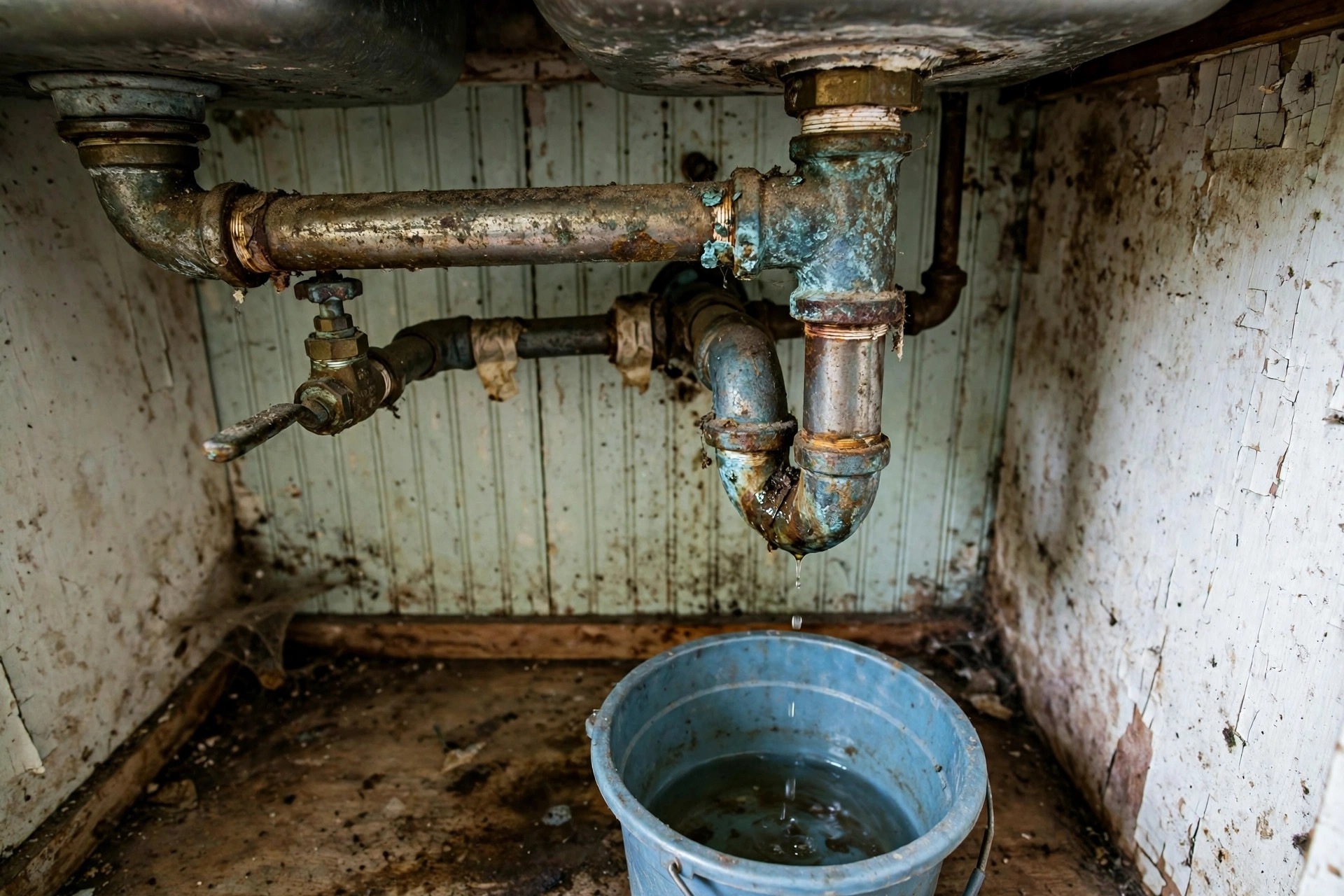
Lebanon has homes from many eras, and the older ones have a character newer builds cannot match — along with plumbing and building materials that age in ways newer materials do not. A galvanized steel supply line installed decades ago does not fail the way a modern line does: it corrodes from the inside, narrows, weakens, and eventually leaks or bursts, often in a wall cavity where nobody sees it happening.
Older homes also hide water damage more easily. Plaster walls, layered flooring, and finished basements added long after construction can conceal a slow leak for months. Knowing what to check — and what era-specific risks your home carries — turns a surprise flood into a planned repair.
Galvanized steel pipe, common in mid-twentieth-century homes, corrodes internally over decades. The corrosion narrows the pipe, reduces water pressure, and eventually eats through the wall of the pipe itself. Cast iron drain lines face a similar fate: rust and scale build up inside, joints weaken, and a drain that has worked for years can start leaking into a wall or under a floor.
Supply lines to fixtures are another age risk. Old rubber washing machine hoses, stiff toilet supply lines, and corroded shut-off valves that no longer close properly are all common in older homes. A valve that will not shut off turns a small fixture leak into a much larger one, because the first step of any response — stopping the water — is suddenly unavailable. Burst pipe water damage in older homes often starts exactly this way.
Slow leaks in older homes favor the same hiding places: behind plaster walls, under layered floors where new flooring was laid over old, around old window and door frames, and in basements that were finished without a moisture barrier. A musty smell in a finished basement, paint bubbling on a plaster wall, or a floor that feels springy near a bathroom can all be the surface evidence of a long-running hidden leak.
Roof and flashing details age too. Older flashing around chimneys and valleys, original gutters, and worn roof coverings let water into attics and wall cavities, where it travels far from the entry point before showing up as a stain. If your home is several decades old and has never had a plumbing or roofing assessment, the absence of visible problems is not proof that none exist.
Learn the age and material of your supply and drain lines if you can, and check water pressure: a gradual drop across the house can mean internal corrosion narrowing the pipes. Test every shut-off valve by closing and reopening it, and replace any that seize or drip. Look under sinks and around toilets for green or rust-colored staining on fittings, which marks slow corrosion.
Check the basement and crawl space for efflorescence — the white mineral deposit left when water moves through masonry — and for any damp framing. Crawl space water damage is common in older homes where ventilation and vapor barriers were never part of the original build, and our frequently asked questions page covers drying timelines for exactly these hidden-moisture situations.
For older homes, the smartest move is often staged: replace the highest-risk lines first — washing machine hoses, toilet supplies, and any visibly corroded section — and plan larger repiping work before a failure forces it. Keep a record of what was replaced and when, since that history helps any future work and any future buyer understand the home.
When a leak does happen, dry thoroughly before repairing finishes. Plaster and old hardwood can often be saved if dried properly, but material left damp will grow mold behind a fresh coat of paint. Homeowners in Lebanon, TN and Watertown, TN with older homes can get help with water damage restoration that respects the structure rather than just covering it up.
Look at exposed pipe in the basement or utility area: galvanized steel is dull gray, magnetic, and often shows rust at joints. A plumber can confirm the material and condition.
Internal corrosion narrows older pipes over time, reducing flow. A gradual, house-wide pressure drop is a classic sign.
A white, powdery mineral deposit left when water moves through masonry and evaporates. It marks a path water has taken, even if the wall looks dry now.
Often, yes, if they are dried properly and promptly. Boards left damp will cup, buckle, or grow mold, so drying comes before any refinishing decision.
If an older home in your care has suffered water damage, our team can help with water damage restoration and structural drying and dehumidification. Learn more about how we serve homeowners in Lebanon, TN, and reach out when you are ready for help assessing the damage.
Standing water and damp framing only get worse with time. Contact Lebanon Water Damage Pros to request service and get a clear plan for drying and cleanup.
Request Service Call (615) 759-0522