November 2, 2026 · Water Damage Tips
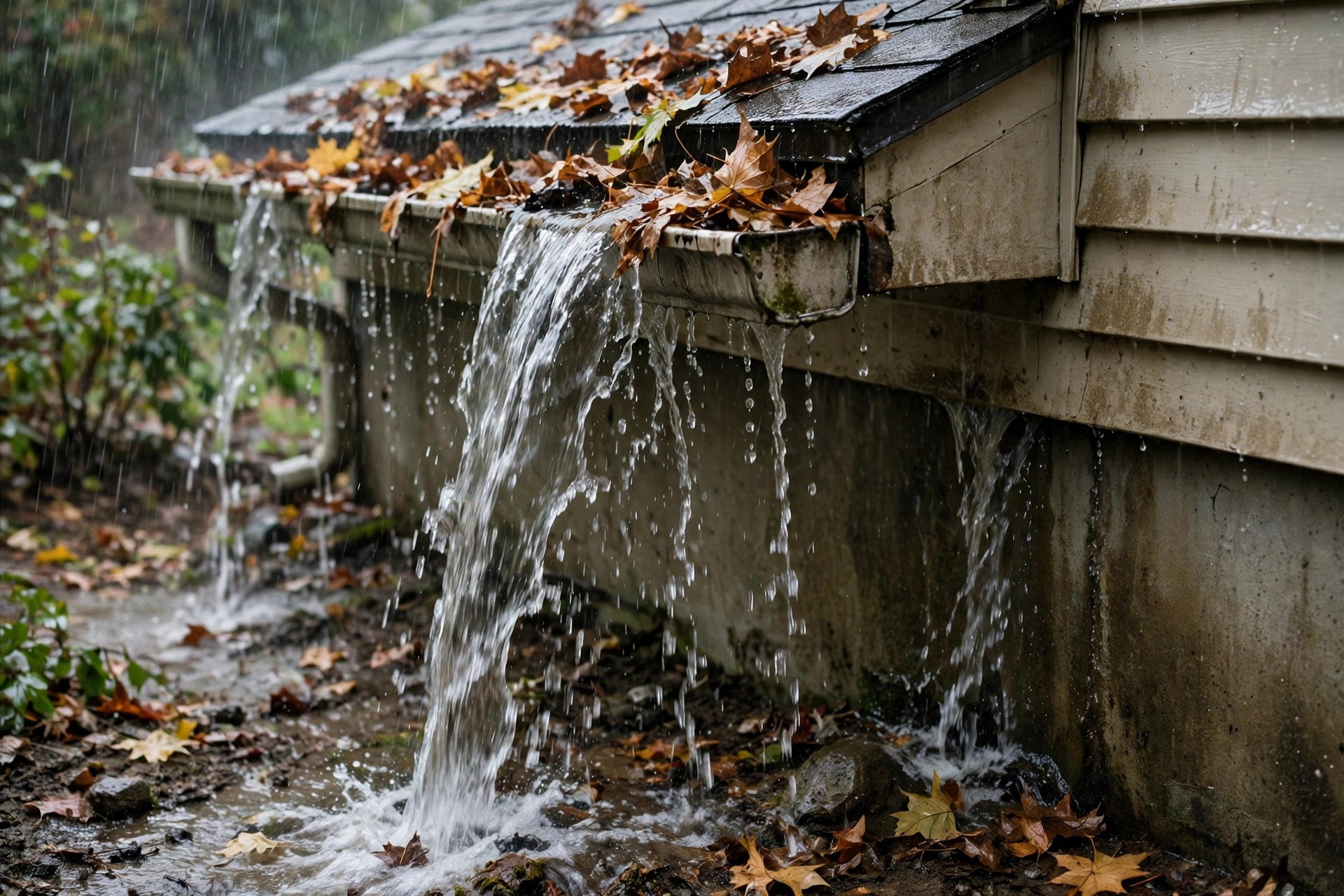
A roof collects an enormous amount of water in a storm — every square foot of roof sheds what falls on it, and all of it ends up in the gutters. When gutters and downspouts are clear, that water is carried away from the house. When they clog with leaves, seed pods, and debris, the same water pours over the edge in a sheet and lands exactly where it does the most harm: right beside the foundation.
Foundation water problems are often blamed on grading or groundwater, but the gutter above the wet wall is frequently the real cause. The good news is that this is one of the most preventable sources of water damage a homeowner faces, and the fix is mostly a ladder, a scoop, and a twice-a-year habit.
A clog usually starts small: leaves settle in a gutter run, sediment builds up, and the next rain washes more debris into the dam. Water backs up behind it, overflows at the lowest edge, and falls in a concentrated stream beside the foundation. Over a single storm, that stream can deliver far more water to one spot than the soil there can absorb.
Saturated soil pushes against foundation walls and finds its way through cracks, joints, and porous concrete. In basements it shows up as seepage at the wall-floor joint; in crawl spaces it shows up as standing water and damp framing. The same overflow can also rot fascia boards and stain siding, but the foundation damage is what costs the most to undo.
Water spilling over the gutter edge during rain is the obvious sign, but there are quieter ones: streaks of dirt on siding below the gutters, mulch or soil washed out of beds near the house, and gutters that sag or pull away from the fascia under the weight of trapped water and debris. Plants growing in a gutter are a late-stage sign that the channel has become a planter.
Inside, look for the pattern. Dampness that appears on a basement wall directly below a gutter run, or a crawl space that gets wet after storms but stays dry otherwise, often traces back to the roof drainage above it. Basement flooding cleanup and crawl space water damage work both frequently starts with this kind of above-ground cause.
Clean gutters in late fall after the leaves drop and again in spring, and check them after any major storm. Scoop out debris, flush the run with a hose toward the downspout, and confirm water flows freely out the bottom. Check that downspouts are connected, not crushed, and that extensions carry water at least several feet from the foundation — a downspout that ends at the wall is barely better than no downspout at all.
Stay safe on the ladder: stable footing, a spotter if possible, and no reaching far to either side. If the roof is steep, the gutters are high, or the system is damaged, a professional cleaning is the safer choice. While you are checking, look at the ground too — soil should slope away from the house, not form a basin against the wall.
Gutter guards reduce how often cleaning is needed, but they do not eliminate it; fine debris still collects and guards themselves need inspection. What matters most is the routine: a seasonal check, a quick look during heavy rain, and prompt repair of sagging sections, loose brackets, and disconnected downspouts.
Homeowners in Lebanon, TN and Mt. Juliet, TN get heavy leaf fall and strong spring storms, which is a combination that tests gutters hard. Our frequently asked questions page covers what to document after water gets in, and flood damage cleanup covers the interior work when runoff has already reached living space.
At least twice a year — late fall after leaves drop and again in spring — plus a check after major storms.
No. Guards reduce debris, but fine material still collects and the guards themselves need checking.
Several feet at minimum, so discharged water cannot drain straight back against the foundation.
Yes. Concentrated overflow saturates the soil beside the wall, and that water finds cracks and joints into basements and crawl spaces.
If roof runoff has reached your basement or crawl space, our team can help with flood damage cleanup and structural drying and dehumidification. Learn more about how we serve homeowners in Lebanon, TN, and reach out when you are ready for help assessing the damage.
Standing water and damp framing only get worse with time. Contact Lebanon Water Damage Pros to request service and get a clear plan for drying and cleanup.
Request Service Call (615) 759-0522