October 29, 2026 · Water Damage Tips
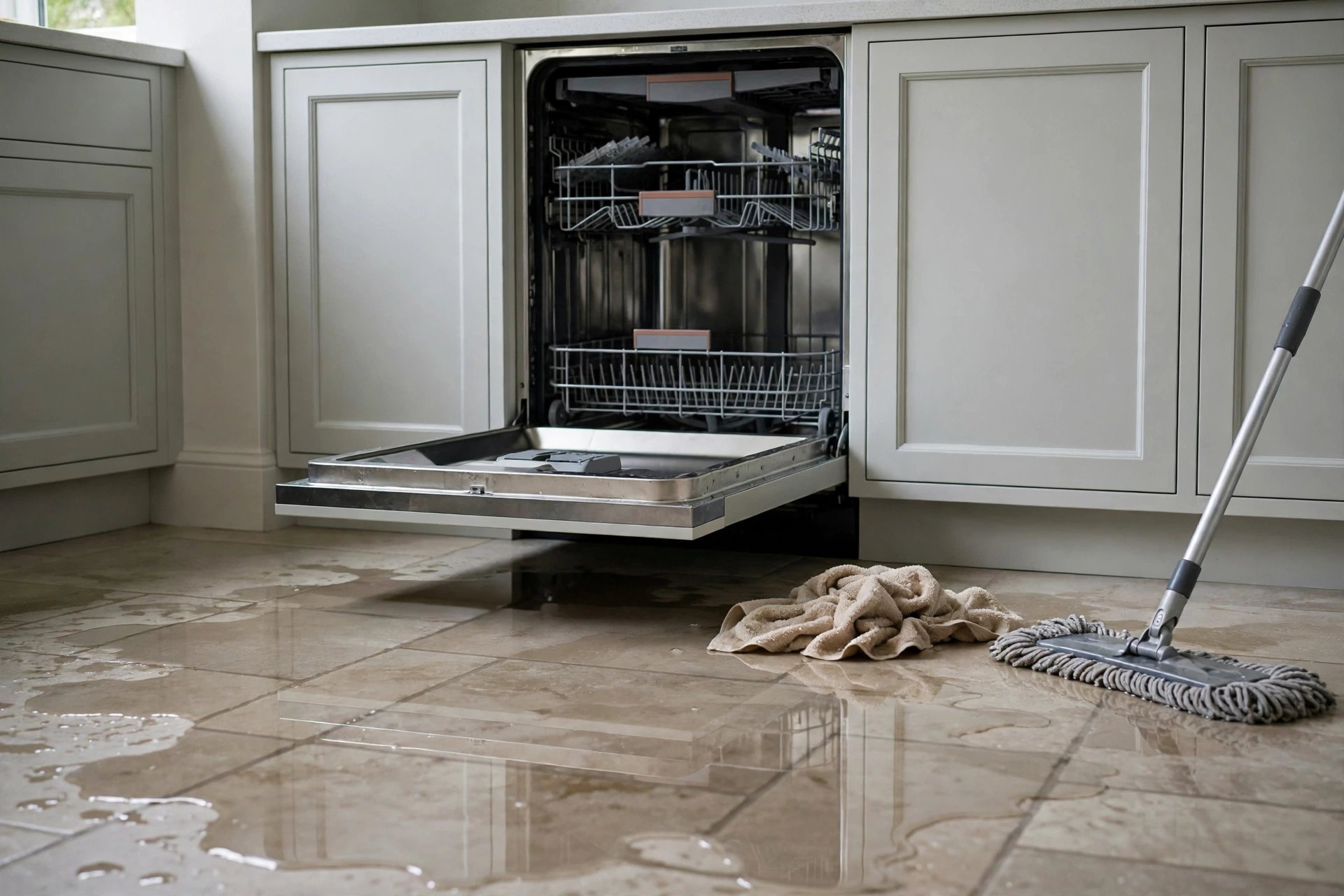
A dishwasher leak rarely announces itself with a dramatic flood. More often it starts as a thin line of water creeping from under the appliance, a damp spot on the rug by the sink, or a musty smell inside a base cabinet. Because the leak hides behind and beneath the machine, it can soak flooring, subflooring, and cabinet bases for days before anyone notices. In Lebanon homes, where many kitchens sit on slab or over a crawl space, that hidden water can quietly damage far more than the visible puddle suggests.
The good news is that the first response is simple, and it takes only a few minutes. Stop the water, protect the surrounding materials, and then work out where the leak is coming from. Acting quickly is what keeps a small appliance leak from becoming warped cabinets, swollen flooring, and mold growth inside a closed cabinet.
Start by turning the dishwasher off and, if you can reach it safely without standing in water, shutting off its water supply valve, which is usually under the kitchen sink. Mop up standing water with towels and move rugs, pet bowls, and anything stored in the base cabinets on either side of the machine. If water has reached an outlet or the dishwasher's electrical connection, do not touch the appliance — switch off the circuit at the breaker panel and keep clear until the area is dry.
Next, pull the kick plate off the bottom of the dishwasher if it comes away easily, and look underneath with a flashlight. You may see drips, a damp hose, or a puddle that points to one side of the machine. Take photos before you move anything. Photos help any technician or contractor understand the extent of the leak, and they are useful documentation if you later speak with your insurer.
The most common sources are the door seal, the drain hose, the water supply line, and the pump seals at the base of the machine. A door seal leak usually shows up at the front of the machine during a cycle and leaves water on the floor in front of the dishwasher. A drain hose leak often appears under the sink or behind the machine, especially where the hose connects. A supply line leak can drip slowly and steadily even when the dishwasher is not running, which is why a puddle that returns after mopping deserves attention.
Run a short cycle only after you have dried the area and only if it is safe to do so, watching from the side with a flashlight. Do not run the machine unattended while it is leaking. If the leak is at a hose connection, tightening a loose clamp sometimes solves it, but cracked hoses, split seals, and pump leaks are jobs for an appliance technician. Our appliance leak cleanup service covers the water damage side once the appliance itself is fixed.
Once the water source is stopped, drying matters more than it seems. Kitchen flooring often looks dry on the surface while water sits underneath it or has wicked into cabinet bases and the subfloor. Remove the kick plate, open base cabinet doors, and let air circulate. Point a fan into the space under and beside the machine, and run a dehumidifier nearby if you have one. Avoid using the dishwasher again until the area underneath is dry to the touch.
Check the materials, not just the surface. Laminate flooring that has swollen at the seams, cabinet bases that feel soft, and a musty smell inside closed cabinets are all signs water went further than the visible puddle. Water extraction and removal equipment — commercial fans and dehumidifiers — dries spaces that household fans cannot reach, and moisture readings confirm whether hidden areas are truly dry. That step matters because mold can begin growing on damp materials within 24 to 48 hours.
Some dishwasher leaks end with a mopped floor and a repaired hose. Others need cabinet bases or sections of flooring removed so the subfloor can dry. Particleboard cabinet bases are especially vulnerable: once they swell and crumble, they rarely dry back to their original shape, and they can trap moisture against the wall behind them. A contractor can tell you whether a cabinet base can be dried in place or whether cutting it out is the safer option.
Do not seal the area up, reinstall the kick plate, or lay new flooring over a damp subfloor. Trapped moisture keeps feeding mold and can soften the subfloor over time. The same principle applies across the home — our guide on how to dry out a room after a leak covers the drying sequence in more detail. Homeowners in Mt. Juliet, TN and across Wilson County face the same risk with any appliance leak, so the rule is the same everywhere: stop the water, dry thoroughly, and verify before you rebuild.
No. Even a slow drip keeps the area underneath the machine damp, and damp materials grow mold within 24 to 48 hours. Keep the water supply off until the source is repaired and the area is dry.
Look for swollen seams, cupping boards, soft spots, and a musty smell from base cabinets. Moisture meters used by professionals can confirm whether water is trapped beneath the surface.
Only if you can do so safely, with the water and power off and without standing in water. If the machine is heavy, the connections are stuck, or water is near wiring, leave it to a technician.
Not always, but the risk rises fast in a closed, damp space under a machine. Fast drying within the first day or two is the best protection, and any musty smell after drying deserves a closer look.
If a dishwasher leak has soaked your kitchen floor or cabinets, our team can help with appliance leak cleanup and structural drying and dehumidification. You can also find answers to common questions on our frequently asked questions page. Learn more about how we serve homeowners in Lebanon, TN, and reach out when you are ready for help assessing the damage.
Standing water and damp framing only get worse with time. Contact Lebanon Water Damage Pros to request service and get a clear plan for drying and cleanup.
Request Service Call (615) 759-0522