November 5, 2026 · Water Damage Tips
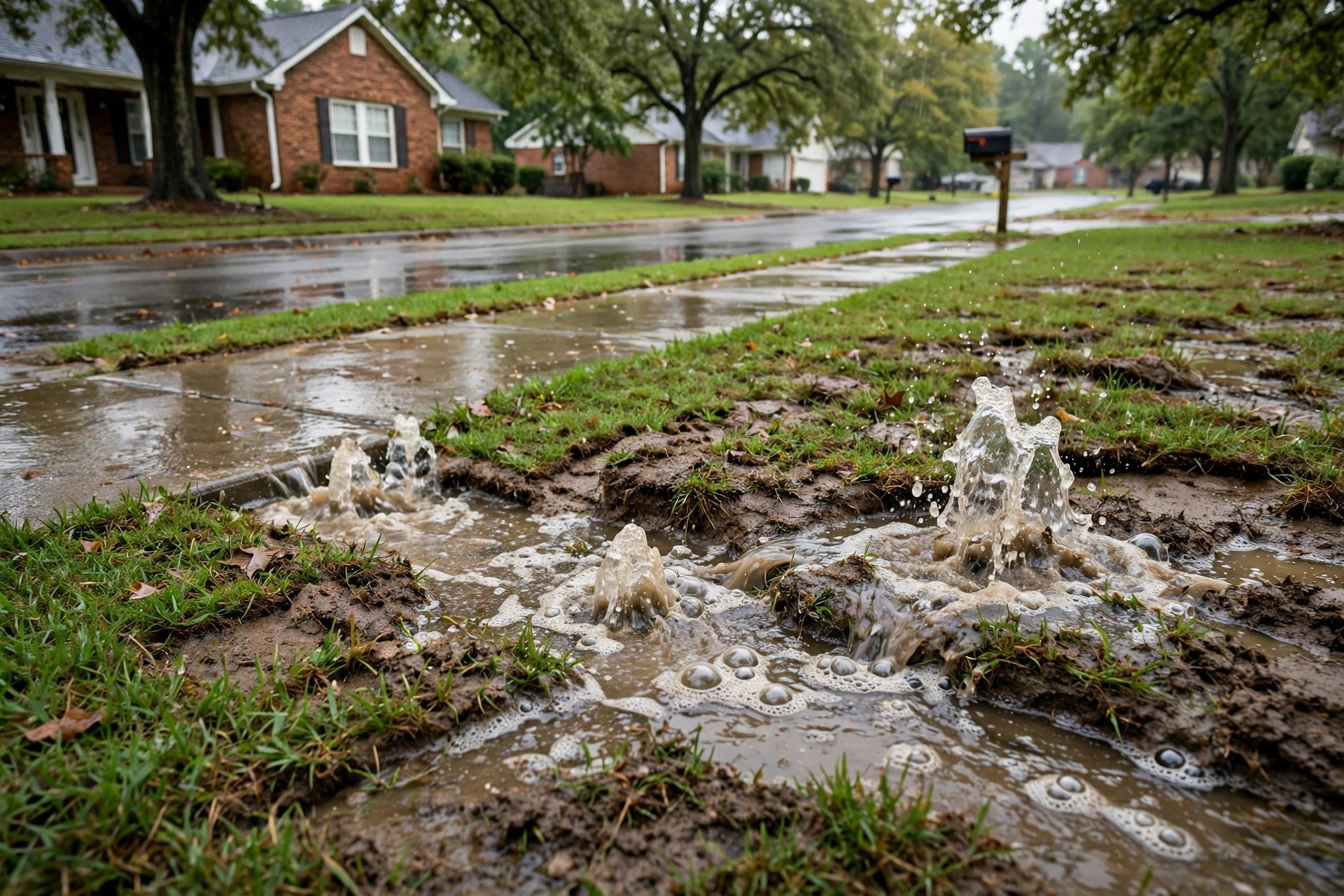
A main water line break does not always announce itself with a flooded room. The pipe that carries water from the street to your home runs underground, so the first signs often appear outside: a soggy patch of lawn that never dries, water bubbling up near the sidewalk, or a sudden drop in water pressure inside the house. In Lebanon, TN, where older service lines and shifting soil both play a role, catching those signs early can keep a yard problem from becoming a foundation and flooring problem.
This guide covers what a main water line break looks like, what to do in the first hour, and what happens once the water reaches your home. If you already see standing water against your foundation, skip ahead to the first-steps section — that is the part that matters most right now.
The most telling sign is water where it should not be. A patch of grass that stays wet long after rain, soil that feels spongy underfoot, or a stream of water running along the curb on a dry day all point to a pressurized line leaking underground. You may also notice a hissing sound near the meter, a meter dial that keeps turning when every tap in the house is off, or discolored water from your faucets after the line has been disturbed.
Inside, the signs are subtler at first: lower pressure at every tap, air sputtering from faucets, or a water bill that jumps without any change in use. A break close to the house can also send water toward the foundation, where it pools against the wall and finds its way into a basement or crawl space. That is why an outdoor leak is never just a landscaping issue — the water is looking for the lowest point, and your foundation is often it.
Start by shutting off the main water supply if you can do so safely. The shut-off is usually near the meter or where the line enters the house. Turning the water off stops the flow at its source and prevents thousands of gallons from soaking the soil around your foundation while you arrange repairs. If you cannot find the shut-off, call your water utility — they can shut the line off at the meter.
Keep people and vehicles off the soggy area. Saturated soil can hide a sinkhole or a collapsed section of ground, and a pressurized break can erode soil quickly. Take photos of the wet area, the meter, and any water reaching the house, and note when you first noticed the problem. That record is useful later, much as our guide to documenting water damage explains for indoor damage.
Water against a foundation wall does not stay outside for long. It seeps through cracks and joints, wicks up into framing and drywall, and can flood a basement or crawl space from below. Once it is inside, the priorities change from stopping the leak to getting the water out and drying the structure — the same sequence used in water extraction and removal and burst pipe water damage work.
Do not assume the area is dry once the surface looks dry. Soil, concrete, and framing hold moisture for days, and trapped dampness is what leads to mold growth and musty odors weeks later. Professional drying equipment measures moisture inside walls and floors rather than guessing from the surface, which is why a line break that reached the house deserves a thorough drying check even if the visible water is gone.
Age is the biggest factor. Older galvanized or polybutylene service lines corrode and weaken over time, and tree roots seeking moisture can crack or displace a line. If your home still has its original service line, ask a plumber to assess its material and condition — replacing a failing line on your schedule is far less disruptive than replacing it after a break. Keep large trees and shrubs away from the line's path where you can, and watch for the early signs above after any nearby excavation or heavy equipment work.
Glance at your water meter with all taps off from time to time: a dial that keeps moving means water is going somewhere. Our frequently asked questions page covers drying timelines and what to document after water damage, and homeowners in Mt. Juliet, TN face the same aging-line risks as those in Lebanon itself.
Turn off all taps, then watch the meter. If it keeps moving, water is flowing somewhere on your side. Your utility can confirm which side of the meter the break is on.
Yes, if you can do so safely. Shutting off the main supply stops the flow and limits how much water soaks the soil around your foundation.
Yes. Water pooling against a foundation wall seeps through cracks and joints, and it can flood a basement or crawl space if it runs long enough.
Get the water out and the structure dried promptly. Surface dryness is not enough — moisture inside walls and floors needs to be measured and dried properly.
If a main water line break has sent water toward or into your home, our team can help with water extraction and removal and structural drying and dehumidification. See also our guide to what to do when a pipe bursts, and learn more about how we serve homeowners in Lebanon, TN.
Standing water and damp framing only get worse with time. Contact Lebanon Water Damage Pros to request service and get a clear plan for drying and cleanup.
Request Service Call (615) 759-0522