November 9, 2026 · Water Damage Tips
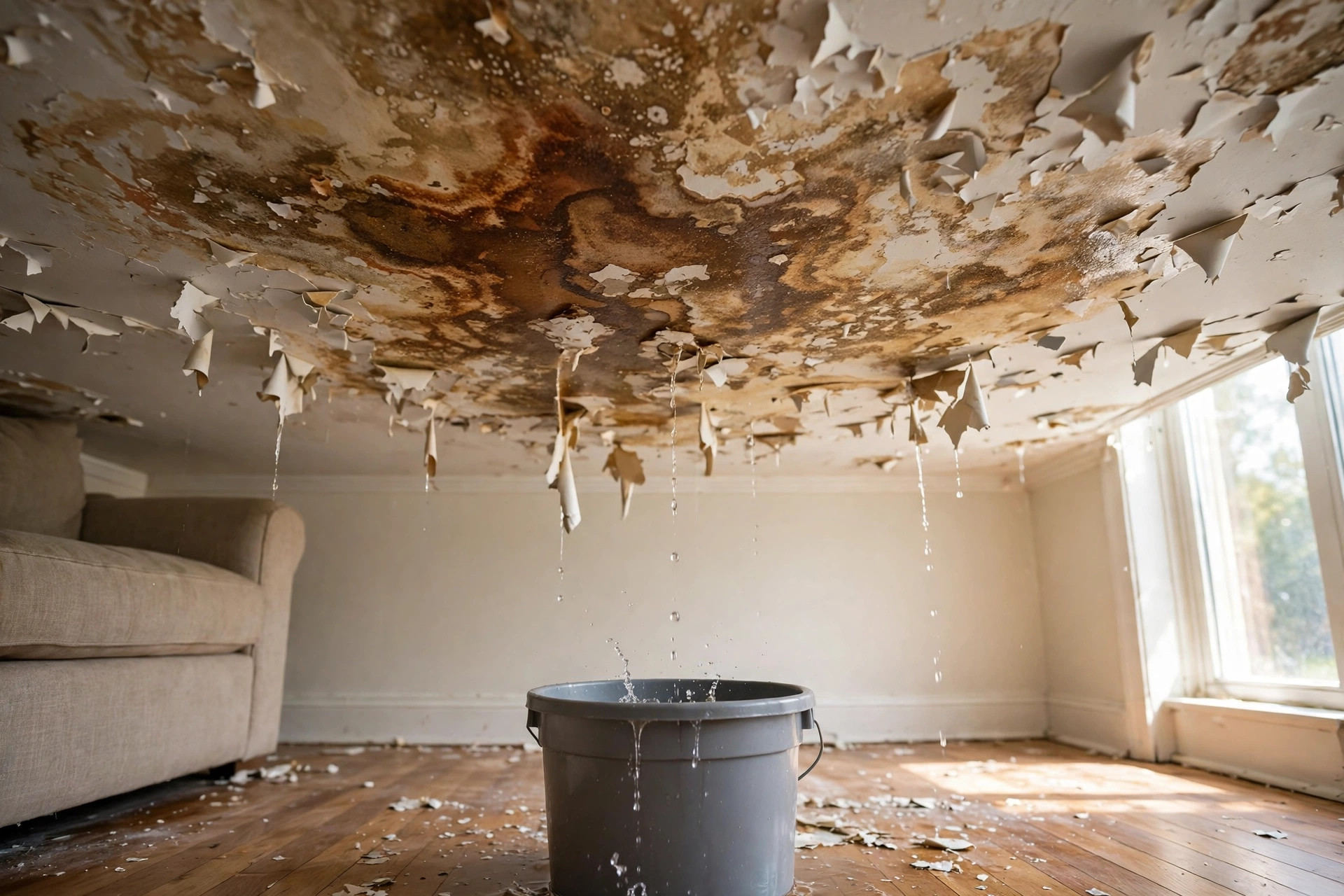
An upstairs bathroom leak rarely announces itself upstairs. The water escapes from a shower, a toilet base, or a supply line, runs through the floor, and shows up first on the ceiling of the room below — a brown stain, bubbling paint, or a soft spot that was not there last week. By the time the stain appears, the water has already been traveling inside the floor and ceiling for some time, soaking joists, insulation, and drywall along the way.
This guide covers where upstairs bathroom leaks come from, the signs to watch for in the room below, and what to do in the first hours. It pairs with our guide to signs of hidden water damage, which covers the same problem in walls and floors throughout the house.
The most common source is the shower or tub: failed caulk or grout lets water seep behind tiles and under the pan, and a worn drain seal lets water escape with every use. The toilet is next — a wax ring that has dried out or shifted lets water seep under the base, often so slowly that it never pools on the bathroom floor. Supply lines to the toilet and sink, and the drain pipes themselves, can also leak at joints, especially in older homes where fittings have loosened over decades.
What makes these leaks hard to catch is that the bathroom floor often looks fine. Water follows gravity and the path of least resistance, so it runs along joists and drips through the ceiling at a point that may be feet away from the actual leak. That is why the stain below matters more than a dry bathroom floor above, and why water-damaged drywall often needs attention on two levels, not one.
The first sign is usually a yellow-brown stain on the ceiling, often with a faint ring around its edge. Paint that bubbles, peels, or feels soft to the touch means the drywall behind it is saturated. A ceiling that sags, even slightly, is a more serious sign — wet drywall is heavy, and a sagging section can fail. A musty smell in the room below, or a patch of floor that feels damp for no clear reason, can also point to water traveling inside the structure.
Watch the timing. A stain that grows after showers or toilet flushes, or that darkens and then lightens, points to an active leak tied to bathroom use. A stain that appeared once and stays the same may be an old, resolved leak — but only a moisture check can confirm that. Do not paint over a stain to test it: paint hides the evidence and traps moisture behind a fresh coat.
Start by stopping the water at its source. Turn off the toilet's supply valve or the sink's shut-off, and stop using the shower or tub until the leak is found. If you cannot tell which fixture is leaking, shut off the water to the whole bathroom. Place a bucket or towels under the drip below, and move furniture and electronics out of the way — ceiling drywall that is saturated can drop without warning.
Photograph the stain, the fixtures above, and any visible damage before anything is moved or repaired. If the ceiling is sagging, do not poke it to drain it — a sudden release of trapped water can damage the room below and the person standing under it. The drying sequence that follows is the same as in water damage restoration work: find the source, stop it, then dry the structure before rebuilding.
A ceiling stain is not just cosmetic. The drywall, joists, and insulation above it may be holding far more water than the stain suggests, and trapped moisture there feeds mold growth that appears weeks later — often as a musty smell in the room below. Insulation that has soaked up water loses its effectiveness and stays damp long after the surface dries, which is why a moisture meter matters more than a dry-looking ceiling.
Do not assume the problem is solved once the fixture is fixed. The structure needs to dry fully before any ceiling is patched or repainted, or the new finish will bubble and the mold will return. Our frequently asked questions page covers drying timelines, and homeowners in Gladeville, TN and across Wilson County see the same upstairs-leak patterns as those in Lebanon itself.
Water follows gravity and the path of least resistance, running along joists before dripping through. The stain can appear feet away from the actual leak.
No. Paint hides the evidence and traps moisture. The source must be fixed and the structure dried first, or the stain and mold will return.
Yes. Wet drywall is heavy and can fail without warning. Keep the room clear and do not poke the sagging section to drain it.
Watch the timing — a stain that grows after showers points to the shower, one that grows after flushes points to the toilet. A plumber can confirm with a moisture check.
If an upstairs bathroom leak has stained the ceiling below, our team can help with water damage restoration and structural drying and dehumidification. See also our guide to water-damaged drywall: repair or replace, and learn more about how we serve homeowners in Lebanon, TN.
Standing water and damp framing only get worse with time. Contact Lebanon Water Damage Pros to request service and get a clear plan for drying and cleanup.
Request Service Call (615) 759-0522