October 26, 2026 · Water Damage Tips
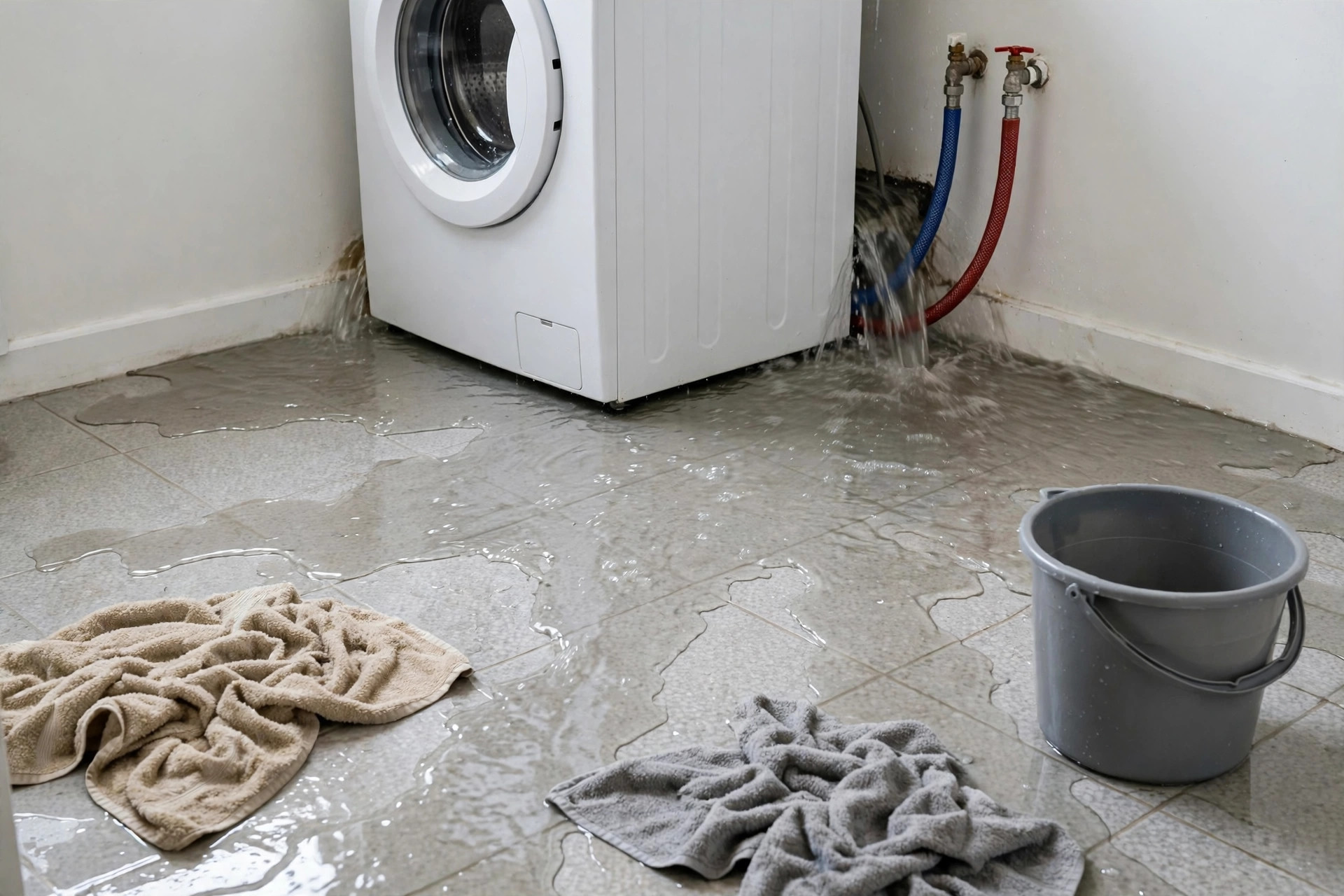
A washing machine leak rarely announces itself politely. One load runs fine, the next one leaves the laundry room floor under water — and because laundry rooms often sit on upper floors or beside bedrooms, that water can reach walls, subflooring, and rooms below before anyone notices. The good news: most washing machine leaks are simple to stop in the first few minutes, and fast action keeps a wet floor from becoming a much bigger repair.
This guide covers exactly what to do when you find water around your washer, how to figure out where it came from, and how to keep it from happening again. It applies to top-loaders and front-loaders alike, and to homes across Lebanon, Mt. Juliet, Watertown, and the rest of Wilson County.
Do not run another load to "see if it still leaks." A second cycle just pumps more water into the same problem. And if water has reached outlets, baseboards with wiring, or rooms below, keep people and pets out of the wet area until the power situation is safe.
Once the water is off, the source is usually one of a few familiar suspects. Supply hoses are the most common: rubber hoses age, bulge, and crack, and a burst supply hose can release a large volume of water very fast because it is connected directly to household pressure. Check both hoses where they meet the wall valves and the back of the machine, looking for bulges, cracks, or drips.
The drain hose is next. If it has slipped out of the standpipe or the drain is backing up, water ends up on the floor during the drain cycle even though the machine itself is fine. Front-loader door seals are another frequent source — a worn or debris-filled gasket lets water escape during the wash, often in small amounts that soak the floor slowly over many loads. Leaks from underneath the machine usually point to the pump, internal hoses, or the tub seal, which are jobs for an appliance technician rather than a homeowner fix.
Detergent matters too: using too much, or the wrong type in a high-efficiency machine, creates excess suds that can overflow the door or dispenser. If your leak lines up with a recent detergent change, that is a strong clue.
A mopped-up floor is not necessarily a dry floor. Water seeps under baseboards, into subflooring, and behind the washer, where it keeps feeding mold and warping wood long after the surface looks fine. Pull the washer out enough to check behind it, lift any rugs, and point a fan at the area with good airflow. If the laundry room is on an upper floor, check the ceiling and walls of the room below for stains or dampness — water travels downward and sideways through framing in ways that are easy to miss.
Remove wet items that cannot dry quickly, and run a dehumidifier in the room for a day or two if you have one. A musty smell that lingers after the floor looks dry is a sign moisture is still trapped somewhere, and that is worth investigating rather than covering up. Our guide on how to dry out a room after a leak walks through the full drying checklist, and signs of hidden water damage covers the clues that water has reached places you cannot see.
Most washer leaks are preventable with a few habits. Replace rubber supply hoses every few years, or switch to braided stainless-steel hoses, which hold up far better under constant pressure. Check hoses and connections every few months for bulges, cracks, or dampness. Turn the water supply off when you leave for a trip — a hose that bursts while no one is home is how a small leak becomes a flooded house.
Use the right detergent in the right amount for your machine, clean the door seal and detergent dispenser regularly, and do not overload the drum, which strains seals and bearings. A drain pan under the washer, especially on an upper floor, catches small leaks before they reach the subfloor. These steps take minutes and protect the rooms around the laundry more than any single gadget.
Yes. Supply hoses sit under constant household pressure, so a burst while you are away can run for days. Closing the two washer valves before a trip is a simple, effective habit.
They hold up much better over time. Rubber hoses age, bulge, and crack, while braided stainless-steel hoses resist bursting far longer. Either type should still be inspected regularly and replaced when it shows wear.
No — a small leak still soaks flooring and subflooring with every load, and it usually gets worse. Find and fix the source first, or have a technician look at it, before running another cycle.
Check the ceiling and walls below for stains, sagging, or dampness, and dry the area thoroughly with airflow. Water that reaches framing or drywall below needs proper drying to avoid mold and structural issues.
If a washing machine leak has soaked your floors, walls, or the room below, our team can help with appliance leak cleanup, fast water extraction and removal, and complete water damage restoration. Learn more about how we serve homeowners in Lebanon, TN, and reach out when you are ready for help assessing the damage. You can also find answers to common questions on our frequently asked questions page.
Turn off the washer valves first, then get help drying the room properly. Contact Lebanon Water Damage Pros to request service and limit the damage.
Request Service Call (615) 759-0522