October 26, 2026 · Water Damage Tips
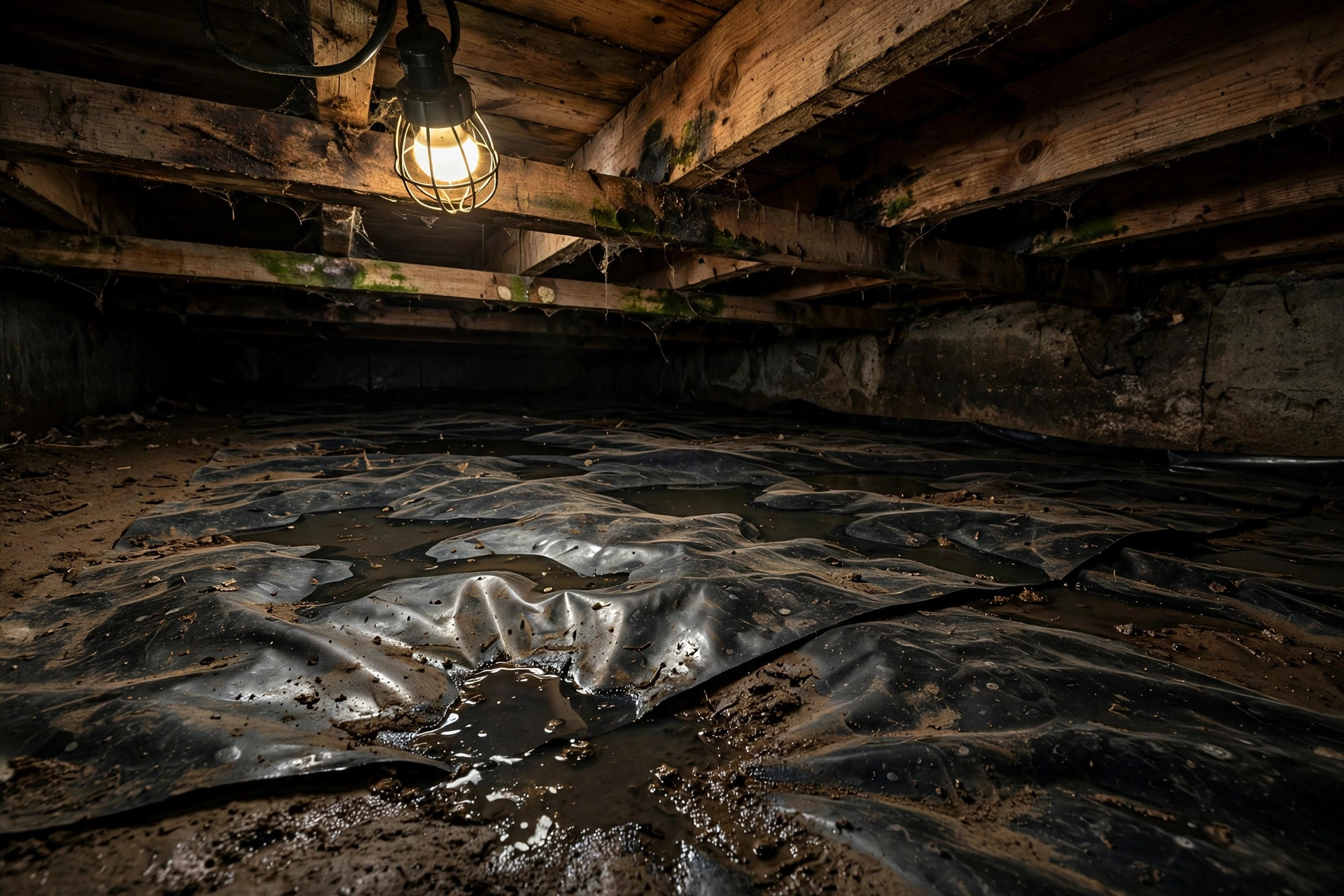
Most Lebanon homeowners never look inside their crawl space until something goes wrong — a musty smell upstairs, a soft spot in the floor, or a home inspector's note during a sale. By then, moisture may have been working quietly for months. Crawl spaces sit close to the ground, collect humidity, and hide leaks, which makes them one of the most common sources of hidden water damage in Middle Tennessee homes.
Lebanon, TN (ZIP codes 37087, 37088, and 37090) has the right mix for crawl space trouble: humid summers, heavy spring rain, clay-heavy soil that holds water against foundations, and older homes with vented crawl spaces that were never designed for today's humidity levels. The good news is that most crawl space moisture problems announce themselves early if you know what to look for — and early action keeps a damp crawl space from becoming mold growth, wood rot, or structural damage.
You do not need to crawl under the house every week, but a few checks a couple of times a year are worth it. Inside the home, watch for a persistent musty or earthy smell that air fresheners never fix, especially on the ground floor. Floors that feel bouncy, uneven, or slightly sagging can point to moisture-softened joists or subflooring. Doors and windows that start sticking may mean framing has shifted as damp wood swells and dries.
Other warning signs include higher indoor humidity, condensation on ductwork or water lines, and allergy-like symptoms that improve when you leave the house. Outside, look for water pooling near the foundation after rain, gutters that overflow or dump water right at the base of the house, and vents blocked by mulch, soil, or stored items. If you do look inside the crawl space, standing water, wet insulation hanging from joists, dark staining on wood, or a strong musty odor all mean the problem is active, not historical.
One caution: never enter a crawl space with standing water near wiring, and never disturb material that might be mold in large amounts without protection. A visual check from the access opening with a flashlight tells you plenty without putting yourself at risk.
Moisture in a crawl space rarely has one single cause, and fixing only the obvious one often leaves the problem half-solved. Poor grading is a frequent culprit: if the ground slopes toward the house instead of away from it, every rainstorm sends water straight to the foundation. Short downspouts and clogged gutters do the same thing, concentrating roof runoff in exactly the worst spot.
Plumbing leaks are another quiet source. A slow drip from a supply line, a drain joint, or a water heater line can soak joists and insulation for weeks before anyone notices, because the crawl space hides the evidence. In summer, warm humid air entering through foundation vents condenses on cool ductwork, pipes, and floor joists — the same effect as a cold drink sweating on a humid day, repeated all season. Groundwater can also rise through the soil after sustained rain, especially in low-lying parts of Wilson County, leaving standing water even when nothing has leaked.
Finally, a missing, torn, or poorly fitted vapor barrier lets ground moisture rise straight into the space. Many older Lebanon homes have partial barriers or none at all, which leaves the wood framing exposed to constant damp.
Small surface dampness after a single storm may dry on its own once drainage is fixed. But standing water, soaked insulation, or visible mold on framing means the drying needs to be thorough. Wood that stays damp grows mold and loses strength, and insulation that has been soaked rarely dries back to full effectiveness. Our guide on signs of hidden water damage covers the indoor clues that often accompany a wet crawl space, and how to dry out a room after a leak explains why fast, complete drying matters everywhere in the home.
Lasting crawl space protection is mostly about water management, not gadgets. Keep gutters clean and extend downspouts away from the house. Re-grade soil where it has settled against the foundation so water flows away, not toward it. A properly installed vapor barrier covering the ground, sealed at seams and walls, cuts ground moisture dramatically.
Insulate pipes and ductwork so humid summer air has nothing cold to condense on, and check the space after major storms rather than once a year. If your home has a history of standing water, a sump pump or interior drainage may be worth discussing with a qualified contractor — these are jobs for professionals, not weekend experiments. Regular checks in spring and fall catch small problems while they are still small, which is the whole point: a dry crawl space protects the floors, air quality, and structure of everything above it.
Some humidity is common in vented crawl spaces, but standing water, wet insulation, or mold on wood is not normal and should not be ignored. Persistent dampness damages wood over time and can affect indoor air quality.
Closing vents on a wet crawl space traps moisture inside and usually makes mold and rot worse. Fix drainage and dry the space first, and get professional advice before changing how the space is ventilated.
A quick check in spring and fall, plus a look after any major storm or plumbing repair, is a sensible routine for Lebanon homes. Watch from the access opening with a flashlight if you prefer not to enter.
Yes. Air from the crawl space rises into living areas, carrying musty odors and moisture with it. Damp joists can also soften floors and, over time, affect the structure the whole house sits on.
If your crawl space has standing water, soaked insulation, or mold on the framing, our team can help with crawl space water damage cleanup, structural drying and dehumidification, and mold remediation. Learn more about how we serve homeowners in Lebanon, TN, and reach out when you are ready for help assessing the damage. You can also find answers to common questions on our frequently asked questions page.
Standing water and damp framing only get worse with time. Contact Lebanon Water Damage Pros to request service and get a clear plan for drying and cleanup.
Request Service Call (615) 759-0522