November 5, 2026 · Water Damage Tips
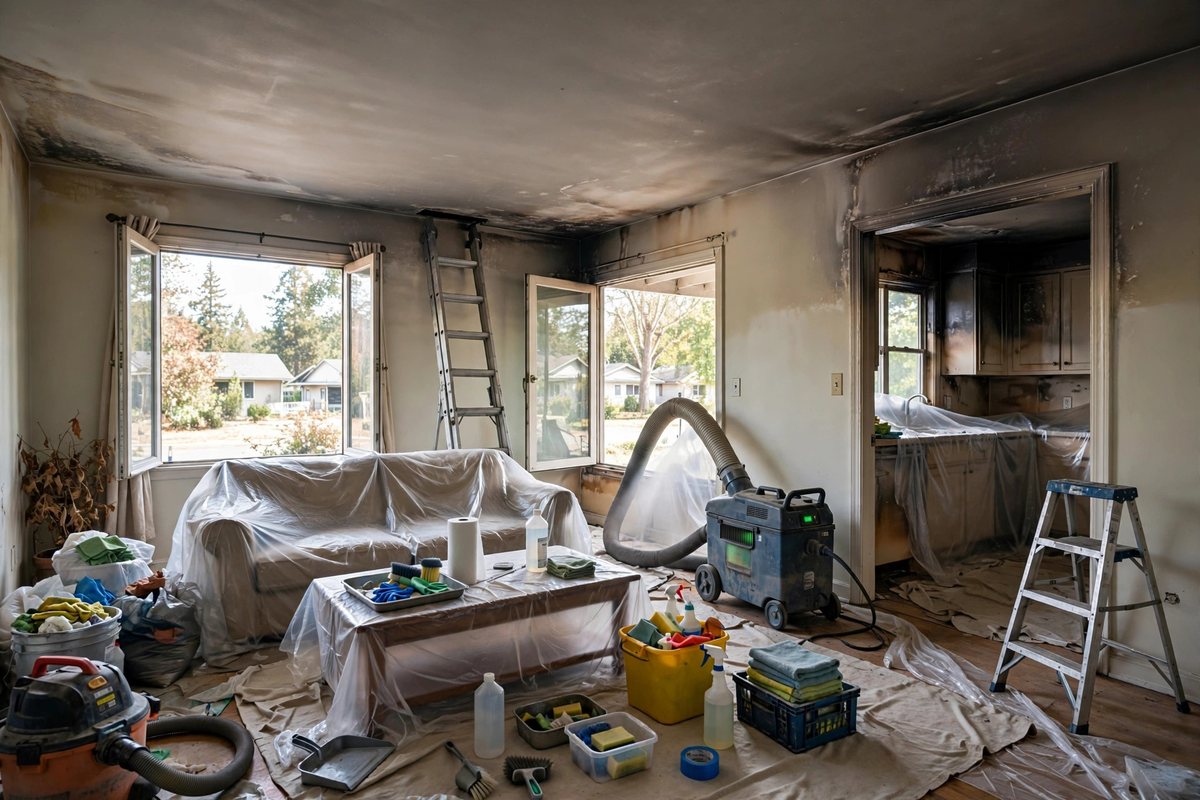
When the fire trucks leave, the fire is out — but the house is often soaked. A single fire hose can deliver hundreds of gallons of water in minutes, and that water runs through ceilings, down wall cavities, and across floors far beyond the room that burned. Homeowners walk back into a house that survived the fire and still face a major water damage job, layered on top of smoke and soot.
This guide explains what firefighting water does to a home, what to do in the first days, and how cleanup differs from an ordinary leak. It follows on from our guide to the first 72 hours after a house fire, which covers the immediate safety and documentation steps.
Ordinary leaks start at one point and spread slowly. Firefighting water arrives all at once, from above, and in far greater volume — it soaks insulation, saturates drywall from the top down, and pools in places a leak would never reach, such as inside ceiling cavities and behind built-in cabinets. The water also carries soot and ash with it, so surfaces are stained and contaminated at the same time they are wet.
That combination matters for drying. Soot is acidic and can stain permanently if it sits, while wet insulation and drywall lose their structure and hold moisture for days. A room that looks merely wet may have a ceiling cavity above it that is saturated, which is why structural drying and dehumidification after a fire involves checking inside walls and ceilings, not just mopping floors.
Do not re-enter until the fire department says the structure is safe — fire can weaken floors and ceilings in ways that are not visible. Once cleared, photograph everything before anything is moved: the water lines on walls, the soot patterns, the damaged rooms. Those photos support any later claim and help the cleanup team plan the work.
Water removal comes first, before soot cleaning in most cases, because standing water keeps soaking deeper while it sits. Water extraction and removal equipment pulls water from floors and carpets, and then drying begins — but items coated in soot need care during this stage, since wiping soot the wrong way can drive it deeper into a surface. Our guide to smoke and soot damage after a fire explains that distinction in more detail.
Cleanup usually runs in stages: extract the water, remove unsalvageable wet materials such as saturated insulation and swollen drywall, dry the structure with airflow and dehumidification, and then clean soot from the surfaces that remain. Each stage depends on the one before it — drying a wall that still holds wet insulation behind it will not work, and cleaning soot off a surface that is still wet can spread the staining.
Some materials will not survive both fire and water. Drywall that was both soaked and heat-damaged, carpet padding under a flooded room, and insulation that has absorbed water and soot are usually removed rather than dried. Hard surfaces — tile, sealed wood, metal fixtures — often clean up well once the water is out and the soot is properly removed.
Two problems tend to surface after the initial cleanup: odor and mold. Smoke odor lives in porous materials and in the HVAC system, and it can return on humid days if the source was not fully addressed. Mold follows any moisture that was not dried completely, especially inside wall cavities and under floors — the same hidden-moisture risk that makes fire and smoke damage restoration a longer job than it first appears.
Patience helps here. Rushing to rebuild over damp framing or to repaint over soot-stained walls traps both problems behind new finishes. Our frequently asked questions page covers drying timelines, and homeowners in Lebanon, TN and nearby Mt. Juliet, TN can request an assessment of both the water and the smoke damage together, rather than treating them as separate jobs.
A great deal — a single hose delivers hundreds of gallons in minutes, and much of it ends up inside the house, in ceilings, walls, and floors.
Usually yes. Standing water keeps soaking deeper while it sits, so extraction and drying come first, with soot cleaning handled carefully alongside them.
It can, if porous materials or the HVAC system still hold soot. Odor that returns on humid days usually means a source was not fully addressed.
The water reaches places an ordinary leak never does — ceiling cavities, wall interiors, and insulation — and those hidden areas dry slowly.
If firefighting water has soaked your home, our team can help with fire and smoke damage restoration and structural drying and dehumidification. Start with our guide to the first 72 hours after a house fire, and learn more about how we serve homeowners in Lebanon, TN.
Standing water and damp framing only get worse with time. Contact Lebanon Water Damage Pros to request service and get a clear plan for drying and cleanup.
Request Service Call (615) 759-0522