November 9, 2026 · Water Damage Tips
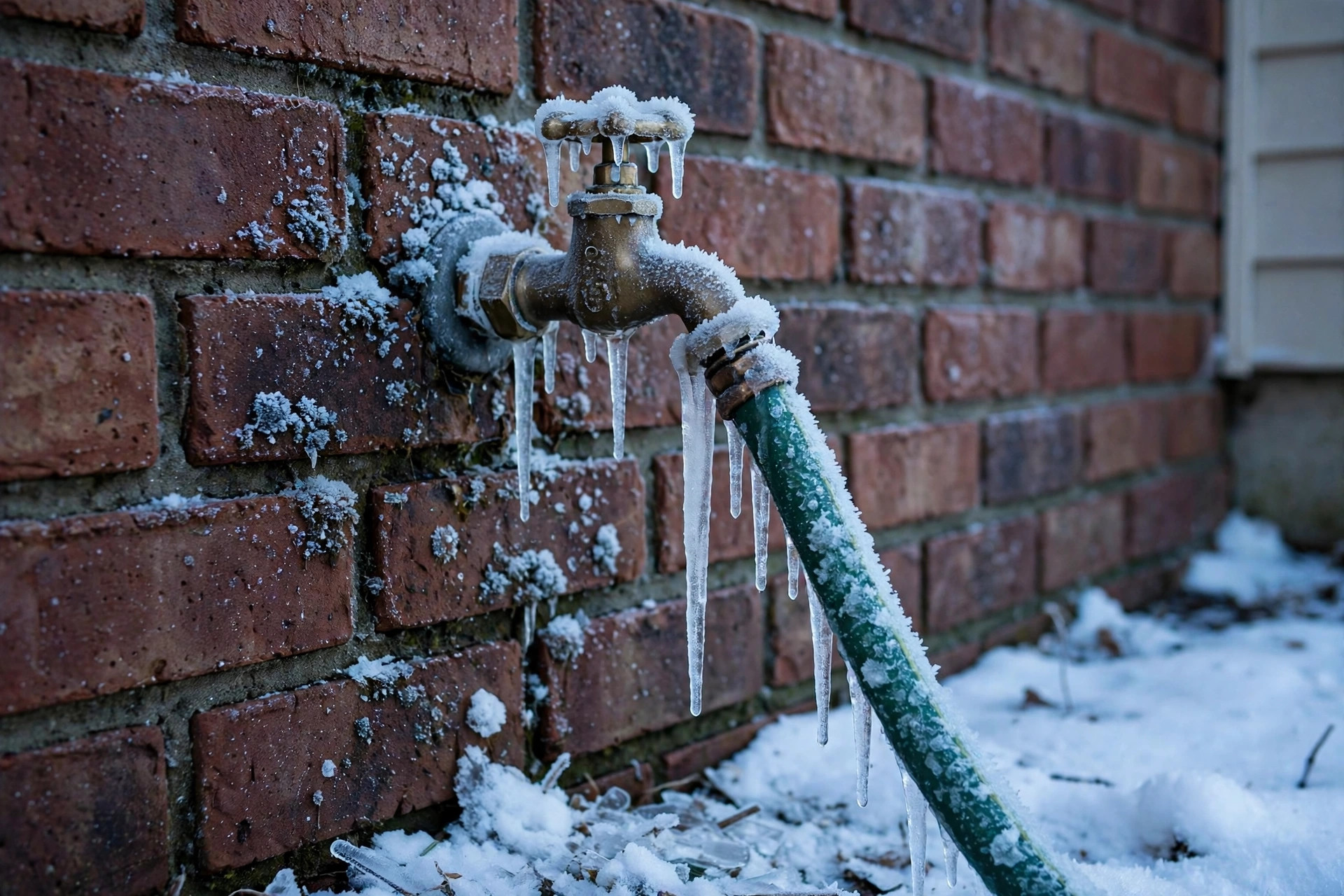
A frozen outdoor faucet is one of the smallest pipes in your home — and one of the most destructive when it bursts. The faucet sits outside, but its pipe runs through your wall — and when the water inside freezes, it expands and cracks the pipe behind the siding. The break often stays hidden until the thaw, when water pours into the wall cavity and down into the room below. In Lebanon, TN, where winter nights regularly dip below freezing, an unprotected hose bib is a leak waiting for the coldest night of the year.
This guide covers why outdoor faucets freeze, the warning signs, what to do when a faucet freezes, and how to protect your hose bibs before the next cold snap. If you already see water leaking from a faucet or a damp wall inside, start with the first-steps section — that is the part that matters most right now.
Water expands by about nine percent when it freezes, and a pipe has nowhere to give. Water trapped in an outdoor faucet or the short pipe behind it turns to ice, and the pressure builds until the pipe splits — usually not at the faucet itself, but a few inches inside the wall, where the crack is hidden. A garden hose left attached makes it worse: it traps water in the faucet and blocks the drain-back that frost-free models rely on.
The damage often does not show until the thaw. While the pipe is frozen, the ice itself plugs the break, so nothing leaks. Then the ice melts, and water flows through the split pipe into the wall cavity, soaking insulation, drywall, and flooring — often for hours before a stain appears on an interior wall. That hidden timing is what makes a burst hose bib so costly, and it is the same freeze-and-thaw pattern behind burst pipe water damage indoors.
The earliest sign is a faucet that drips or will not shut off fully, even with the handle turned tight — ice damage can keep the valve from seating. A faucet that sprays sideways from the handle, or one where the handle turns but no water comes out, is also suspect: the pipe behind it may be frozen solid. Outside, look for a wet patch on the wall or foundation beneath the faucet on a dry, cold day, and listen for a faint hiss inside the wall.
Inside, watch the wall on the other side of the faucet. A damp or bubbling patch of paint, a soft baseboard, or a musty smell near an exterior wall in winter all suggest water is getting in. Low pressure at other taps can also point to a frozen or split line. Our guide to how to thaw frozen pipes safely covers the indoor side of this problem — and the same caution applies: never use an open flame on a frozen pipe.
First, shut off the water to that faucet at its interior shut-off valve, usually in the basement, crawl space, or utility room on the same wall. Open the outdoor faucet to relieve pressure and drain the remaining water. If the pipe has already burst, shutting off the supply stops the flow at its source — the same first move as with any burst pipe indoors.
Do not force a frozen faucet handle, and do not pour boiling water on it — sudden heat can crack the fitting. A hair dryer on low, or warm towels around the pipe, will thaw it gradually. Once it thaws, watch for leaking: water inside the wall, or drips with the handle closed, means the pipe has split and needs repair. Keep the area dry, move belongings away from the wet wall, and photograph the damage first.
The most effective step is also the simplest: disconnect every garden hose before the first hard freeze, and drain it. A disconnected hose lets the faucet drain back and lets a frost-free sillcock do its job. Then shut off the interior valve for each outdoor faucet if your home has one, and open the outdoor faucet briefly to let the remaining water out. Foam faucet covers add insulation and are inexpensive, but they are a backup, not a substitute for draining the line.
Add outdoor faucets to your seasonal checklist. Our guide to winterizing your Lebanon home before winter walks through the full list, and our frequently asked questions page covers drying timelines if water has already gotten in. Homeowners in Watertown, TN and across Wilson County face the same freeze risks as those in Lebanon itself.
Yes. The split usually happens a few inches inside the wall, where it is hidden — which is why the leak often shows up only after the thaw.
No. Disconnect every hose before the first hard freeze — an attached hose traps water in the faucet and blocks it from draining.
Use gentle heat — a hair dryer on low or warm towels. Never use an open flame, and do not force the handle.
Shut off the water to that faucet and keep the area dry. A leak after thawing usually means the pipe has split and needs repair.
If a frozen outdoor faucet has sent water into your wall or floor, our team can help with water extraction and removal and structural drying and dehumidification. See also our guide to how to thaw frozen pipes safely, and learn more about how we serve homeowners in Lebanon, TN.
Standing water and damp framing only get worse with time. Contact Lebanon Water Damage Pros to request service and get a clear plan for drying and cleanup.
Request Service Call (615) 759-0522