November 5, 2026 · Water Damage Tips
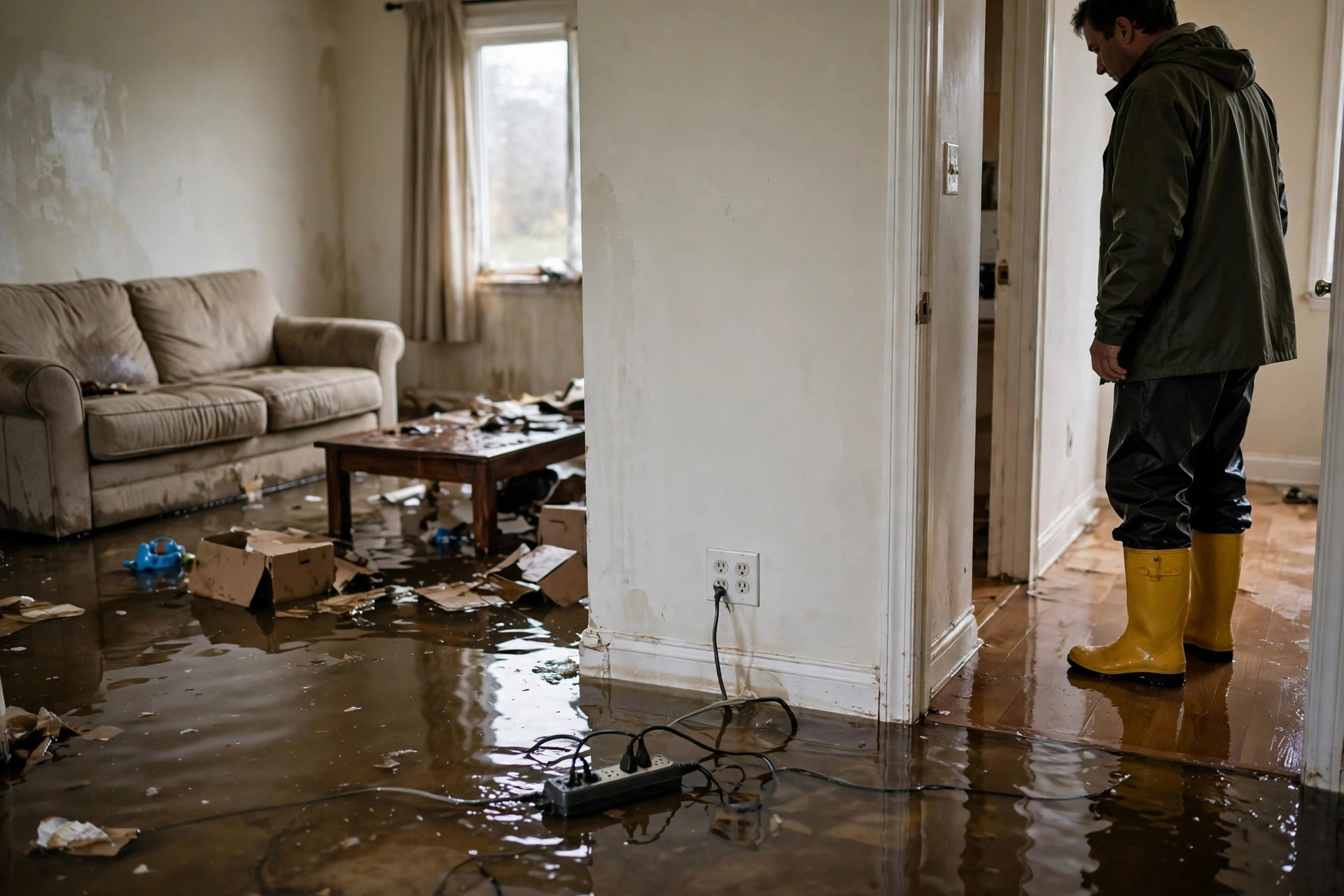
Water damage and electrical safety belong together, because the most dangerous thing in a flooded room is often not the water itself — it is what the water is touching. Outlets, power strips, appliances, and wiring that sit in or under water can energize the water around them, and the risk is invisible: clear, shallow water can still carry a current. Knowing what not to touch, and when to stay out entirely, is the most important part of responding to any indoor flood.
This guide is about safety first. It covers the rooms and items to avoid, how to shut power off safely when you can, and what to do when you cannot. If water is already near outlets or your breaker panel, stop here and stay out of the water — the rest of this guide can wait.
Water conducts electricity, and household water is rarely pure — dissolved minerals and contaminants from flooring, drywall, and soil make it conduct even better. An outlet submerged in even an inch of water, a power strip lying on a wet floor, or a damaged appliance cord can turn the surrounding water into a shock hazard. You cannot tell by looking whether water is energized, which is why the rule is simple: treat any water near electrical equipment as live until a professional confirms otherwise.
The risk is not limited to obvious flooding. A slow appliance leak that reaches a baseboard outlet, a basement flooding situation where the water has crept up to a furnace or water heater connection, or a ceiling leak dripping onto a light fixture can all create the same hazard on a smaller scale. If water and wiring have met, the room needs a safety check before anyone works in it.
Never touch a light switch, outlet, or appliance while standing in water, and never reach into standing water to unplug something. Never use a wet vacuum on water near outlets until the power to that area is off and confirmed off. Never touch a breaker panel that is wet, or stand in water while operating one — a wet panel is a job for an electrician, not a homeowner in a hurry.
Also avoid metal objects in the water, such as a metal ladder or a wet appliance frame, since metal can carry current from a live source to your hands. Keep children and pets out of any wet room until the electrical risk has been checked, and do not let anyone wade through a flooded basement to rescue belongings — no item is worth a shock.
If you can reach the breaker panel without standing in water and without touching anything wet, switch off the circuits serving the affected area. If the panel itself is wet, if you must stand in water to reach it, or if you are unsure which circuits serve the room, leave it alone and call an electrician or your utility. They can disconnect power safely from outside the affected area.
Once power is off, do not restore it until the area has been dried and the wiring, outlets, and appliances have been inspected. Water inside an outlet box or appliance can cause a short or a fire days after the flood, long after the floor looks dry. The same caution applies after sump pump failure flooding, where the pump itself is an electrical device sitting in the very water it failed to remove.
Drying is only half the job. Outlets, switches, and appliances that were submerged or splashed should be inspected before use, and any that were underwater should be replaced rather than dried out and reused. Wiring inside walls that stayed wet needs time and airflow to dry, and our frequently asked questions page covers drying timelines and what to document after water damage.
If you are unsure whether a room is safe, treat it as unsafe until checked. Structural drying and dehumidification addresses the hidden moisture in walls and floors, and homeowners in Lebanon, TN and nearby Watertown, TN can request an assessment once power has been safely disconnected.
No. Do not reach into water to unplug anything. Shut off power at the breaker panel first, and only if you can do so without standing in water.
Yes. Even an inch of water can carry a current from a submerged outlet or cord, and you cannot tell by looking whether the water is energized.
Only after the area is dry and the wiring, outlets, and appliances have been inspected. Water inside an outlet box can cause a short days later.
Do not touch it. Call an electrician or your utility to disconnect power safely from outside the affected area.
Once a wet area is electrically safe, our team can help with water extraction and removal and structural drying and dehumidification. For the cleanup sequence itself, see our basement flooding cleanup steps, and learn more about how we serve homeowners in Lebanon, TN.
Standing water and damp framing only get worse with time. Contact Lebanon Water Damage Pros to request service and get a clear plan for drying and cleanup.
Request Service Call (615) 759-0522