November 9, 2026 · Water Damage Tips
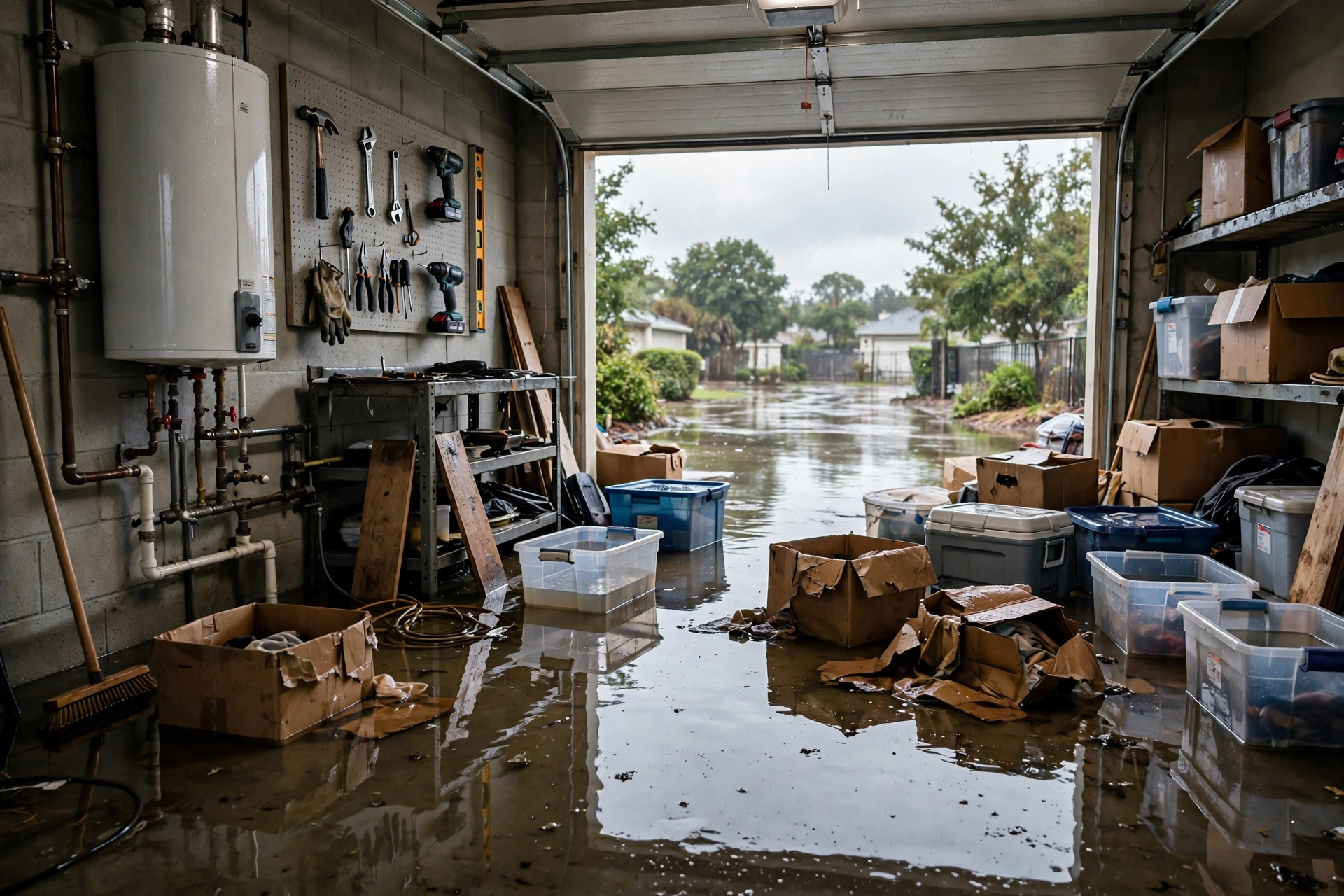
Garage water damage is easy to overlook, because the garage is the room nobody lives in. A little water on the concrete floor gets a shrug, the door is closed, and life goes on — until the cardboard boxes at the bottom of the stack turn to mush, the stored furniture grows mold, or the damp climbs the drywall and reaches the room above. Garages flood more often than homeowners expect: heavy rain, a failed water heater, a burst washing machine hose, or a driveway that slopes toward the door can all put water where it does not belong.
This guide walks through what to check after water gets into your garage, from the floor to the walls to the appliances. It pairs with our guide to salvaging belongings after flooding, which covers how to sort what the water touched.
The most common entry point is the door itself. A driveway that slopes toward the garage, a worn door seal, or a heavy storm can push rainwater straight under the door and across the floor. From above, a roof leak or a failed gutter can send water down the garage walls. From inside, the usual culprits are a leaking water heater, a washing machine supply hose, or a burst pipe in the wall shared with the house — the same washing machine leak that floods a laundry room can flood a garage just as fast.
Garages are also vulnerable because they are built to a different standard than living space. The concrete slab sits at or below grade, the walls often have no vapor barrier, and stored items sit directly on the floor. Water that would be a nuisance in a kitchen can linger in a garage for days, because nobody notices it and the concrete holds moisture long after the surface looks dry.
Start with safety: if water is near the water heater, the furnace, or any electrical outlet or panel, do not wade in until the power to the area is off. Our guide to water damage and electrical safety covers the rules in detail. Once it is safe, check the water heater and any appliances first — a leaking tank can keep feeding water for hours — then look at the walls where they meet the floor, and the drywall in the wall shared with the house.
Check the bottom of everything stored on the floor: cardboard boxes wick water upward, so a box can be soaked a foot above the water line. Lift rugs and mats, and look behind shelves and storage units, where water hides and mold starts. Note the water line on the walls — it tells you how deep the water got, and it is useful both for the cleanup plan and for your records.
Get the water out first, then get air moving. A wet vacuum or a pump handles standing water, and fans plus a dehumidifier do the rest — concrete that looks dry can still hold moisture for days, so do not stack dry boxes back on a damp slab. Drywall that stayed wet for more than a day or two usually needs to be cut back to the dry line, since wet drywall crumbles and feeds mold. The same drying logic applies here as in flood damage cleanup inside the house.
Do not forget the ceiling and the room above. Water that reaches the top of a garage wall can wick into the framing and the floor of the room above, and a garage ceiling stain is often the first sign of a roof leak. If the garage shares a wall with a bedroom or living room, check that room too — water does not respect the line between garage and house.
The cheapest fix is often the door seal: a worn bottom seal or a threshold that no longer meets the floor lets storm water in with every heavy rain. Regrading the driveway or adding a small drainage channel in front of the door keeps water moving away from the opening, and keeping gutters and downspouts clear stops roof water from pouring beside the garage walls. Inside, replace rubber washing machine hoses with braided steel ones, and check the water heater for rust or drips at least once a season.
Store belongings off the floor on shelves or pallets, and use plastic bins instead of cardboard for anything you would hate to lose. Our frequently asked questions page covers drying timelines and what to document after water damage, and homeowners in Watertown, TN face the same storm and appliance risks as those in Lebanon itself.
Yes. Water in a garage soaks stored belongings, climbs drywall, and can reach the room above. It deserves the same response as water inside the house.
Not until the slab is fully dry. Concrete holds moisture for days, and dry boxes placed on a damp floor will wick it up.
Shut off its water supply and power, then get the water out. A leaking tank can keep feeding water for hours if it is not shut off.
Replace a worn door seal, check the threshold, and make sure the driveway slopes away from the door rather than toward it.
If water has flooded your garage, our team can help with flood damage cleanup and structural drying and dehumidification. See also our guide to basement flooding cleanup steps, and learn more about how we serve homeowners in Lebanon, TN.
Standing water and damp framing only get worse with time. Contact Lebanon Water Damage Pros to request service and get a clear plan for drying and cleanup.
Request Service Call (615) 759-0522