November 5, 2026 · Water Damage Tips
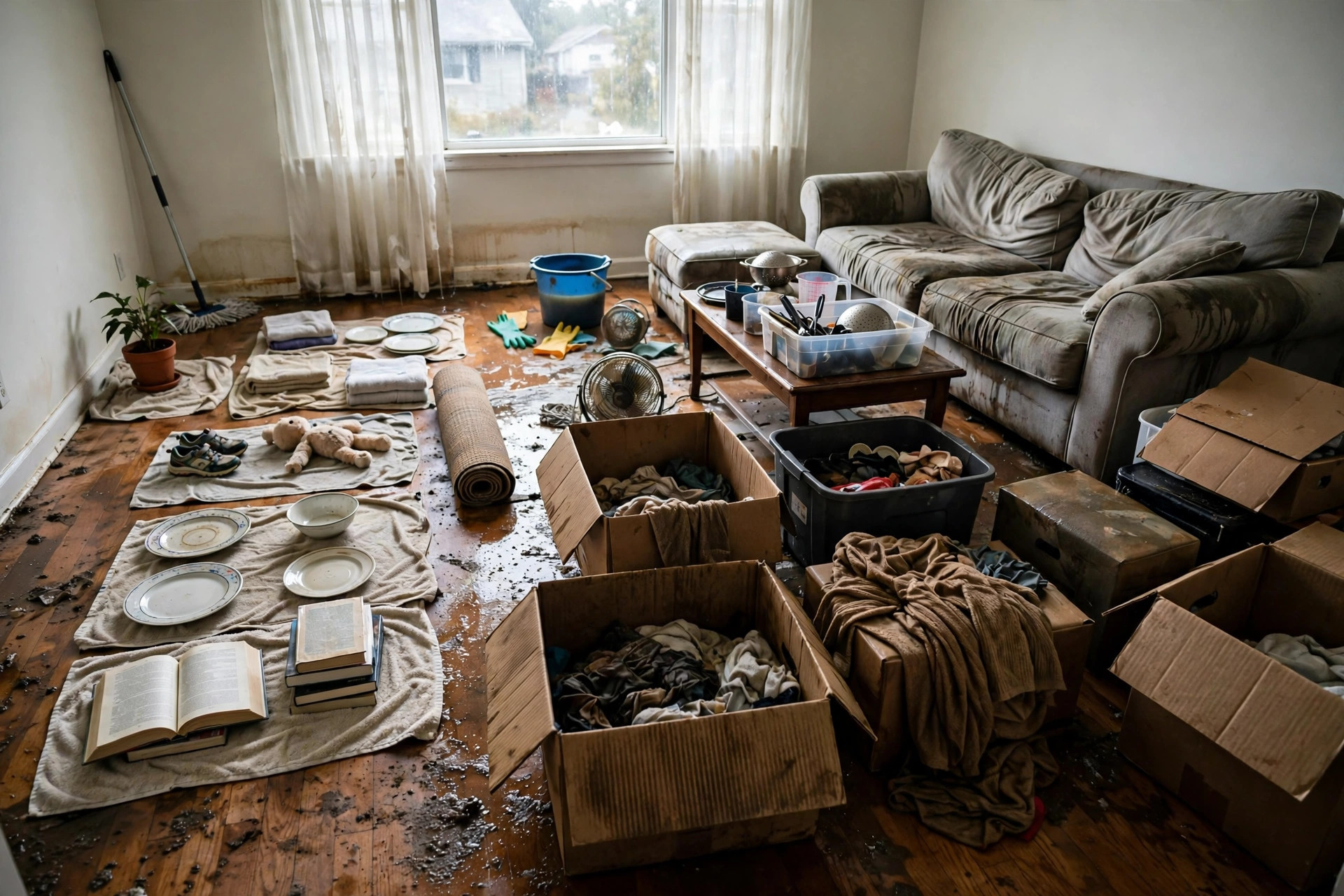
After flooding, the hardest part is often not the water on the floor — it is the decisions in every room. A soaked sofa, a box of photographs, a child's stuffed toy: each one asks whether it can be saved, and guessing wrong either throws away something precious or keeps something that will grow mold and smell for months. A calm, room-by-room sort, done safely, makes those decisions far easier than trying to judge everything at once.
This guide walks through that sort: what to check first, which materials usually dry well, which should go, and how to protect the items you save. It assumes the water is clean or gray water from a supply line or rain; if the flood involved sewage, the rules are stricter — see our guide to sewage backup health risks before handling anything.
Do not start until the room is electrically safe. Water near outlets or appliances is a shock risk, as our guide to water damage and electrical safety explains, and power to the area should be off before you wade in. Wear rubber boots, gloves, and a mask, especially if the water has been standing for more than a day, since damp materials can carry bacteria and mold spores.
Work in daylight or good lighting, and sort in a dry area if you can — a garage, a covered porch, or an unaffected room. Moving wet items out of the damp room stops them from reabsorbing moisture and gives you a clear view of what you have. Photograph each room and the damaged items before you move or discard anything; that record matters, as our guide to documenting water damage explains.
Hard, non-porous items clean up best: glass, metal, ceramic, and sealed plastic can usually be washed and disinfected and returned to use. Solid wood furniture often survives if it is dried slowly and evenly — rushing it with high heat can crack or warp it, so airflow and patience matter more than a heater pointed straight at it. Photographs and paper documents are worth trying to save: separate wet pages gently, air-dry them flat, and do not stack them while damp.
Clothing and washable fabrics can usually be laundered, though items that sat in standing water for days may carry odors that survive a wash. Electronics are a judgment call: do not power on anything that was submerged until it has been inspected, and assume anything that was underwater may be a loss even if it looks fine on the outside.
Soft, porous materials that stayed wet are the hardest to save. Mattresses, upholstered furniture with soaked padding, carpet padding, and particleboard furniture absorb water deep into their structure, and they are very difficult to dry completely — trapped moisture there becomes mold growth and lingering odor. Stuffed toys, pillows, and cushions that were submerged fall into the same category.
Anything that touched sewage-contaminated water should go, no matter how sentimental — porous items cannot be reliably disinfected after sewage exposure. Food, medicines, and cosmetics that contacted floodwater should also be discarded, as should any item you cannot dry within a day or two of getting wet. When in doubt, the safer choice is to let it go; keeping a damp item in a closed room can spread mold to the items around it.
Dry saved items in a ventilated, dry space with good airflow, not in the same damp room they came from. Keep items separated so air reaches every surface, and check them over the following days for musty smells or spots — mold can appear after an item looks dry. Wash hard items with clean water and a household cleaner, and launder fabrics before putting them back into closets or drawers.
If the structure itself — floors, walls, or framing — is still damp, the items you saved will not stay dry for long. Flood damage cleanup and structural drying and dehumidification address that hidden moisture, and our frequently asked questions page covers drying timelines. Homeowners in Watertown, TN and across Wilson County face the same sorting decisions after any flood.
Start as soon as the area is safe. Items that stay wet for more than a day or two are far harder to save, and mold growth accelerates after that window.
Usually not. Mattresses absorb water deep into their padding and are very difficult to dry completely, so they tend to grow mold and hold odor.
They are worth saving. Separate wet pages gently, air-dry them flat, and do not stack them while damp. Work slowly — wet paper tears easily.
No, not porous items. Sewage-contaminated materials cannot be reliably disinfected, so they should be discarded.
If flooding has damaged your home and belongings, our team can help with flood damage cleanup and mold remediation where growth has started. See also our basement flooding cleanup steps, and learn more about how we serve homeowners in Lebanon, TN.
Standing water and damp framing only get worse with time. Contact Lebanon Water Damage Pros to request service and get a clear plan for drying and cleanup.
Request Service Call (615) 759-0522