November 9, 2026 · Water Damage Tips
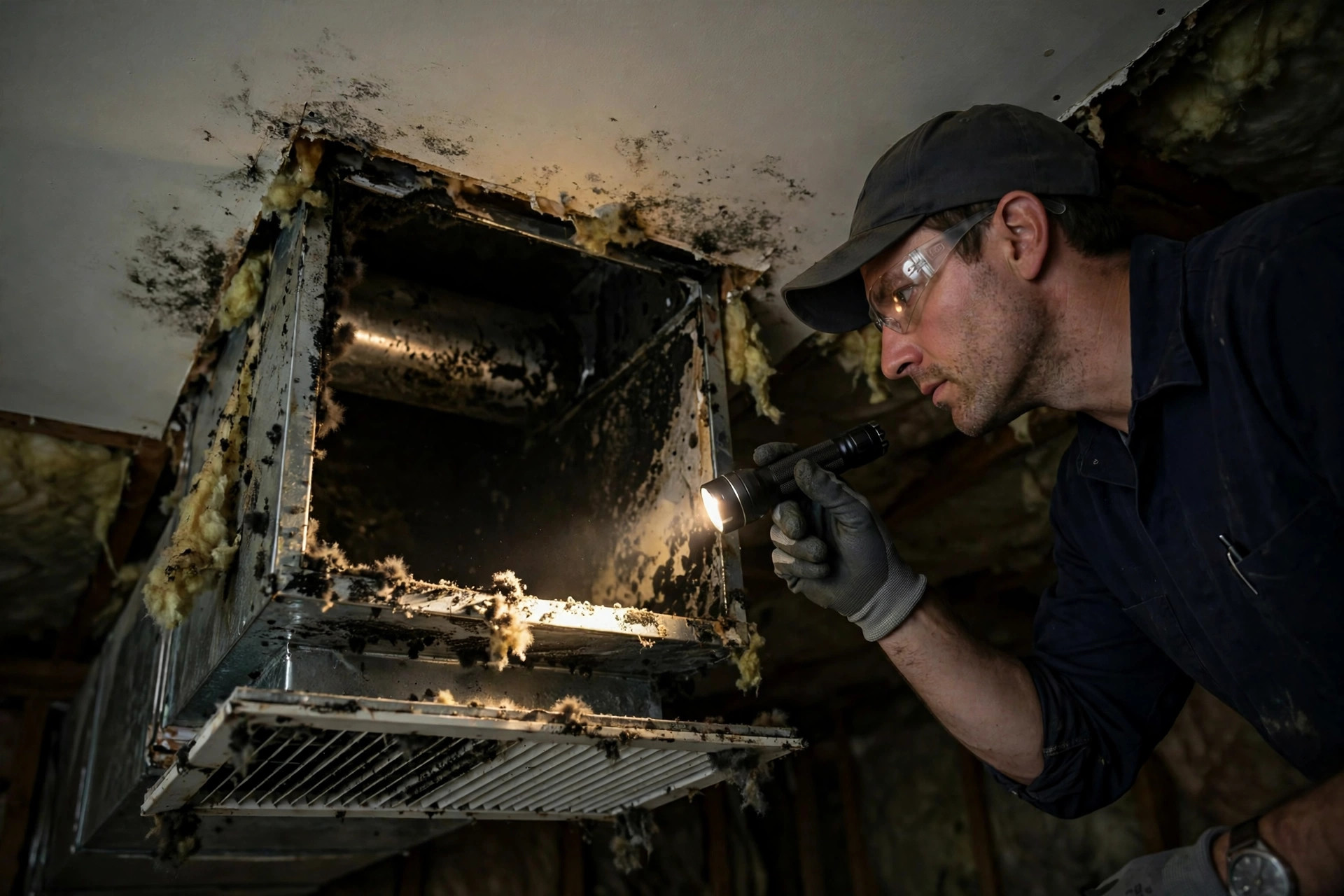
Mold in your HVAC system is easy to miss, because the part you see — a clean-looking vent on the wall — is only the end of a long, dark run of ductwork. Inside those ducts, dust, moisture, and warm air create exactly the conditions mold needs, and every time the system runs, it can carry spores into every room in the house. A musty smell that appears when the air kicks on, or dark spots around a vent, are often the first clues that something is growing where you cannot see it.
This guide explains how mold gets into heating and cooling systems, the signs homeowners in Lebanon, TN should watch for, and what to do when you suspect it. It is a companion to our guide to signs of mold after water damage, which covers the visible growth that appears on walls and ceilings.
Mold needs three things: moisture, food, and time. Ductwork supplies all three. Dust and organic debris collect inside ducts and provide food, while condensation forms on cold duct surfaces in summer and around the evaporator coil, supplying moisture. A clogged AC condensate drain can add standing water, and a roof or plumbing leak that drips onto ductwork can soak insulation that then stays damp for weeks.
Once mold establishes itself in a duct, the system itself becomes the delivery mechanism. Air moving through the ducts picks up spores and carries them to every register in the house, which is why HVAC mold can affect rooms that never had a leak. The same moisture problems that feed duct mold also feed growth elsewhere: our guide to bathroom moisture and mold covers the other dampest room in the house.
The most common sign is a musty or earthy smell that is strongest when the system first turns on and fades as it runs — the smell of air passing over growth inside the ducts. Dark spots or staining around vent grilles, on the inside of the air handler, or on the filter are another clue, as is a filter that turns dark or damp far faster than it should. Dust that returns to furniture within days of cleaning can also point to a dirty, contaminated duct system.
Pay attention to patterns: if the smell or the symptoms appear in every room at once, the source is more likely central — the system itself — than a single damp wall. If several people in the household notice coughing, sneezing, or irritated eyes that ease when they leave the house, that is worth taking seriously, though only a medical professional can say what is causing it. What matters here is the pattern, not a diagnosis.
Start by turning the system off and checking what you can see: pull a vent grille and look inside with a flashlight, check the filter, and look at the air handler and the area around the evaporator coil. Do not run the system while you inspect — running it spreads spores. Photograph anything you find, and note when the smell started and whether it followed a leak, a flood, or a long humid stretch.
Do not try to clean inside ductwork with household sprays or a vacuum. Duct interiors are hard to reach, and disturbing growth without proper containment can spread spores through the house. A professional assessment can tell you whether the problem is limited to a grille and filter or runs deeper into the duct system. Our guide to mold testing vs. mold inspection explains what each step can and cannot tell you.
The best prevention is dryness. Change filters on schedule, keep the condensate drain clear, and have the evaporator coil and drain pan checked during routine service — standing water in the drain pan is one of the most common starting points. Keep indoor humidity in check with ventilation and, where needed, a dehumidifier, and fix any roof or plumbing leak that drips onto ductwork promptly rather than letting insulation stay damp.
After any water damage event, the HVAC system deserves a check even if the rooms look dry. Water that reached a duct or the air handler can seed growth that appears weeks later. Mold remediation addresses growth that has already established itself, and our frequently asked questions page covers drying timelines and what to document. Homeowners in Mt. Juliet, TN face the same humidity and ductwork risks as those in Lebanon.
Usually musty or earthy, strongest when the system first turns on. The smell often fades as the system runs, then returns at the next start-up.
No. Duct interiors are hard to reach, and disturbing growth without containment can spread spores through the house. A professional assessment comes first.
It can. Air moving through contaminated ducts carries spores to every register, which is why the signs often appear house-wide at once.
Moisture plus dust plus time — condensation on ducts, a clogged condensate drain, standing water in the drain pan, or a leak dripping onto ductwork.
If you suspect mold in your HVAC system, our team can help with mold remediation and structural drying and dehumidification where moisture is the root cause. See also our guide to signs of mold after water damage, and learn more about how we serve homeowners in Lebanon, TN.
Standing water and damp framing only get worse with time. Contact Lebanon Water Damage Pros to request service and get a clear plan for drying and cleanup.
Request Service Call (615) 759-0522