November 9, 2026 · Water Damage Tips
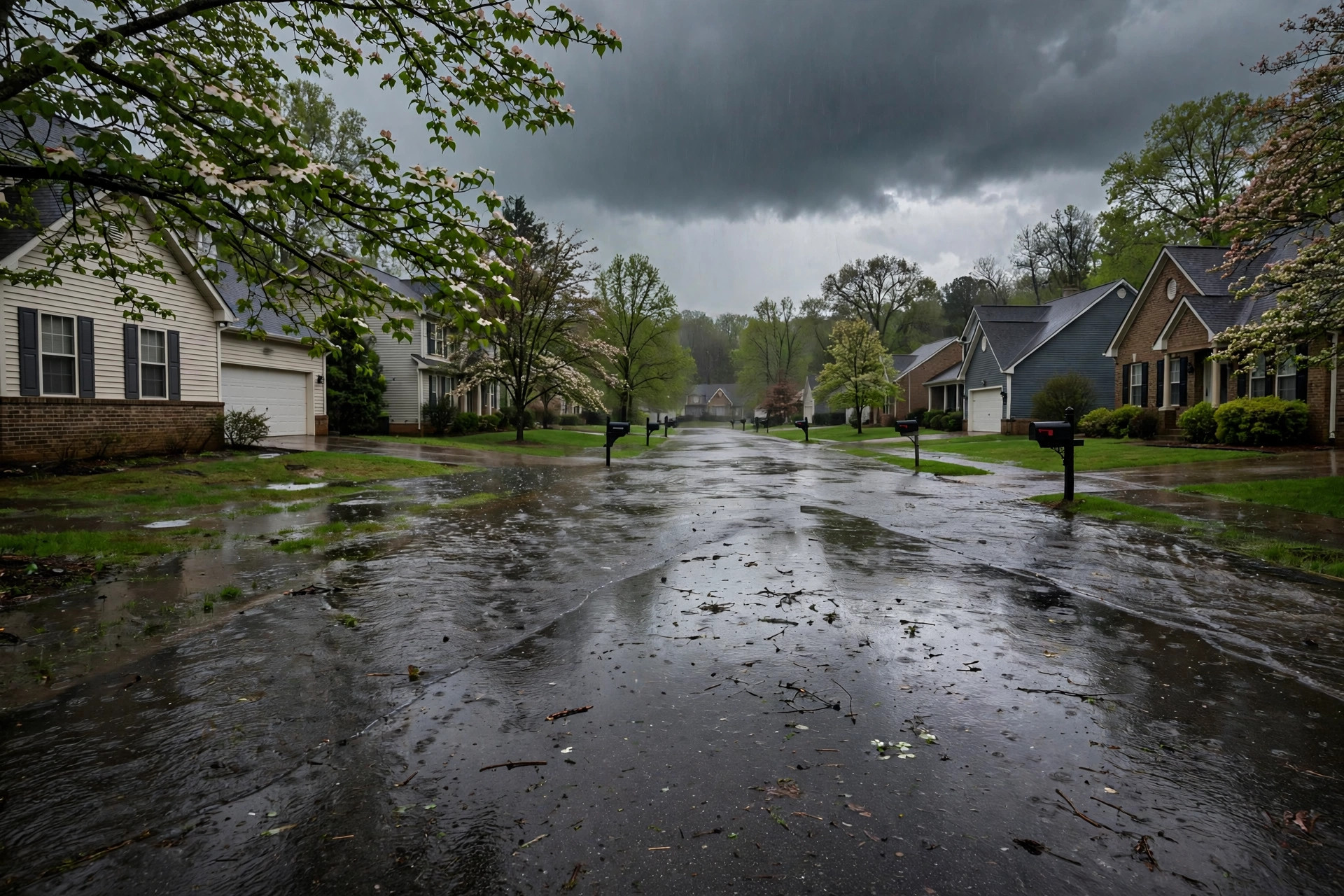
Spring in Middle Tennessee brings the storms that flood streets and yards in minutes. A heavy downpour overwhelms drains, a creek jumps its banks, and water that was on the road is suddenly at your front door, looking for the lowest point — which is often your foundation, your basement, or your crawl space. Flash flooding in Lebanon is not a rare event: the same spring storm season that fills the Cumberland River tributaries can put inches of water around a home in a single afternoon.
This guide covers what to do when water rises around your home, how to keep it out, and what to check once it recedes. For the broader storm picture, see our storm and flood damage guide for Tennessee homeowners.
Flash flooding is a speed problem, not a volume problem. When rain falls faster than the ground and drains can absorb it, water runs off instead of soaking in — and in Lebanon's rolling terrain, that runoff collects in low spots, along streets, and against foundations. Saturated soil from earlier storms makes it worse: ground that is already wet cannot absorb the next downpour, so even a moderate storm can flood a yard that handled the last one.
Urban surfaces add to it. Roads, driveways, and patios shed water instantly, and a storm drain blocked by leaves or debris can turn a street into a stream in minutes. That is why flash flooding often surprises homeowners: the storm does not need to be historic, just intense, and the water arrives before anyone has time to prepare. Our guide to clogged gutters and downspouts covers the smaller-scale version of the same problem at roof level.
First, stay out of the water. Floodwater can hide debris, open drains, and downed power lines, and even shallow water can carry a current from a submerged outlet — the same danger our guide to water damage and electrical safety describes indoors. Never drive through flooded streets: a foot of water can float a car, and the road beneath may be washed out. Move to higher ground and wait for the water to recede.
If water is approaching your home, move valuables and electronics to higher floors, and shut off power to any level the water is reaching — but only from a dry location. Do not wade through standing water to reach a breaker panel. If you have a sump pump, check that it is running and that its discharge is clear; a pump that cannot discharge is a pump that cannot help. Photograph the water line outside your home for your records.
Once the water is gone and the area is safe, document everything before you start cleaning: photograph the water lines on walls and foundation, the damaged rooms, and any belongings that were touched. Then get the water out and the structure drying as soon as possible — the same sequence used in storm damage restoration work. Floodwater is contaminated water, so wear boots, gloves, and a mask while you work, and keep children and pets out of affected rooms.
Check the places water hides: under flooring, inside wall cavities, in the crawl space, and behind stored items. A basement or crawl space that took water needs more than a mop — standing water against a foundation wall keeps soaking in long after the yard is dry. Our guide to crawl space moisture in Lebanon homes covers what to look for in that often-forgotten space.
Some fixes are simple: keep gutters and downspouts clear, extend downspouts well away from the foundation, and make sure the soil around your home slopes away from the walls. A sump pump with a battery backup keeps working when the storm knocks out power, which is exactly when you need it most. For yards that collect water, a drainage channel or a dry well can move runoff away from the foundation before it pools.
Know your home's low points. If water has reached your door before, it will again — plan for it: store valuables off the basement floor, keep a pump and a wet vacuum accessible, and know where your shut-offs are before the storm, not during it. Our frequently asked questions page covers drying timelines and what to document, and homeowners in Mt. Juliet, TN face the same spring storm patterns as those in Lebanon.
Not deep at all. A few inches against a foundation can seep through cracks and joints, and a foot of water inside can ruin flooring, drywall, and belongings.
No. A foot of water can float a car, and the road beneath may be washed out. Turn around and find another route.
Photograph everything, then get the water out and the structure drying. Floodwater is contaminated, so wear boots, gloves, and a mask.
It helps, but only if it is running and its discharge is clear. A battery backup keeps it working when the storm knocks out power.
If spring flooding has reached your home, our team can help with storm damage restoration and structural drying and dehumidification. See also our guide to storm and flood damage for Tennessee homeowners, and learn more about how we serve homeowners in Lebanon, TN.
Standing water and damp framing only get worse with time. Contact Lebanon Water Damage Pros to request service and get a clear plan for drying and cleanup.
Request Service Call (615) 759-0522